- Authorities seized 4,676 liters of illegally stored fuel during a January operation in Cameroon’s Littoral region.
- State subsidies and purchase caps on kerosene continue to fuel diversion toward the black market.
- Weak enforcement, corruption, and distribution failures undermine the effectiveness of periodic crackdowns.
Cameroon continues its campaign against illicit fuel trafficking. An operation conducted from January 27 to 29 by the Ministry of Water and Energy (Minee) in the Littoral region led authorities to seize 4,676 liters of illegally stored petroleum products. The seizure included 3,236 liters of diesel and 1,440 liters of kerosene, which operators stored in jerrycans and barrels.
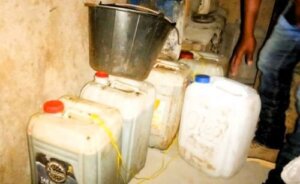
The ministry carried out the operation along the Yaoundé–Douala national highway and across several districts of Douala, according to official statements. Authorities targeted informal storage sites and roadside resale points that operate outside regulated distribution channels.
The Ministry of Water and Energy pursues a dual objective. The government aims to curb an illicit trade that escapes regulatory oversight. At the same time, authorities seek to prevent safety risks linked to improper storage, including fires and explosions that directly endanger local populations.
Kerosene remains under particular pressure. The state heavily subsidizes the product, and regulations strictly control its distribution. A ministerial circular dated August 11, 2025, caps kerosene purchases at 10 liters per customer at service stations. However, this restriction has created incentives for diversion. Individuals redirect legally purchased volumes toward the black market, where resellers command higher prices and generate substantial margins.
In practice, enforcement struggles to keep pace with the regulatory framework. Authorities face persistent difficulties monitoring inventories and retail points. Distribution chain weaknesses, combined with corruption and irregular inspections, allow parallel networks to re-emerge rapidly. Even when the law предусматри sanctions, enforcement remains limited, and offenders perceive judicial risk as low. Investigative mechanisms rarely identify the organizers and financiers behind the networks.
This episode highlights a recurring tension in fuel governance. Seizures reduce immediate safety threats, but they fail to dismantle fraud on a lasting basis. Experts call for a more structured response that combines repression, product traceability, tighter controls, and public awareness campaigns. They also stress the need to develop economic alternatives to reduce reliance on the black market in areas where the trade thrives.
The Minister of Water and Energy has pledged to intensify enforcement efforts, ensure product quality, and protect consumers from the dangers of illicit fuel trade. However, specialists and officials agree that results will depend on sustained and coordinated action that extends beyond isolated seizure operations.
https://www.stopblablacam.com/