The Government of Cameroon and the United Nations System reaffirmed their cooperation to strengthen entrepreneurship, the social economy, and small and medium-sized enterprises (SMEs) at a high-level meeting on Thursday, 5 February 2026. Minister of Small and Medium-Sized Enterprises, Social Economy and Handicrafts, Achille Bassilekin III, received the UN Resident Coordinator in Cameroon, Issa Sanogo, to discuss key strategic economic and development priorities. The talks aligned closely with the implementation of the United Nations Sustainable Development Cooperation Framework (UNSDCF) 2022-2026 and the preparation of the 2027-2031 cooperation framework.
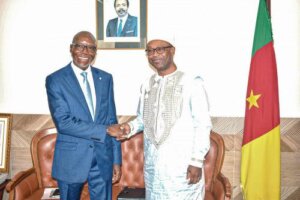
Discussions concentrated on advancing youth and women’s economic empowerment, formalising the informal sector, and the strategic role of SMEs, cooperatives and artisans in job creation and inclusive growth. The minister stressed the need to shift from ad hoc support to structural interventions, including tailored financing mechanisms, guarantee funds, equipment support, and enhanced access to local, regional, and international markets. The United Nations System was also encouraged to advocate for the creation of a national coalition to promote entrepreneurship nationwide.
Cameroon’s SME sector constitutes a dominant share of the national economy. According to the latest statistical yearbook from the Ministry of Small and Medium-Sized Enterprises, Social Economy and Handicrafts, the total stock of SMEs rose to approximately 443,524 units in 2024, up from 393,175 in 2023, an increase of about 50,349 enterprises or roughly 12.8 per cent year-on-year.
These SMEs accounted for nearly 99 per cent of all registered enterprises in the country’s economic fabric in 2024. The tertiary sector, including services and commerce, comprised the majority of SME activity, with around 77 per cent of firms operating in this space. Data also indicate that 21,132 new SMEs registered through official business creation centres in 2024 are expected to generate over 97,000 jobs.
Additional figures from national economic surveys highlight that SMEs contribute significantly to employment, with more than 70 per cent of the urban workforce engaged in SME activities and an estimated 34 per cent of national GDP. Access to formal financing remains limited, with only an estimated 15 per cent of SMEs securing formal credit in 2024.
Globally, the United Nations and its specialised agencies have emphasised the economic role of SMEs and entrepreneurship in sustainable development. United Nations Industrial Development Organisation (UNIDO) data show that SMEs account for over 90 per cent of businesses and more than half of employment worldwide, and UN agencies invest in capacity building, technology transfer, and enhanced market integration to strengthen SME competitiveness.
The cooperation between the Government of Cameroon and the UN System aims to consolidate these economic actors as engines of inclusive and resilient growth, in line with national strategic frameworks and broader Sustainable Development Goals.
https://www.businessincameroon.com/