By Ikome Christie-Noella Eposi in Buea
The Buea Council Hall came alive on Wednesday, December 3, 2025, as the South West Region commemorated the 34th Edition of the International Day of Persons with Disabilities (IDPD) under the global theme: “Innovation for Inclusion, Building Inclusive Communities Together.” The ceremony, attended by government officials, representatives of partner ministries, disability organisations, and community stakeholders, placed renewed emphasis on strengthening inclusion, dismantling barriers, and expanding opportunities for persons living with disabilities.
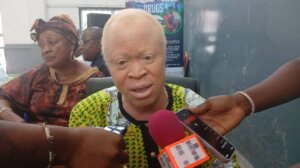
Representing South West Governor, Mbembe Mbong Vennessa Munge, Head of Division for Social, Economic and Cultural Affairs, presided over the event. She lauded the Regional Delegation of Social Affairs for its continued commitment to improving the lives of persons with disabilities and reiterated government’s pledge to promote dignity, rights, and equal access for all citizens, regardless of physical or learning limitations.
MINAS outlines plans for 2026
The Regional Delegate of Social Affairs for the South West, Fidelis Njie Ewumbua, used the occasion to outline MINAS’s vision for the coming year, stressing that inclusion must be backed by action. He announced that beginning February 2026, the delegation plans to intensify education and sensitisation campaigns aimed at strengthening public awareness on disability inclusion.
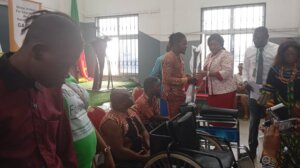
He further revealed plans to organise capacity-building workshops for promoters of institutions working with persons with disabilities. These workshops, he explained, will equip stakeholders with technical skills to manage their structures, develop sustainable income-generating projects, and secure funding from national and international partners. “We must continue building the technical know-how and economic resilience of these institutions,” he emphasised.
CUAPWD raises key concerns, calls for implementation of laws
In a compelling address, Avictus Teneck Teneck, representing the Coordinating Unit of Associations of Persons with Disabilities (CUAPWD), expressed gratitude for the collaborative efforts but stressed that the community continues to face significant challenges. Citing reports by WHO and the World Bank, he reminded participants that persons with disabilities constitute 16% of the global population, with Cameroon’s 2025 census estimating over 3.7 million persons with disabilities nationwide.
He listed persistent concerns including discrimination at local administrative levels, non-respect of the 10% employment quota reserved for persons with disabilities, inaccessible public infrastructure, inadequate implementation of disability rights laws, limited presence of sign language interpreters, and inequitable distribution of subvention funds. “Nothing for us, without us,” he insisted, urging authorities to involve disability groups in all decision-making processes affecting them.

Despite the challenges, he highlighted CUAPWD’s achievements, including securing office space, raising awareness across the region, and partnering with MINAS to support learners with disabilities through school fee exonerations. He called on stakeholders to invest more in empowerment initiatives to curb street begging and improve livelihoods.
Education sector reinforces commitment to inclusive schooling
The representative of the Regional Delegate of Basic Education, Elangwe Rose Bume, emphasised that education remains a fundamental right and a cornerstone of inclusion. She outlined government’s ongoing initiatives under the National Policy of Inclusive Education (2024–2028), which aims to ensure equitable access to quality education for at least 25% of learners with special needs by 2028.
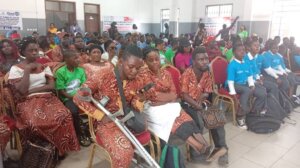
She highlighted progress made, including the creation of 31 nursery and 31 primary inclusive pilot schools in the South West Region, distribution of disability identification tools for teachers, training of focal points, and provision of learning aids such as wheelchairs, hearing aids, and walking devices.

Complementing this, the representative of the Regional Delegate of Secondary Education, Oscar Malange, noted that inclusion remains a firm priority at the secondary level. He reaffirmed that learners with disabilities write national exams using adapted scripts such as braille, often achieving “marvelous grades.”
Employment and Vocational Training promotes economic inclusion
The Regional Delegation of Employment and Vocational Training highlighted its programmes aimed at bridging employment gaps for persons with disabilities. These include identification and profiling, inclusive vocational training in areas such as ICT, tailoring and carpentry, as well as job placement services. Employers, they stressed, are continuously sensitised to uphold equality and reduce workplace discrimination.
Celebrating resilience and diversity
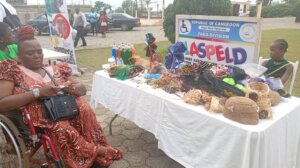
The event featured dance and music performances, award presentations, donations, and exhibitions showcasing skills and innovations by persons with disabilities. The vibrant celebration underscored a shared message: inclusion is not merely a policy goal, it is a societal responsibility.
As Cameroon joins the world to mark IDPD, stakeholders in the South West Region reaffirmed that building an inclusive society requires sustained collaboration, strong political will, and community-driven innovation. In the words of many speakers throughout the event, “Together, we can build communities where everyone belongs.”