By Ikome Christie-Noella Eposi in Buea
With an objective of revolutionising agricultural research and higher education opportunities in Cameroon, the
University of Buea (UB) has entered into a strategic partnership with Kentucky State University (KSU) in the
United States. The Memorandum of Understanding (MoU) was officially signed last June 4, 2025, on the
campus of the University of Buea, setting the stage for a dynamic exchange of knowledge, resources, and
opportunities for both institutions.
At the heart of the agreement lies a shared vision to advance agricultural research and development, tackle
food insecurity, and foster sustainable agricultural practices in a world increasingly threatened by climate
change, conflict, and hunger. The collaboration is specifically designed to benefit students of UB’s Faculty of
Agriculture and Veterinary Medicine, who will now be able to pursue further academic and research training at
KSU.

During the signing ceremony, Professor Ngomo Horace Manga, Vice Chancellor of the University of Buea,
described the partnership as “mutually beneficial,” emphasising that it would empower both universities to
improve their academic programmes, boost innovation capacity, and reinforce their core mission of
knowledge transmission. “This partnership will be beneficial both to UB and KSU as it will enable both
Universities to ameliorate their programmes, enhance their capacity to carry out innovations and create and
improve their own ability to transmit knowledge,” Professor Ngomo remarked, highlighting the long-term
academic and societal benefits of the collaboration.
The President of Kentucky State University, Professor Koffi Akakpo, echoed this sentiment, commending UB
for its robust commitment to agricultural development and sustainability, particularly through its One Health
Project and ongoing agricultural research initiatives. He noted that such visionary efforts positioned UB as a
valuable partner in the global quest to develop practical solutions to the world’s most pressing food and
environmental challenges. “This partnership is a concrete step in uniting institutions across borders to
address the global food crisis and to promote sustainable development through shared research, education,
and innovation,” Professor Akakpo stated.
The scope of the agreement includes: Collaborative Research Projects: Joint efforts in developing innovative
agricultural techniques and policies to boost productivity, Student Mobility: Opportunities for UB students to
complete advanced coursework and participate in research at KSU, Capacity Building: Training programmes,
seminars, and exchange visits to strengthen institutional expertise and Food Security Initiatives: Practical
approaches to addressing hunger and preventing food crises in vulnerable regions.
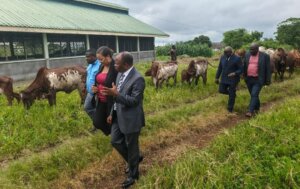
Following the formal ceremony, Professor Akakpo and his delegation visited the University of Buea’s Livestock
and Fish Production facilities, where they lauded the infrastructure and the evident progress made in these
domains. The visit further underscored the practical dimensions of the partnership and the immediate
avenues for collaboration.
Present at the ceremony were senior UB officials and Heads of Departments from the Faculty of Agriculture
and Veterinary Medicine, all of whom expressed optimism that the agreement would mark the beginning of a
new era in applied agricultural education in the region.
This international collaboration is particularly timely, coming at a moment when Africa is urgently seeking
innovative approaches to feed its growing population, build climate resilience, and transition to sustainable
food systems.
With the University of Buea and Kentucky State University joining forces, the hope is that knowledge will not
only cross borders but also transform communities.
As this partnership unfolds, the spotlight will remain on its outcomes, how students benefit, how research is
translated into practice, and how two universities, though oceans apart, are working together to solve
common challenges.