- Mission Head, Mbua Isaac Embola Calls for Daily Public Involvement in Local Budget Decisions
- Urges Local Leaders to Adopt Inclusive Tools for Transparent Governance
By Ikome Christie-Noella Eposi in Buea
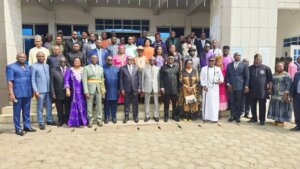
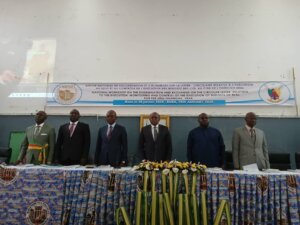
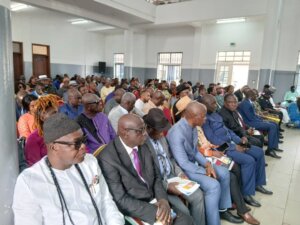
In a strategic move to fortify the decentralization process and enhance fiscal discipline at the grassroots level, the Ministry of Finance (MINFI) hosted a high-stakes National Workshop at the Buea Council Chambers on Wednesday, January 28, 2026. The event which cantered on the dissemination of the Circular Letter relating to the execution, monitoring, and control of budgets for Regional and Local Authorities (RLAs), brought together key administrative and local leaders from the South-West and North-West Regions.
The workshop served as a critical platform for unveiling what officials described as a “genuine methodological guide” for the 2026 financial year. This guide is designed to outline the macro-economic context of the nation while identifying the primary stakeholders and fundamentals necessary for rigorous budget execution.
Presiding over the opening ceremony, the Governor of the South West Region, Okalia Bilai, underscored the importance of the workshop as part of Government efforts to strengthen budget execution, transparency and accountability within Regional and Local Authorities. He commended the Government for institutionalising the annual forum, which he described as a key platform for ensuring a shared understanding of the rules governing local public expenditure and public contracts.
Governor Okalia Bilai recalled that decentralisation remains a firm policy choice of the State, grounded in the Constitution and the General Code of Regional and Local Authorities. According to him, this process aims to bring public administration closer to citizens, strengthen local governance and promote balanced development. He stressed that Regional and Local Authorities now manage substantial public resources and must respond responsibly to the expectations of local populations.
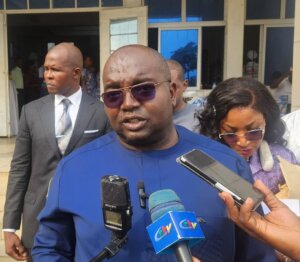
In his intervention, Mbua Isaac Embola, Head of the Inter-Ministerial Mission team and Head of the Monitoring and Management Control Division at the Ministry of Decentralization and Local Development (MINDDEVEL) emphasized that the primary objective is to bridge the gap between state administration and local execution. The initiative aims to significantly improve budget execution rates, ensuring that allocated resources translate into tangible development for local populations.
A central theme of the deliberations was the evolution of “Citizen Participation” in local finance. Mbua Isaac Embola noted that the legal and institutional framework in Cameroon now provides specific tools to ensure that public affairs are managed with the input of those they serve.
Key mechanisms highlighted for the 2026 fiscal year include: Participatory Budgeting, Citizen consultations, direct citizen contributions etc.
According to the MINFI delegation Head, these tools are not merely bureaucratic requirements but are essential for strengthening governance, re-engaging citizen interest, and fostering a culture of accountability among local elected officials.
In conclusion, Mbua Isaac Embola framed citizen participation as more than a policy option; he described it as a “powerful lever” for democratic and effective local governance. If embraced sincerely and inclusively, he argued, it can transform citizens from passive observers into genuine actors in local development and public finance management.
Bridging the Gap in the South-West and North-West
The choice of Buea as a hub for this dissemination exercise underscores the government’s commitment to stabilizing and developing the South-West and North-West Regions through effective decentralization. By refining State support to these regions, the Ministry of Finance aims to address the daily challenges faced by local authorities in budget management.
The workshop included technical presentations from a heavy-weight ministerial quartet: MINFI, MINMAP (Public Contracts), MINEPAT (Economy and Planning), and MINDDEVEL. These presentations provided a 360-degree view of the administrative pipeline, from the initial planning of budgets to the final stages of monitoring, evaluation, and reporting.
Addressing public finance reforms, the Governor highlighted performance based management as a central pillar of Cameroon’s Public Finance Reform Strategic Plan. He noted that the workshop fits within ongoing technical support provided by the Ministry of Finance, in collaboration with sector ministries, to improve budget execution at the local level.
He announced that for the 2026 financial year, the Common Decentralisation Fund allocated to Regional and Local Authorities stands at FCFA 1,106 billion, up from FCFA 958 billion in 2025. Fiscal transfers are projected at FCFA 603 billion, with FCFA 117 billion earmarked for Regions and FCFA 485 billion for Councils. He said these figures demonstrate the Government’s commitment to consolidating decentralisation and strengthening local financial autonomy.
However, the Governor pointed out persistent challenges, including low investment budget execution rates, weak mastery of project procedures, poor project maturation and the continued practice of credit safeguarding. He called on all actors in the budget execution chain to assume their responsibilities and improve performance.
As the 2026 financial year approaches, the focus now shifts to the ground. Local authorities are expected to use the insights gained in Buea to refine their performance management and control mechanisms. The success of this workshop will ultimately be measured by the visible improvement in the delivery of public services and the effective management of local finances across the two regions.