The post Limbe turns a new corner as 27km coastal road studies kick-off appeared first on THE SUN NEWSPAPER CAMEROON.
]]>Friday, 26th June 2026, will be remembered as the day Limbe stopped talking about a second entrance and started funding it. In the packed Deliberative Chambers of the Limbe City Council Main Building, Bota, CAMEROG and municipal authorities officially launched the feasibility studies for a good modern tarred road linking Man O’ War Bay – Bimbia – Dikolo – Tiko.
Stakeholders say the project “would be a game-changer for Limbe”. The studies and preparatory works are budgeted at FCFA 251 million . The breakdown is now public: Limbe City Council has provided FCFA 165 million, while the Minister of Public Works has contributed FCFA 86 million.
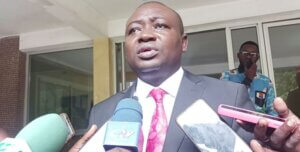
“We should really know that the City Council has interest to see that Limbe becomes a genuine, a true city,” an official noted during the session, stressing that the minutes will go directly to the Minister of Public Works. “I count on your contributions. Thank you.”
A Second Way In and Out
For a city that has depended on a single congested entry for decades, the symbolism was heavy. “Not only because of the debts, but equally because many people who had appointments on the other side of our nation could not travel because the roads were blocked,” one stakeholder explained.
“A second access into Limbe, of course, would mean a second access out of Limbe into Tiko, and then to Douala for every other appointment or economic activity that we have to carry out.” For residents of Limbe 3, Bimbia, Dikolo, and Tiko, the promise is mobility, safety, and opportunity.

“This is more than a road project; it is a commitment to our city’s growth, our people’s mobility, and our region in general,” declared Limbe City Mayor Dr. Paul Efome L.M. Ngale in his opening address. He framed the study launch as “the veritable start” of a corridor that will reshape investment across the Southwest coast.
He paid tribute to Mr. Viang Mekala, Senior Divisional Officer for Fako, for his “fatherly involvement,” and credited Prime Minister, Head of Government, His Excellency Dr. Chief Joseph Dion Ngute, and the Minister of Public Works for making the launch possible. “Without that impetus,” the Mayor said, “this communication jewel would still be on paper.”
Technical Scope: Studies, Design, and Sustainability
Officials were clear that this phase is not just paperwork. “Within the framework of these studies, we are going to do feasibility analysis, both technical and economical, evaluating which approach is going to be best for the execution of the construction of the road,” the technical team stated.

“Equally, we will have a detailed engineering design that will be done by the contractor. Added to that, we will have environmental and social impact assessments done to ensure sustainability of the project that we are carrying out.”
That means the 27km tarred road will be preceded by route optimization, cost-benefit analysis, slope and drainage studies, and ESIA to protect coastal ecosystems and communities.
From Congestion to Connection
Mayor Dr. Paul Efome L.M. Ngale was blunt: “We all know that at the moment our city relies heavily on one main entrance and exit point.” The new tarred road will ease congestion, cut travel time, and provide a reliable alternative during emergencies or maintenance. For traders, families, and emergency services, that means “a safer journey.”
The road aligns with the planned expansion of Limbe 3 subdivision, the anchor zone for Limbe’s “New City.” “They say where the road passes, development follows,” Dr. Ngale noted. The corridor will impact Limbe, Tiko, and Douala, and will be critical when the Limbe Deep Sea Port takes shape.
Economic and Social Engine
In a follow-up interview, Mayor Dr. Paul Efome L.M. Ngale said the road is about people, not just pavement. Citing President Paul Biya’s support and the NDS 2030–2035 strategy, he said it will open Bimbia’s agricultural potential — “where a high percentage of crayfish in the national territory comes from” — and unlock heritage tourism at the historic Slave Tree site.
“This modern tarred road will generate economic development because it passes through Bimbia… and it will facilitate the construction of the port and other municipal priorities,” he said.
The contractor, FULL STUDY SAL, reinforced that logic: the road will boost fishing, agriculture, and local trade, move goods faster, and enhance access to Bimbia’s Slave Trade Heritage Site. The project will follow a “study-design-construct” approach to shorten the gap between studies and works.
Stakeholders Set the Guardrails
The Secretary-General of Limbe City Council read out key resolutions. Stakeholders want the topography “well-studied” to prevent landslides and slope failures. They mandated all documents in English, population involvement in mapping history and protected areas, and harmonization with previous studies. They also asked for provision to extend the road in future even if the current budget does not cover it.
Compensation was another concern: affected persons will be compensated “based on the regulations in force” once the best route is chosen. Leaders from Bimbia, Dikolo, and Bonangome said transparency will determine community acceptance.
FULL STUDY SAL requested drone authorization for rapid surveys and expedited bill processing to keep field teams moving. The consultant also appealed for collaboration from traditional authorities.
A Call to Own the Project
First Assistant SDO Awa Dean closed with appreciation: “I like the very interactive discussions for this project, I saw you guys very enthusiastic with frank remarks.” That frankness, participants said, will make the project succeed.
Mayor Dr. Paul Efome L.M. Ngale ended on partnership: “It is incumbent for us… to follow the guidelines of the Ministry of Public Works… All authorities and the population have been informed, and everybody has shared their opinion.”
With FCFA 251 million now committed 165 million from the City Council and 86 million from the Ministry of Public Works — Limbe has moved from talk to technical work. If studies proceed, the city will get more than tar. It will get a modern, climate-smart corridor linking tourism, trade, agriculture, and a new urban frontier.
For now, the pen is on paper. The road, at last, has begun.
Cameroon, British Firm Sign MoU to advance construction of Bekoko-Limbe-Idenau road
Government has taken a decisive step toward the construction of the Bekoko-Limbe-Idenau road with the signing of an agreement with British firm PROPAV Infrastructure Ltd, which will now prepare financing proposals for the project.
The Memorandum of Understanding (MoU) was signed in Yaounde on June 19 by Minister of Public Works Emmanuel Nganou Djoumessi and representatives of the British firm. The corridor cuts through the South-West Region and is considered strategic for trade, mobility and economic activity along Cameroon’s Atlantic coast.
The agreement establishes a framework for the next phase of project development, including site visits, technical assessments and the preparation of financial proposals required before construction can begin. Authorities say the move is intended to accelerate implementation of a project regarded as a key component of the region’s economic development plans.
According to the Ministry of Public Works, the Bekoko-Limbe-Idenau road has been identified as the priority project among three major road corridors discussed with PROPAV Infrastructure Ltd. The other routes are Loum-Tombel-Kumba-Mundemba and Mutengene-Buea. Officials said Bekoko-Limbe-Idenau was selected first because technical studies have already been completed, allowing preparations to advance more quickly toward financing and execution.
The project is expected to improve connectivity between major economic centres in the South-West Region, facilitate the movement of goods and people, and strengthen access to commercial and industrial zones. The agreement marks an important step in moving the project from the planning stage toward investment mobilisation and eventual construction. Authorities believe the road will play a significant role in supporting economic activity along Cameroon’s Atlantic coast.
Djoumessi said the MoU was intended to translate a shared commitment into concrete action. He noted that the parties had identified three strategic roads in the South-West Region, with the Bekoko-Limbe-Idenau corridor designated as the priority project.
“Based on this Memorandum of Understanding, PROPAV, which is based in London and has financial backing, will propose financing conditions for the project and we will move forward. Together, we will discuss a timetable so that work can begin very quickly and ensure that the signing of an MoU does not remain only a document,” he said.
The agreement also enables PROPAV Infrastructure Ltd to submit technical and financial offers aligned with the expectations of the contracting authority. Company officials said they are ready to undertake the technical, financial and environmental assessments required before field operations commence.
United Kingdom High Commissioner to Cameroon Matt Woods, who accompanied the PROPAV delegation, welcomed the signing and praised the cooperation between the parties. He also thanked the Ministry of Public Works for its cooperation during discussions leading to the agreement.
“I am very pleased to be here with PROPAV and its Country Manager, Paula Miguel. This is the first step of a collaboration that I believe will be very fruitful. I have seen the personal commitment of the minister and the commitment of PROPAV, and I am confident that this road will be delivered,” Woods said.
British partners also reiterated their commitment to supporting implementation of the project, noting that the required studies for the priority road have already been completed. The MoU now provides the framework for advancing technical preparations, financing discussions and planning ahead of the start of construction works.
The post Limbe turns a new corner as 27km coastal road studies kick-off appeared first on THE SUN NEWSPAPER CAMEROON.
]]>The post MPs raise public concerns on gender-based violence, TikTok, telecom services, protection of Cameroonians abroad appeared first on THE SUN NEWSPAPER CAMEROON.
]]>A plenary session dedicated to oral questions was held at the Paul Biya Glass House at Ngoa Ekelle last June 26, 2026 and was chaired by Deputy Speaker, Hon Mary Muyali Meboka, representing the House Speaker, the Right Hon Theodore Datouo.
Discussions focused on key issues directly affecting the daily lives of Cameroonians, including the fight against gender-based violence (GBV), the protection of minors on social media, the quality of telecommunications services, and the safety of Cameroonians living abroad.

Hon. Germain Mengue Mezui questioned the Minister of Women’s Empowerment and the Family, Prof. Marie-Thérèse Abena Ondoa on gender-based violence. In response, the Minister highlighted the existing regulatory framework and announced the ongoing development of a specific draft law on GBV. She also noted that 126 support centers for victims are already operational nationwide.
The Minister of Posts and Telecommunications, Minette Libom Li Likeng addressed two major concerns. In response to Hon Josephine Ghimbop Simo, she drew attention to the risks associated with TikTok use by minors, in a context marked by insufficient legal, technical, and educational safeguards. She outlined measures including strengthened content monitoring and the implementation of a reporting mechanism to ensure the rapid removal of harmful content.
Responding to Hon. Benilde Djeumeni on the deterioration of mobile and internet services, she reaffirmed the existence of a regulatory framework and clarified the responsibilities of the National Agency for Information and Communication Technologies (ANTIC) and telecom operators in ensuring service quality and consumer protection.
On his part, Hon Roger Nkodo Dang raised concerns with the Ministry of External Relations regarding acts of extortion and violence against Cameroonians in South Africa, citing the case of businessman Baba Danpullo. He called for a firm yet measured diplomatic response in line with international conventions. Representing the Minister of External Relations, the Minister Delegate in Charge of the Commonwealth, Felix Mbayu, assured that the matter is being closely monitored at the highest level of the State, with diplomatic and legal actions underway.
Through this session, the National Assembly once again reaffirmed its commitment to overseeing government action and placing citizens’ concerns at the heart of parliamentary debate.
The post MPs raise public concerns on gender-based violence, TikTok, telecom services, protection of Cameroonians abroad appeared first on THE SUN NEWSPAPER CAMEROON.
]]>The post Plan International Cameroon, MTN Foundation school media professionals in Yaounde on child protection mechanisms appeared first on THE SUN NEWSPAPER CAMEROON.
]]>About 30 media professionals have been groomed on children’s rights at a workshop organised last June 24 and 25, 2026 by Plan International Cameroon with support the Foundation of the leading mobile telephony operator in the Country, MTN Cameroon.
Experts during the workshop revealed to journalists that ‘‘a child out of 3 is a victim of child abuse in Cameroon.’’
To Protection Specialist at Plan International Cameroon, Gaelle Beri, “a month alone is not enough and media role remains essential. Interventions shall be known and coordinated. MTN Foundation will be a key partner with whom all can be shaped.”

A presentation on Understanding new logics of information in the era of digital world and the economic cost of mediatization of unethical violence done on children was done by Dr Albert Ze of the Institute of Research on Health and Development, IRESADE.

Presenting what MTN Cameroon is doing to protect children online in what is MTN Cameroon Help Children be Children, the Official in charge of Operations at MTN Foundation, Fernande Mengbwa said it is a key initiative put in place for child online programme. Children are protected online because the cyberspace is very complicated with people passing for other people etc.

She told the press that “a child can easily be deceived once the person behind the pseudo name discusses familiarity issues with them such as I am a friend to your father, mother etc.”
Fernande Mengbwa added that “MTN Cameroon is there to connect people for development and we are aware that our children are naive so they ought to be protected against criminals in the cyberspace.”

On the second but last day of the workshop, Dr Eddy Patrick Donkeng schooled media professionals on how to write a non-sensational story that carries child protection messages. He told media professionals that after their Douala workshop with journalists in the Littoral region this week, a media network for the active protection of children’s rights in the country will be created.
Presenting what Plan International Cameroon does for children’s protection, Safeguards Specialist, Josianne Ngouleu said safeguarding children and young people are our framework for keeping children and young people safe and protected in Cameroon.
Other Facilitators at the workshop included; Taka Ebong Nathalie of the Ministry of Youth Affairs and Civic Education, Public Health Specialist, Dr Afounde Jeannette, Country Director of Association CityLight Cameroon, Helene Marie Fanny, etc.
It should be recalled that Plan International Cameroon is advocating children’s rights and equality for girls in the country since 1996.
The post Plan International Cameroon, MTN Foundation school media professionals in Yaounde on child protection mechanisms appeared first on THE SUN NEWSPAPER CAMEROON.
]]>The post Non-civil-servant-mayors fume over salary arrears -Call on Decentralisation minister to come to their rescue appeared first on THE SUN NEWSPAPER CAMEROON.
]]>Mayors, deputy mayors, and city mayors who are non-civil servants, are seething over non-payment of salary arrears.
The arrears which have accrued to ten months since 2025, add to an earlier 16-month arrears which some of them did not receive.. In a chat with one of the aggrieved mayors in the North West Region, who spoke on condition of strict anonymity, insisting he wasn’t officially mandated to speak to the press, he intimated to The SUN that the first 16 months arrears, spans the period they were elected into office in 2016 and 2017.

He recalled that the Head of State’s decree of 5th September 2015, instituting salaries for non-civil-servant mayors, was effectively implemented as from April 2017. He continued that when calculations were effected as to what was owed them, the calculations started from 2017, leaving out 16 months.
The deputy mayor in question admitted that while some mayors, deputy mayors, and Government Delegates’ situations were completely cleared, he doesn’t know why some were left out. He revealed that in October 2023, in Order Number 056, the Director General of Treasury, Mr. Moh Sylvester had directed councils to communicate the situation of salary arrears of non-civil-servant-mayors of the 2013-2020 mandate. He said their files were deposited on October 18, 2023, and in early 2024, some municipal authorities were paid, while others, like them, are still waiting. “It has been impossible to get the Director General of Treasury to have an explanation”, he told The SUN.
The deputy mayor cried out that “they’re really suffering”, especially since salaries that had been flowing normally started witnessing difficulties in 2025, To the point that they have not had salaries since November 2025 .
As to why they haven’t received their invoices, he said one of them was afraid to speak out due to fear of reprisal. A top official at the Ministry of Decentralization and Local Development confided to The SUN on condition of anonymity, that 16 months can’t be true, but most, if not all, have salary arrears. He added that it’s the responsibility of the Ministry of Finance.(MINFI). He revealed that his ministry “had calculated and transmitted everything to the Ministry of Finance (MINFI)”.
It should be noted that on November 1, 2022, the Minister of Decentralization and Local Development, George Elanga Obam, in a press release No 000047, informed municipal authorities that following instructions from the Head of State, their salary arrears have been budgeted under the Common Decentralization Fund of that year .
The mayors are in a quandary as to who will rescue them and when will their situation be normalized.
It seems most of them are relying on the Minister of decentralization and Local development, George Elanga Obam to push through their case.
Over 100 mayors and city mayors in the country are non-civil-servants.
The post Non-civil-servant-mayors fume over salary arrears -Call on Decentralisation minister to come to their rescue appeared first on THE SUN NEWSPAPER CAMEROON.
]]>The post CDC workers to begin receiving salaries this week appeared first on THE SUN NEWSPAPER CAMEROON.
]]>The management of the Cameroon Development Corporation has promised its workers payment of salaries arrears will commence this week in a move to appease striking workers and generally improve the tense climate throughout the company.
The gesture to pay is not because the company has improved on its finances, on the contrary the company is still in financial dire straits.
The General Manager of Cameroon Development Corporation (CDC),rFranklin Ngoni Njie, says the corporation made FCFA 24 billion in revenue in 2025, but the figure is still less than half of pre-crisis earnings.

He made this revelation on Friday, June 26, 2026, at the Corporation’s annual management meeting at SS Club Bota. The result was “far… less than 50 percent from where we were before the crisis” in the Northwest and Southwest Regions.
“The general picture of our performance for last year is not as good as we expected… We ended the year 2025 with a revenue of above FCFA 24 billion,” Mr. Njie told over 300 top managers, staff representatives and trade union leaders.

From FCFA 50bn to FCFA 4.3bn at crisis peak
The GM noted that insecurity had dragged CDC revenue from an average of over FCFA 50 billion annually to as low as FCFA 4.321 billion in 2019. Revenue is now recovering gradually as peace returns, with income from rubber, bananas and palm oil.
For January to May 2026, the Corporation has already made about FCFA 12 billion, according to Head Office Management Controller Francis Mbock Otto. He said the amount still cannot cover all financial commitments, including salaries for the Corporation’s 15,000+ workers.
Government bailout, but monthly pay still a challenge
The state intervened at the end of 2024 and 2025 with FCFA 35 billion to clear salary arrears from 2018 to 2022. Despite that, CDC has struggled to pay monthly wages regularly. Last week, rubber workers in Tiko downed tools over months of unpaid salaries. CDC must produce more to survive,”

“The only way the corporation can pay monthly wages regularly is for workers to step up production.” He explained that monthly sales fund wages, taxes, healthcare, fuel, electricity and other needs. GM said.
Performance awards launched
To motivate staff, management gave prizes to the three best workers in bananas, oil palms and rubber. Mr. Njie said the scheme will be extended to other service departments by the end of 2026.
Trade unions table solutions
Union leaders proposed ending insecurity in vulnerable areas, maintaining staff housing, and improving the transport fleet. They also said motivation should include verbal appreciation and equal treatment for production and service workers.

They raised concerns over the Mondoni Oil Mill in Tiko, where irregular electricity has forced reliance on costly thermal generators. The Illoani Oil Mill in Ndian, built in 2011 at FCFA 7 billion, is also out of use after installations were vandalized during the crisis.
Retooling deal pending
Before the close of 2025, the government signed a FCFA 51.8 billion contract with French firm Tylium to build a new oil mill at Idenau and a rubber factory at Tiko within 25 months. Workers say they are still waiting for work to start.
New staff reps installed
The meeting ended with the installation of newly elected staff representatives, commissioned by SW Regional Delegate of Labour and Social Security, Ms. Yvette Lyonga.
GM visits striking workers, appeals for end to strike
The General Manager of the Cameroon Development Corporation (CDC), Franklin Ngoni Njie, has appealed to workers to return to their duty posts while assuring them that management is working to resolve the challenges confronting the corporation. His appeal came during a meeting with disgruntled labourers and staff at the Way Bridge near the Technical Office in Tiko on June 23, following weeks of strike action over unpaid salaries and deteriorating working conditions.
The visit, intended to calm tensions and reopen dialogue between management and employees, provided workers with an opportunity to voice frustrations that have accumulated over several months. While some employees welcomed the General Manager’s outreach, others maintained that meaningful action rather than promises was needed to restore confidence.
During the meeting, workers painted a grim picture of life within the corporation, revealing that salary arrears varied significantly among employees. Some claimed they had gone without pay for as long as 36 months, while others reported not receiving salaries since February or being owed four months’ wages. The prolonged delays, they said, have plunged many families into severe financial hardship.
Several workers narrated how their inability to meet basic household expenses had affected their children’s education, with some pupils reportedly sent home from school or denied report cards because tuition fees had not been paid. Others described the emotional and psychological toll of struggling to provide food and other necessities for their families despite remaining committed to the corporation.
Employees also criticised what they described as poor communication between management and the workforce. According to them, the absence of regular updates on the corporation’s financial situation has created uncertainty and frustration among staff. “As a father, I am crying. If we are lying in what we have spoken, investigate our families. Our pots are empty,” one emotional worker told the General Manager, reflecting the depth of despair among many employees.
Beyond salary concerns, workers highlighted deteriorating working conditions across several CDC facilities. They complained of broken toilets, dry water taps, neglected surroundings and inadequate infrastructure that they said had made the working environment increasingly difficult.
Medical personnel also expressed concern over shortages of essential supplies in CDC health centres. One health worker, identified as Rosemary, lamented that the lack of medical equipment and consumables was undermining the quality of healthcare services provided to workers and surrounding communities.
Despite their grievances, several employees reaffirmed their attachment to the corporation, urging the General Manager to take decisive steps to restore the institution’s former prestige. They encouraged him to conduct regular field visits to better understand the realities facing workers on the ground. “Touch all services with your hands. You are a father; you know where all the issues are coming from,” one employee appealed.
Workers also called for the rehabilitation and maintenance of rubber plantations, arguing that overgrown bushes posed security risks and negatively affected productivity. They pledged their continued support for efforts aimed at reviving the corporation but stressed that visible improvements were urgently needed.
Responding to the concerns, Franklin Ngoni Njie acknowledged that the Cameroon Development Corporation was facing a difficult period. He admitted that the corporation was in crisis but assured workers that efforts were underway, with the support of government, to improve the situation.
The General Manager recognised the payment of salaries as a key responsibility of management and assured employees that work was ongoing to address the arrears. He further pledged to strengthen communication between management and staff to ensure that workers are kept informed about developments affecting the corporation.
In a move aimed at promoting greater collaboration, Njie announced that workers’ representatives would be invited to participate in technical meetings so that employees’ concerns could be directly incorporated into management discussions and decision-making processes.
He also expressed appreciation for the dedication shown by employees despite the numerous challenges confronting the corporation, assuring them that this year would bring better prospects than the previous one.
However, his assurances did little to immediately soften the workers’ position. As the General Manager concluded his visit and departed the venue, employees repeatedly chanted, “No money, no work,” signalling their determination to continue withholding their services until concrete action is taken on outstanding salary payments.
The encounter highlighted the enormous challenges facing one of Cameroon’s largest agro-industrial corporations. While management has pledged reforms, improved communication and renewed engagement with staff, workers insist that the corporation’s recovery must begin with the settlement of salary arrears and meaningful improvements in working conditions. The coming weeks are expected to determine whether the renewed dialogue can pave the way for lasting industrial peace and the revival of the CDC.
The post CDC workers to begin receiving salaries this week appeared first on THE SUN NEWSPAPER CAMEROON.
]]>The post Cameroon reaffirms readiness to play host to 51st General Assembly of Parliamentary Assembly of La Francophonie, July 7-12, 2026 appeared first on THE SUN NEWSPAPER CAMEROON.
]]>Cameroon has reaffirmed its readiness to play host to the 51st General Assembly of the Parliamentary Assembly of La Francophonie (APF) next July 7 to 12, 2026 in Yaounde.
The country’s readiness was disclosed during a press briefing held last June 25, 2026 at the Paul Biya Glass House by the President of the Cameroon Branch of the APF, Hon Hilarion Etong, who doubles as Senior Deputy Speaker of Cameroon National Assembly.
In his preliminary statement, Hon Hilarion Etong indicated that all necessary arrangements have been finalized to ensure the successful hosting of this major parliamentary event.

He said the session, which will be held alternately at the National Assembly and the Senate, is organized under the distinguished patronage of the President of the Republic, H.E. Paul Biya, and coordinated by the Speaker of the National Assembly and the President of the Senate.
Providing insight into the level of preparedness, the MP emphasized that a comprehensive organizational mechanism has been put in place, with 17 sub-committees fully operational and working in synergy to oversee all aspects of the event. Key components including transportation, accommodation, catering, health services, security, communication, and protocol arrangements have all been carefully addressed to ensure a smooth and successful session.
The session is expected to bring together over 300 delegates from across the Francophone world, underscoring its importance as a major platform for parliamentary diplomacy.
Particular emphasis has been placed on inclusivity, especially the participation of women and young people within the Francophone parliamentary space. In this regard, the Youth Parliament and the Network of Female Parliamentarians of the APF will hold their respective meetings on the sidelines of the session.
Hon. Hilarion Etong also reassured the international community on health safety, noting that Cameroon has recorded no cases of Ebola, thereby offering a secure environment for all participants.
This press conference marks the final phase of preparations for the session, which is poised to enhance Cameroon’s visibility and reaffirm its commitment to the values of dialogue, cooperation, and solidarity within the Francophone parliamentary community.
The post Cameroon reaffirms readiness to play host to 51st General Assembly of Parliamentary Assembly of La Francophonie, July 7-12, 2026 appeared first on THE SUN NEWSPAPER CAMEROON.
]]>The post Buea: Mile 16 community joins regional fight against drug abuse appeared first on THE SUN NEWSPAPER CAMEROON.
]]>More than 500 residents of Mile 16-Bolifamba in the South West Region took part in a community-wide campaign against the use and distribution of illicit drugs on June 26, 2026, as civil society organizations intensified efforts to combat substance abuse among young people.
The campaign was organized by the South West Union of Human Rights Associations (SWUHRA) in collaboration with the Cameroon Human Rights Commission and other local civil society organizations based in Mile 16. The initiative was spearheaded by REREHABET under the leadership of Lucas Nji.

Bringing together women, men and youths, the campaign featured a peaceful march through the community, public sensitization sessions and door-to-door awareness activities aimed at educating residents on the dangers of illicit drug use and the importance of community action.
Organizers said the initiative sought to address the growing abuse and circulation of illicit drugs in the South West Region, a trend they believe poses serious threats to public health, security, peace and human dignity.
Beyond awareness raising, the operation also yielded enforcement results. Working alongside law enforcement officers and local vigilante groups, campaign organizers identified and apprehended several individuals allegedly involved in the sale and distribution of illicit substances. The suspects were handed over to the competent authorities for further action.

The campaign also adopted a victim-centred approach by referring more than 20 drug users to a partner organization for psychosocial support and rehabilitation instead of treating them as criminals.
Speaking to journalists after the peace march, the Coordinator of the South West Union of Human Rights Associations, Rev. Sama Ndaghu, said the operation was aimed at targeting both consumers and suppliers of illicit drugs. “Our goal is to get not just the consumers but the distributors of the illicit drugs and so far we have apprehended some suppliers in mile 16 and Mutengene who are now in the hands of forces of law and order.”
Rev. Ndaghu also appealed to residents to work closely with the organization by reporting locations where drug-related activities continue to flourish, particularly in Mile 16, which has been identified as one of the areas most affected by drug abuse.
The campaign drew support from members of the community, many of whom expressed concern over the growing social consequences of substance abuse.
Reacting to the initiative, community member Mama Pauline Enjema described the campaign as timely and called for sustained action. “Our children are becoming dangerous as the day go buy, our things are no longer safe, from shops to households appliances, we don’t want them anymore in our society.”
Organizers described the high turnout as a demonstration of the community’s determination to confront the problem collectively. They also hailed the collaboration between civil society organizations, the Cameroon Human Rights Commission, law enforcement agencies and local vigilante groups as a model for future interventions.
Following the success of the Mile 16 campaign, the South West Union of Human Rights Associations announced plans to extend similar operations to other communities across the South West Region. The organization said future activities will focus on strengthening partnerships with public institutions, traditional authorities, rehabilitation centres and local communities while sustaining public education in schools, churches, markets and youth groups.
The union maintains that a coordinated, community-driven and human rights-based approach remains essential in protecting the health, safety and dignity of citizens while addressing the growing challenge of illicit drug abuse in the region.
The post Buea: Mile 16 community joins regional fight against drug abuse appeared first on THE SUN NEWSPAPER CAMEROON.
]]>The post Justice, dignity, economic power take center stage as Limbe lll marks 16th International Widows’ Day appeared first on THE SUN NEWSPAPER CAMEROON.
]]>Limbe III Sub-Division gathered on June 23, 2026, as widows, traditional rulers, council officials, civil society groups, and development partners came together to mark the 16th edition of International Widows’ Day under the global theme “Justice, Dignity and Economic Power for Widows.” The atmosphere in Limbe III was one of solidarity and resolve, a deliberate counter to the silence and stigma that too often surround widowhood in many communities.

The event was more than ceremony. It was a public affirmation that widows are not a forgotten category, but mothers, sisters, daughters, and nation-builders whose resilience holds families and communities together. Speakers and attendees alike stressed that recognizing widows’ rights is not an act of charity, but a matter of justice and national progress. When widows are protected, supported, and empowered, entire households stabilize and local economies grow.
Community leaders step up with tangible support
The day was marked by significant donations that addressed both immediate needs and long-term livelihoods. Mayor Nseke Luma Debotti made a substantial donation comprising bags of rice, cartons of Savor, bags of salt, palm oil, and groundnut oil to ease the burden on households preparing meals and caring for children. In a parallel gesture, Limbe City Council Mayor Dr. Paul Efome extended major support to the widows of Limbe III, reinforcing the message that local government sees their welfare as a priority, not an afterthought.
The NALOVA’S FOUNDATION (NAFONDA) also stood with the widows, providing a cash donation of 150,000 FCFA and a grain grinding machine. The equipment is expected to reduce the physical burden of food processing and create a pathway for income-generating activities within the association. Leaders thanked NAFONDA for investing in both relief and economic empowerment, noting that tools like the grain mill help turn resilience into productivity.
Their generosity did not go unnoticed. Mayor Nseke, Mayor Efome, and other community benefactors were decorated with the title of patron of the Limbe III Widows Association in recognition of their commitment to the group’s welfare and growth.
A call for empowerment beyond charity
Opening the event, Hon. Yvonne Ngowo Epse Sama, President of the Limbe III Widows Association, urged members to move from receiving aid to organizing themselves for production and collective bargaining, arguing that dignity is tied to self-reliance.
Mme. Ewang Mirabelle Eyang, Sub-Divisional Delegate for Women’s Empowerment and the Family, stressed that protecting widows’ rights and promoting their socio-economic inclusion is central to national development.
The Divisional Officer called for active participation in cooperatives, savings schemes, agriculture, agro-processing, handicraft, and small-scale commerce, and pledged that the administration would facilitate linkages to training centers and microfinance institutions.
Mayor Nseke’s advice to the widows
- Hold fast to your dignity: “Your status as a widow does not reduce your worth. Walk with your head high.”
- Invest in your children’s future: “Prioritize their education and discipline.”
- Build together, don’t suffer alone: “Join hands in common initiative groups and cooperatives.”
- Embrace opportunity, no matter how small: “Start where you are… With consistency, they grow into businesses.”
- Engage with your community and authorities: “We in leadership are here to accompany you.”
Looking ahead
The administration reaffirmed its commitment to expand capacity-building programs, vocational training in agro-processing, literacy programs, and legal clinics for inheritance disputes.
As the event closed, the message was clear: charity provides relief, but justice, dignity, and economic power provide a future.
International Widows’ Day is observed every June 23. It was established by UN Resolution A/RES/65/189.
The post Justice, dignity, economic power take center stage as Limbe lll marks 16th International Widows’ Day appeared first on THE SUN NEWSPAPER CAMEROON.
]]>The post Gov’t strips councils of local taxes collection -Criticisms trail ministers’ decision with many saying it’s a “coup on decentralisation appeared first on THE SUN NEWSPAPER CAMEROON.
]]>The Cameroonian government officially regains control of local taxation. Through a joint decree signed by the Minister of Finance, Louis Paul Motaze, and the Minister of Decentralization and Local Development, Georges Elanga Obam, councils, city councils and subdivisonal councils, have been stripped of their authority to issue, assess, and collect local taxes, transitioning these powers direct;y to the state.
The directive by both ministers has provoked groundswell criticism with some saying the move only goes to betray government’s bad faith over the decentralization process since it started in 2015.
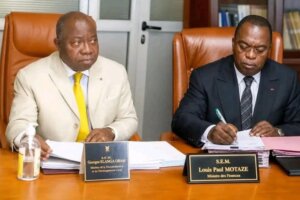
The new reform follows a joint ministerial order signed by Louis Paul Motaze and Georges Elanga Obam. It operationalizes Law No. 2024/020 of 23 December 2024 on local taxation and places the collection of local taxes, duties, and municipal charges under the authority of the Directorate General of Taxation (DGI).
Under the new framework, municipal councils, subdivisional councils, and city councils will no longer have the mandate to assess, issue, or recover local taxes and revenues. Article 13 of the implementing order formally transfers these responsibilities from local authorities and their accounting services to the State tax administration.
Rather than directly collecting revenues, councils will function through newly established Local Taxation Monitoring Units. Their role will now focus on identifying taxable persons and businesses, transmitting taxpayer information to tax authorities, supporting field operations, supervising collection activities, and producing reports on local tax performance.
Government authorities argue that the reform seeks to improve transparency, reduce leakages, increase efficiency in revenue collection, and establish uniform tax administration across the country.
For many years, councils depended largely on internally generated revenues such as market fees, advertising taxes, permits, and other local levies to fund development projects and administrative activities.
While critics argue the implementation of decentralisation is gradually becoming centralisation, others believe it’s a great move as this revenue have often been siphoned by local administrators with no accountability taking municipalities back in time.
Code on Decentralisation: From hope to despair
The National Assembly and the Senate are currently met at a 15-day Extraordinary Session of Parliament at the demand of the President of the Republic, Paul Biya who tabled a Decentralisation Code that provided special status for the North West and South West regions and sped up the de-centralisation process in the other eight regions of Cameroon.
The bill was declared receivable by the Chairmen’s Conferences of both Houses of Parliament last December 13, 2019 before being tabled at a plenary session in the House Chambers.
The bill joyfully received by Members of both Houses of Parliament is said to be one of the most striking victory of the Major National Dialogue of last September 30 to October 4, 2019 at the Yaounde Conference Centre convened by the Head of State to look for lasting solutions to end the socio-political crisis now armed conflict in the North West and South West regions.
The Decentralisation Code among several things conferrred a Special Status for the two Anglophone regions, the restoration of House of Chiefs in the North West and South West regions, the suppres-sion of posts of Government Delegates to city councils, the setting up of a Commission of Inquiry by public-independent mediator, the allocation of a little more money to the North West and South West regions for the purpose of reconstruction as compared to the other regions, the putting in place of a Regional Assembly. Also guaranteed are greater powers in the formulation and management of educational policies for the English sub-system; and more consultative roles in the ‘formulation of justice public policies in the common law subsystem’ Section 328 (2) among other things.
In a chat with The SUN, Hon Joshua Osih of the Social Democratic Front party, SDF noted that the Decentralisation code is a commendable move by government. Being a code, it covers principally on effective decentralisation which is of utmost importance to solving issues plaguing Cameroon’s governance system, though not exactly fitting the federalism hole.
According to the Code, the House of Chiefs as a consultative body with powers to impeach Re-gional Councils will supervise the execution of projects in the North West and South West regions.
A senior State authority rejoiced that the restoration of House of Chiefs in the two Anglophone re-gions is a major victory for the population especially as it was one of the recommendations of the Major National Dialogue.
The Decentralisation Code also stipulates that Anglophone regions will keep their sub systems of education and the judiciary inherited from their former colonial master, the Great Britain.
The Code, was expected usher in a new era of direct governance not only in the North West and South West regions but across the country.
With the new directives, full decentralisation seems a pipe dream.
The post Gov’t strips councils of local taxes collection -Criticisms trail ministers’ decision with many saying it’s a “coup on decentralisation appeared first on THE SUN NEWSPAPER CAMEROON.
]]>The post Biya’s envoy posthumously raises late Hon Cavaye Yeguie Djibril to rank of Grand Cordon of Cameroonian Merits appeared first on THE SUN NEWSPAPER CAMEROON.
]]>The Speaker Emeritus, Hon. Cavaye Yeguie Djibril has been posthumously elevated to the rank of Grand Cordon of the Order of Cameroonian Merits by the President of the Republic, H.E. Paul Biya.
The distinction was conferred during the official funeral held in Mada Kolkoch, Tokombere Subdivision last May 23, 2026 by the Personal Representative of the Republic, Paul Biya, National Assembly House Speaker, Rt. Hon. Théodore Datouo.

Biya’s personal representative, Rt Hon Datouo Theodore posthumously raises late Hon Cavaye Yeguie Djibril to grand Cordon of Cameroonian merits
The ceremony was attended by the Prime Minister and Head of Government, Joseph Dion Ngute, members of the government, as well as representatives of the National Assembly and the Senate. Eulogies celebrated a statesman whose remarkable legislative career spanned over five decades.
Tributes were delivered by the Mayor of Tokombere, Boukar Tikire, the CPDM Central Committee, represented by Deputy Secretary General Grégoire Owona and the National Assembly, represented by Senior Deputy Speaker Hon. Hilarion Etong.
The Prefect of Mayo-Sava Division Ludovic Etienne Ngbwa conveyed President Biya’s heartfelt condolences to the bereaved family, praising Hon. Cavaye’s unwavering loyalty, steadfast support for the CPDM, pivotal role in the construction of the new National Assembly building, and enduring commitment to the promotion of national traditions.
It should be recalled that the Emeritus House Speaker, Hon Cavaye Yeguie Djibril passed away last May 6, 2026 in his native Mada village in Tokombere subdivision in the Far North region after spending 33 years unperturbed stay in Parliament as Speaker. He was also the Permanent Bureau member of the Central Committee of the ruling Cameroon People’s Democratic Movement, the CPDM party.
The post Biya’s envoy posthumously raises late Hon Cavaye Yeguie Djibril to rank of Grand Cordon of Cameroonian Merits appeared first on THE SUN NEWSPAPER CAMEROON.
]]>