By Ndumbe Bell Joseph Gaston in Douala
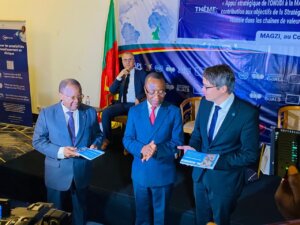
MAGZI plans to add over 9,000 hectares of serviced industrial land by 2035, a 7.5 percent expansion of current capacity. To close Cameroon’s industrial land gap and attract manufacturing. In addition, 1,200 hectares are currently developed across 7 zones from phase to phase through 2035.
Priority locations are focused on the Douala-Bassa extension, Kribi Industrial-Port Complex, Limbe, Bafoussam, Garoua. Priority sectors are agro-processing, construction materials, light manufacturing. In infrastructure each zone is to include roads, power substations, water, wastewater treatment, and fiber. MAGZI will be positioning plots as “plug-and-play” for investors.
The economic stakes are high. On the manufacturing gap industry is less than14percent of GDP. More serviced land removes this. There are barriers cited by investors in MINPMEESA surveys.
MAGZI hopes to create 50-150 jobs per hectare. Full capacity is envisaged toward 450,000 to 1.3million direct jobs depending on tenant mix.
One of the objectives of MAGZI expansion is to prepare for the African Continental Free Trade Agreement (AFCFTA) where Kribi/Douala zones give exporters port access, customs advantages and informal industrial areas.
The challenges to watch are funding, land issues and utilities. 9,000 hectares needs FCFA 135billion to 225billion. MAGZI is banking on state budget, pupils Private Partnerships (PPPs) and developers. Land issues: Past zones stalled on compensation and title disputes. Community engagement will determine speed. ENEO reliability and water supply must improve. Without dedicated power and water, zones will lose edge to Morocco, Togo and Côte d’Ivoire.
SMEs will expect small plots of less than 1 hectare and shared facilities like cold rooms, warehouses, labs to lower entry cost.
Investors tax and customs incentives inside MAGZI zones remain. Land availability is now a priority.