The post SDF Legal Adviser, Barrister Ndangoh calls government to order over harassment of opposition militants appeared first on THE SUN NEWSPAPER CAMEROON.
]]>National Legal Adviser of the Social Democratic Front (SDF), Frontline Politician, Certified and Sworn Forensic Investigator, National Chairman of the National Institute of Certified Forensic Investigation Professionals, and Ntumfon of Mbengwi
Speaking during an exchange with members of the press, I carefully examined the prevailing political and security situation in Cameroon, particularly in the North-West and South-West Regions, against the backdrop of preparations for the forthcoming municipal and parliamentary elections.
As a citizen, legal practitioner, human rights advocate, and National Legal Adviser of the Social Democratic Front (SDF), I deem it necessary to draw the attention of the Cameroonian public, state authorities, and the international community to a disturbing trend that threatens the very foundations of democracy, political pluralism, and the rule of law in our country.
The Constitution of the Republic of Cameroon guarantees every citizen fundamental rights and freedoms, including freedom of association, freedom of expression, freedom of movement, and the right to freely belong to and support a political party of one’s choice. These rights are not privileges granted at the discretion of administrative authorities; they are constitutional guarantees that must be respected and protected at all times.
The Social Democratic Front remains a legally recognized political party committed to democratic governance, peaceful political engagement, social justice, national unity, and the promotion of the rule of law. For more than three decades, the party has played a pivotal role in strengthening democratic culture and advancing political participation in Cameroon.
It is therefore with profound concern that we continue to receive reports of intimidation, harassment, arbitrary arrests, unlawful detention, and false accusations directed against SDF militants, supporters, elected officials, and local leaders. Particularly troubling are allegations that some individuals are being falsely branded as secessionists or associated with armed groups simply because of their membership in, or support for, the Social Democratic Front.
Even more alarming is the fact that many of these incidents appear to target active SDF militants who are engaged in lawful political mobilization and preparation for upcoming elections. Such actions create an atmosphere of fear and uncertainty that discourages legitimate political participation and undermines public confidence in democratic institutions.
The security challenges facing the North-West and South-West Regions are real and require serious attention. However, the ongoing crisis must never be used as a pretext to victimize innocent citizens, suppress opposition voices, or criminalize lawful political activities. Any attempt to exploit the security situation for partisan political purposes constitutes a dangerous assault on democracy and the constitutional order.
Equally concerning is the conduct of certain administrative and security officials who appear to have abandoned the principles of neutrality, professionalism, and impartiality expected of public servants. Rather than facilitating a level political playing field, some officials are accused of using their positions to intimidate, discourage, and suppress legitimate political activities by members of opposition parties, particularly the SDF.
As National Legal Adviser of the SDF and a defender of human rights, I strongly condemn all acts of intimidation, harassment, arbitrary arrest, unlawful detention, and politically motivated persecution directed against SDF militants, opposition supporters, and political leaders anywhere in Cameroon.
I categorically reject attempts to deliberately associate SDF militants with armed groups or secessionist activities solely on the basis of their political affiliation. Such accusations are not only reckless and irresponsible but also dangerous, as they expose innocent citizens to unlawful persecution and violate the presumption of innocence guaranteed under the law.
I call on all administrative authorities, law enforcement officers, and security personnel to immediately desist from the profiling, victimization, and persecution of SDF militants under the guise of maintaining public order and security. The enforcement of security measures must always be guided by evidence, legality, and respect for human rights.
Furthermore, I demand strict respect for the constitutional rights and freedoms of all Cameroonians, including the right to freely support, campaign for, and participate in the activities of a political party without fear of intimidation, harassment, or reprisals.
The Government must ensure that all administrative and security authorities conduct themselves professionally, impartially, and within the confines of the law. Any abuse of power or violation of citizens’ rights must be thoroughly investigated and appropriate sanctions imposed on those found responsible.
I also call for the immediate release of any person who may have been arbitrarily arrested or detained solely because of their political affiliation or peaceful political activities.
The continued harassment of opposition militants poses a serious threat to the credibility of the forthcoming municipal and parliamentary elections. Elections can only be considered free, fair, transparent, and inclusive when all political actors are allowed to participate freely without fear of persecution or discrimination.
The Social Democratic Front remains unwavering in its commitment to peaceful democratic participation, national unity, constructive dialogue, justice, and the defense of fundamental human rights and freedoms. No amount of intimidation, false accusations, or political persecution will force the party or its militants to abandon their constitutional rights or democratic responsibilities.
I encourage all SDF militants and supporters across the country to remain calm, law-abiding, peaceful, and steadfast in their commitment to the ideals and values of the party. Our response to provocation must always be guided by respect for the law, democratic principles, and the pursuit of justice.
Finally, I call upon national and international democratic institutions, civil society organizations, human rights defenders, religious leaders, and all lovers of democracy to closely monitor developments in Cameroon and support efforts aimed at safeguarding political freedoms, democratic participation, and respect for human rights.
The future of our democracy depends on our collective commitment to justice, fairness, political tolerance, and the rule of law. Cameroon deserves a political environment where citizens can freely express their views, support political parties of their choice, and participate fully in the democratic life of the nation without fear.
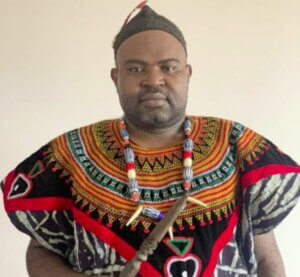
National Legal Adviser, Social Democratic Front (SDF)
Frontline Politician
Certified and Sworn Forensic Investigator
National Chairman, National Institute of Certified Forensic Investigation Professionals
Ntumfon of Mbengwi
The post SDF Legal Adviser, Barrister Ndangoh calls government to order over harassment of opposition militants appeared first on THE SUN NEWSPAPER CAMEROON.
]]>The post Is it Legal for Civil Servants to engage in Commercial Activities? appeared first on THE SUN NEWSPAPER CAMEROON.
]]>The assistance created by the digital age to merchants or traders cannot be overemphasized, as it has introduced online platforms like Facebook, WhatsApp, LinkedIn, and TikTok, which are acting as accessible trading platforms for business persons to advertise their products or services through attractive short videos of their products or services. Alternatives are short, captivating messages and pictures of their products or their services rendered.
As a result of the easy access to clients through these platforms, many graduates have been able to make a living. Some utilise it as a starting point after saving money they get from advertisements or referrals; they open their own shops or companies. Due to the absence of limited jobs and difficult access to both private and public institutions, most graduates have used this business method as their only means to cater for themselves and their families.
It is rather unfortunate to apprise you that this means of survival is now threatened or reduced by government employees called civil servants. This is because many civil servants are now online vendors who keep advertising products like perfumes, bags, clothes, packaged water-fufu, and the rest on their Facebook pages and WhatsApp statuses. They even use their positions or offices to influence buyers to buy from them and get preferences or favours from their government-paid services. This issue has ignited sporadic complaints from young business persons who see it as an unnecessary competition and question if civil servants are allowed to do business or if it’s legally acceptable for civil servants to be merchants. In order to attempt a response to this, we will look at who is a civil servant, the position of the law with regard to merchandise carried by civil servants, and the effects of their involvement in trading or commercial activities.
To begin, a civil servant is a person recruited by the government to serve permanently in government ministries and departments. Business, trading, or commercial activity on the other hand, entails the buying and selling of products or services. Now that we have grasped the definitions of these basic terms, it is apposite to delve into the law governing civil servants engaging in commerce.
Position of the Law Concerning Civil Servants and Commerce.
Civil servants in Cameroon are primarily governed by decree No. 94/199 of October 7, 1994, baptised as the general rules and regulations of the public service or commonly known as the public service law. This decree defines their status, recruitment training, career management, and discipline. It establishes a statutory relationship between the state and its permanent employees, prioritising meritocracy, integrity, and hierarchy. The most attractive position of this decree, which relates to our concern, is section 37, which stipulates
“It is forbidden for any civil servant governed by their statute to have in a company or sector subject to their direct control or related to it to engage on a personal basis in a lucrative private activity, except by special exemption by a text. This prohibition does not apply to rural production, the production of scientific, literary, or artistic work, or to teaching given on a supplementary or part-time basis.”
The decree adds that
“When the spouse engages in a lucrative private professional activity, the civil servant must declare it to the relevant minister. The administration will take appropriate measures to safeguard the interest of the service.”This section can be stratified into (A) Prohibitions, (B) Permitted activities, and (C) Punishment.(A) ProhibitionCivil servants are prohibited from performing the following:
— Commercial Activity
Civil servants cannot engage in commerce or retail sales.
— Active Management
Civil servants are forbidden from being directors or managers of private companies.
— Construction or Public Works
Direct involvement in construction and public works is prohibited.
— Conflict of Interest
Engaging in activities that directly compete with or relate to their official duties is illegal.
(B) Permitted Activities
— Agriculture:
Civil servants are allowed to engage in agricultural activities.
— Passive Investment:
Owning shares in private companies is allowed.
— Scientific/Artistic Work:
Producing scientific, literary, or artistic works is allowed.
— Teaching:
Teaching on a part-time or supplementary basis is allowed.
(C)Punishment
Engagement in prohibited business activities can lead to disciplinary actions, as officials must demonstrate their wealth which aligns with their income.
Now that we know the do’s and don’ts of civil servants. Let’s look at the effects of civil servants’ engagement in commercial activity on society.
Effects of Civil Servants’ Participation in Commercial Activities
— It increases unemployment.
When civil servants engage in business or commercial activities, they increase unemployment because many people, especially the youths who could not be integrated into the public service, use commercial activities as their means of employment. When civil servants engage in the same activities, they use their salaries as capital to sell at cheaper prices. Now young graduates who have been managing the small capital given to them by their parents face difficulty in competing with these civil servants with giant capital. As a consequence, they will desist from commercial activities, thereby going back to their unemployment status, because there’s no need to buy to sell without profit. It’s a vastum of time.
Secondly, some civil servants who engage in commercial activities use their government jobs or positions to influence or threaten buyers to buy from them. Let’s look at the following examples.
Example 1
A government secondary school teacher who sells yaghouts and puff directly or indirectly influences the students to buy from her because if they don’t, she may be cruel or harsh to them during classes. The majority of the students will be coerced to buy from her because of either fear of unfavourable treatment that may accrue from not buying from her or to attract some examination favours that may come from her after purchase.
Example 2
A lady who sells items like perfumes in her office at a government ministry influences you directly or indirectly to buy from her. Imagine a scenario where you drop a document on her table to forward to her boss. Upon leaving, she advertises her different products and tells you that you will be kind to her if you purchase any of the items she sells. That’s an indirect influence or facade to buy because she will trade her service to forward your document in exchange for your kindness in purchasing her products, and if you don’t buy, you are afraid that the document might not be forwarded.
At the end of the day it is that poor woman or young person doing the same business that will suffer because someone with a government salary is using their position as leverage in a sector that forbids such activities to be performed by their personnel.
— It slows down government services.
Another effect is that it slows down government services as these categories of civil servants make more money from commercial activities as compared to their salaries. You find them leaving their offices before break to go and deliver products they sell online or to go and buy from a seller who has brought in new goods at cheaper prices. Some of them intentionally absent from work just to travel and go for delivery in another town. The consequence is felt by those who need their government services. You will be forced to wait for them or come back another day. This brings unnecessary delays in public offices.
— Unfairness
Once a civil servant engages in commercial activities, he or she is bound to be fair to customers and unfair to non-customers who know about their business but choose not to buy from them.
E.g.
A particular man who always patronises the business of a particular magistrate can’t be sent to prison by the same magistrate even after committing a grievous crime, because sending him to prison will mean crumbling his business, which is paying him more than his salary.
I can go on an on, but permit ask you again, Are Civil Servants allowed to do business?
The views expressed in this article are the author’s own and do not necessarily The SUN’s editorial stance.
The post Is it Legal for Civil Servants to engage in Commercial Activities? appeared first on THE SUN NEWSPAPER CAMEROON.
]]>The post May 20: Beyond celebration, the need for genuine national unity and youth empowerment appeared first on THE SUN NEWSPAPER CAMEROON.
]]>
Concerned Citizen
Indeed, the celebration of the National Day continues to remind citizens that despite their differences in culture, language, religion and background, they still belong to one nation with a shared destiny. Beyond the various opinions and interpretations that surround the day, one thing remains undeniable; it is a memorable national day in the history of Cameroon. Cameroon, often described as “Africa in miniature,” possesses enormous cultural and human diversity. From one region to another, different traditions, languages and customs contribute to the beauty and richness of the nation. The National Day therefore symbolizes not only political unity, but also the collective hope for peaceful coexistence and national progress.Just as the body depends on all its parts working together, a nation also depends on the unity of its diverse cultures and languages, which together drive progress and development.
However, beyond the songs, uniforms, speeches and festivities, the 20th of May also presents an important opportunity for reflection. It invites citizens to think deeply about the present condition of the nation and the future they sincerely hope to build together. True national unity should not exist only during ceremonial celebrations. It should be reflected in everyday life through justice, equal opportunity, solidarity and mutual respect among citizens.
According to one University don, Prof. Nixon Kahjum Takor, National Day celebrations are often state-inspired and publicly organized events aimed at promoting collective memory and national consciousness. In his article, Commémorative National Days in Post-Independence Cameroon: Checkered Social Responses in Collective Memory Construction p 2, he explains that such commemorations encourage citizens to revisit the past and relive it in collective imagination. However, within this reflection emerges a sympathetic concern raised by many young people: what kind of past should they proudly remember when many continue to struggle with unemployment, economic hardship and uncertainty about the future? For numerous youths, genuine attachment to national celebrations becomes stronger when they can equally experience hope, opportunity and inclusion in present-day national life.
One of the greatest concerns facing the nation today is the situation of the youth. Cameroon is blessed with energetic, intelligent and talented young people. Across towns and villages, many youths struggle daily with the hope of building meaningful lives for themselves while contributing positively to society. They pursue education with dreams of serving their country, supporting their families and improving their communities. Unfortunately, many continue to face unemployment and difficult living conditions after graduation. As years pass, some gradually become discouraged, not because they lack love for their country, but because opportunities often seem limited or distant. This partly explains why many young people increasingly seek opportunities abroad in search of better living conditions.
It is therefore necessary that authorities and all those entrusted with leadership should continue making greater efforts toward youth empowerment and job creation. Employment does not only improve individual lives; it strengthens peace, social stability, patriotism and confidence in national institutions. When young people are productively engaged through meaningful opportunities, they naturally develop stronger attachment to their country and greater belief in the future of the nation.
A National Day celebration becomes even more meaningful when citizens can genuinely feel the benefits of belonging to the nation. Youths empowered through quality education, entrepreneurship, employment opportunities and social inclusion are more likely to participate actively in national development. They celebrate national unity with greater hope because they can envision a future for themselves within the country.
Equally important is the need for fairness, inclusion and balanced representation in national life. Cameroon was built on the coming together of both the English-speaking and French-speaking communities and many citizens continue to hope for a society where every group feels adequately represented, respected and valued. The spirit of national unity can grow stronger when there is visible balance and equal opportunity in important sectors such as administration, education, public services, energy, infrastructure and the military. When citizens see themselves fairly represented within national institutions, they develop a deeper sense of belonging and trust in the nation.
Such balance is not beneficial to only one group or region; it strengthens the entire country. It reassures citizens that national unity is not merely spoken about during annual celebrations, but is also reflected in practical realities. A nation where every citizen feels included is more likely to enjoy peace, loyalty, cooperation and sustainable development. In this way, the celebration of the 20th of May can continue gaining deeper meaning and stronger support from all Cameroonians.
The beauty of Cameroon lies not only in its diversity but also in the resilience, determination and aspirations of its people. From the northern regions to the southern forests, from the western grassfields to the coastal towns, many citizens continue to dream of a nation where peace prevails, where hard work is rewarded, and where every young person has the opportunity to live with dignity. Such aspirations are not demands born out of hostility or disrespect, but heartfelt hopes for a better and more united society.
As another 20th of May approaches, it is worth hoping that the ideals behind the National Day will continue gaining deeper meaning in the daily lives of ordinary citizens. Beyond the ceremonial activities, many silently wish for a Cameroon where unity is strengthened through concrete actions, where justice and inclusion prevail, where youths are given greater opportunities to thrive and where national celebrations become symbols not only of patriotism, but also of shared progress and collective wellbeing.
On the whole, the National Day remains a powerful reminder that the future of Cameroon depends largely on unity, inclusion, peace, and sincere commitment to the welfare of its people. By investing more in the youth, promoting fairness, encouraging balanced representation and creating opportunities for all citizens, the spirit of the 20th of May can continue growing stronger in the hearts of Cameroonians. Through such efforts, the celebration of national unity will not merely remain a yearly event, but a living reality capable of inspiring hope, stability and progress for generations to come.
The post May 20: Beyond celebration, the need for genuine national unity and youth empowerment appeared first on THE SUN NEWSPAPER CAMEROON.
]]>The post The Epiphany of Pope Leo XIV: A Conscience for Cameroon appeared first on THE SUN NEWSPAPER CAMEROON.
]]>Traditionally, the Feast of the Epiphany celebrates the manifestation of Christ to the Gentiles – a moment when the Divine breaks through national and ethnic borders to claim the whole of humanity. In April 2026, Cameroon experienced a contemporary epiphany. For four grace-filled days, the visit of Pope Leo XIV became far more than a papal journey; it was a revelation—of the Gospel, of the Church’s prophetic mission, and of the enduring relevance of the Petrine ministry in the twenty-first century. In a nation often described as “Africa in miniature,” the Holy Father recognized diversity not as a weakness, but as “a treasure… a promise of fraternity and a solid foundation for building lasting peace.”

A shepherd with the heart of a restless Saint
As the first Augustinian to ascend the Chair of Saint Peter, Pope Leo XIV brought to Cameroon the soul of Saint Augustine: intellectually rigorous, pastorally compassionate, and spiritually restless for truth. His third international journey (April 13–23, 2026) spanning four African countries (Algeria, Cameroon, Angola and Equatorial Guinea) was not merely a diplomatic itinerary; it was a pastoral pilgrimage. He came, in his own words, as “a pastor and servant of dialogue, fraternity, and peace.” In him, one encountered a pontiff deeply convinced that the Gospel must not remain confined to sanctuaries, but must enter the streets, the marketplaces, the institutions of power, and the hidden wounds of society.
The “Technical Fault” and the Moral Mirror
The tone of the visit was set almost immediately on April 15 at the Unity Palace in Yaoundé. Standing before President Paul Biya, members of government, diplomats, and the nation’s political elite, Pope Leo XIV delivered an address of remarkable moral clarity—so incisive that its live transmission was famously interrupted by a mysterious “technical fault.” Yet the interruption only amplified the force of his message.
He reminded the nation that peace is not political rhetoric but a demanding vocation: “Peace cannot be reduced to a slogan: it must be embodied in a personal and institutional style that rejects all forms of violence.” He went further still, insisting that authentic peace can flourish only where justice reigns: “Genuine peace is born when everyone feels protected, heard, and respected, when the law is a sure bulwark against the arbitrary power of the wealthiest and strongest.”
Drawing from Saint Augustine, he offered a timeless definition of public office: “Those who command are at the service of those whom they appear to command.” In a single sentence, he dismantled every false notion of authority rooted in domination, privilege, or self-preservation. Leadership, he reminded Cameroon’s rulers, is not possession; it is stewardship.
The Prophet in the Northwest: Bamenda
On April 16, in Bamenda – the epicenter of nearly a decade of suffering in Cameroon’s Anglophone regions – the Pope shed all diplomatic reserve and spoke with the unmistakable cadence of the biblical prophets. Here, amid a people scarred by violence, displacement, and uncertainty, he gave voice to the voiceless.
He exposed the moral inversion at the heart of modern conflict: “A disarmed peace, and a disarming peace” – one not founded on fear, threats, or weapons, but on love, justice, trust, empathy, and hope. His was no naïve idealism. It was a radical realism rooted in the Gospel. “The world thirsts for peace,” he declared, adding with unmistakable urgency: “Enough of wars, with their painful toll of death, destruction, and exile.”
Behind every statistic, he insisted, there are human faces: shattered families, children denied education, and young people robbed of hope. His words transformed abstract policy into moral encounter.
Breaking the chains of corruption in Douala
In Douala, the economic heartbeat of Cameroon, Pope Leo XIV turned his attention to one of the nation’s deepest wounds: corruption. Addressing both public officials and ordinary citizens, he identified corruption not simply as an administrative failure, but as a spiritual pathology.
His words were unsparing: “It is necessary to break the chains of corruption that disfigure authority by emptying it of its credibility.” Corruption, he warned, is ultimately idolatry—an enslavement of the heart to greed and power. “It is necessary to free the heart from this thirst for gain which is idolatry.”
Against the false gospel of private accumulation, he proposed a richer vision of prosperity: “The real gain is integral human development.” True wealth, in the Christian understanding, is measured not by private hoarding, but by the flourishing of the whole person and of every person.
The builders of peace: women and civil society
Among the most moving passages of his visit was his tribute to women. In a society where women are too often the first victims of violence, exclusion, and prejudice, the Pope recognized them as indispensable agents of renewal. He called them “tireless builders of peace.”
Their role in education, mediation, healing, and rebuilding the social fabric, he noted, is unparalleled. Their witness serves not only as a force for reconciliation but also as a powerful antidote to corruption and abuse. For this reason, he insisted, their voices must be fully heard and genuinely included in decision-making processes.
He extended similar praise to civil society – associations, youth movements, humanitarian organizations, traditional authorities, and religious leaders – calling them a vital force for national cohesion and a necessary partner in the work of reconciliation.
The hope of the nation: Youth
Pope Leo XIV repeatedly returned to the promise embodied in Cameroon’s young people. He described them as “the hope of the country and the Church.” Their energy, creativity, resilience, and profound spirituality, he said, are among the nation’s greatest treasures.
Yet he also spoke candidly about the dangers they face: unemployment, exclusion, drugs, prostitution, and the painful hemorrhage of talent through migration. Investing in youth, therefore, is not optional. It is, as he made clear, a strategic and moral imperative. Education, vocational formation, and entrepreneurship are not merely development goals; they are pathways to peace.
The six axes of the Augustinian papacy
Pope Leo XIV’s message in Cameroon may be distilled into six interlocking pillars: Dialogue, Peace, Good Governance, the Common Good, Youth Empowerment, and the Promotion of Women. These are not political slogans, but moral imperatives rooted in Catholic social teaching.
He challenged the nation to replace resignation with responsibility, fear with trust, exclusion with participation, and corruption with integrity. His vision was profoundly Augustinian: a society ordered by justice, animated by charity, and directed toward the flourishing of all.
Conclusion: The light that exposes and heals
If the visits of Saint John Paul II planted seeds of hope, and those of Benedict XVI deepened the theological maturity of the African Church, then the 2026 visit of Pope Leo XIV will be remembered as the moment when the Church held up a moral mirror to the Cameroonian nation.
In his final Eucharistic celebration, he reminded the faithful that “faith does not separate the spiritual from the social.” Rather, authentic faith empowers believers to engage the world, defend the dignity of the vulnerable, and work tirelessly for justice.
Pope Leo XIV has revealed himself as a pastor unafraid to enter the complexities of history – a shepherd willing to risk misunderstanding in order to proclaim truth. His visit to Cameroon was not merely ceremonial. It was prophetic. It was not merely diplomatic. It was evangelical. And it was not merely memorable. It was a summons – a divine call to conscience, accountability, reconciliation, and hope.
May the light of this modern epiphany continue to shine in Cameroon’s public life, illuminating its institutions, healing its wounds, and guiding its people toward a future founded on justice, peace, and the common good.
The post The Epiphany of Pope Leo XIV: A Conscience for Cameroon appeared first on THE SUN NEWSPAPER CAMEROON.
]]>The post Lessons from the war: A call for strategic reckoning in West Asia appeared first on THE SUN NEWSPAPER CAMEROON.
]]>By Javad Zarif
In its recent statement, the Cooperation Council declared that “Iranian attacks have also led to a sharp loss of confidence by the Council states in Iran, which requires Iran to take the initiative to make serious efforts to rebuild trust”. While rebuilding trust in our region is a lofty and essential objective, and while Iran has always taken the initiative in this regard, it is imperative for all sides to recognise their share in the current regrettable state of affairs.
The unprovoked aggression against Iran was the product of blatant miscalculations and mistakes. It was predicated on the illusion that Iran had been weakened and thus incapable of resisting and responding forcefully to a massive onslaught by two nuclear powers, aided and abetted by regional actors. Policymakers in Washington and Tel Aviv and in some regional capitals convinced themselves that a swift campaign of economic pressure, sabotage, covert operation, decapitation and indiscriminate war crimes could break the Islamic Republic and leave it with little opportunity to respond. They were wrong. Iran’s response, measured yet resolute, demonstrated not only its military resilience but also its capacity to react on a scale that reverberated far beyond the region.

Our Arab neighbours in the GCC had their grave share in these miscalculations – and Iran may have played a role in misleading them. For five decades, they consistently stood on the wrong side of history – supporting Saddam Hussein’s aggression and even assisting Israel to intercept Iranian missiles launched in self-defence following Israel’s murder of an Arab leader in Iran. Some of them actively encouraged the United States to take military action against Iran, even asking the latter to add Iranian naval forces to its list of targets. In return, they allowed the United States to establish military bases within their territories to launch and logistically support many of its acts of aggression and war crimes against Iran. They even publicly sided with the United States as it committed war crimes against Iran, reminding Iranians of the sad days when these Muslim brothers and sisters sided with Saddam Hussein as he used chemical weapons against Iranian and Iraqi Kurdish civilians. Extensive human and financial damages were inflicted upon the people of Iran through these illegal attacks, which were deliberately launched and sustained from the sovereign territories of our Arab neighbours. Even as it became unmistakably clear that the United States was preparing to commit systematic war crimes against Iran’s civilian population — including strikes on populated areas and critical infrastructure — they indeed proved unwilling to prohibit or even restrict the use of their land, airspace and military facilities for such war crimes against their Muslim brothers and sisters in Iran.
Some of our Arab neighbours in the GCC mistakenly hoped that Iran would either be incapacitated and unable to respond, or would continue to turn a blind eye to their complicity in an aggression that explicitly targeted its territorial integrity and even its very existence. That illusion proved tragically wishful, and Iran had no other choice but to reluctantly respond – still in a calibrated and restrained fashion – to the attacks launched or logistically supported from the territories of Council states.
To move forward, it is therefore imperative for our neighbours to disabuse themselves of such distorted perceptions of the past and their misplaced proclamations of victimhood. A transitional moment now confronts our region. The conflict has exposed the fragility of imported security architectures and the enduring strength of Indigenous power and regional security networking. Rather than doubling down on yesterday’s alliances, our brothers and sisters in the region will be well-advised to pause and reassess. The right lessons from this episode point towards a future grounded in self-reliance, regional agency and an inclusive security network.

First, Iran and its Arab neighbours are here to stay. Iran has weathered sanctions, foreign-sponsored terrorism, hybrid warfare and even decapitation for nearly five decades. Its population, though diverse, has repeatedly shown it will rally around the flag when faced with foreign intervention. Tehran possesses the means to counter existential threats, and its geography grants it leverage that can impose devastating consequences on global markets if pushed too far. Iran’s exercise of restraint for far too long created the misimpression that the Strait of Hormuz could be open to all while Iran was essentially deprived of it due to illegal and immoral US sanctions – from which our neighbours immensely benefit – building their fortunes on the unlawful miseries imposed on their Iranian brethren.
More importantly, Iran’s power is not imported or artificial; it is home-grown, rooted in unchangeable variables: a millennial history of an enduring and continuous civilisation-state, a rich and cohesive culture, a youthful and educated population and an instinct for survival sharpened by centuries of resisting external domination. No amount of foreign pressure can alter these foundations. Those neighbours who continue to bet against this reality can only blame themselves for ignoring geography, history and demography.
Second, the “security-and-development model” pursued by several Arab states has proven deeply flawed. For years, the formula was simple: purchase security by spending lavishly on procuring the most sophisticated US weapons systems and hosting US military bases – and even Israeli intelligence and terrorism centres – and invite foreign investment under the umbrella of that imported security. The model delivered neither genuine security nor the perception of stability required for sustainable economic growth.
The perception that some Arab capitals sided with the United States and Israel against a fellow Muslim country earned them infamy across the Islamic world. That reputational damage was later compounded by the US president’s crude and condescending rhetoric directed at them. Now, reports that Washington is contemplating forcing our neighbours to foot the bill for a war launched at their expense and on Israel’s behalf only confirm the cynicism at the heart of the arrangement. The greatest mistake would be to double down on this failed model once the guns fall silent. Continuing to tie national security and economic futures to external patrons who use their bases as a staging ground for aggression against neighbours and treat them as obedient clients is a recipe for perpetual dependence and recurring humiliation.
Third, the war has produced political and legal realities that our neighbours need to recognise. The presence of American bases – from which aggression to “annihilate Iranian civilisation” was launched and logistically supported – cannot be considered as an innocent and neutral security partnership, but as an existential threat to Iran – as it has been proven over the course of the past two wars and even in previous hostilities against Iran. These bases have been erected here not to protect their hosts but to harm Iran even at the expense of their hosts. Arab states that continue to host such installations are actively participating in the militarisation of the region, including the Strait of Hormuz, a chokepoint vital to their own economies.
Fourth, Israel’s deepening presence in the region has only brought conflict and will bring nothing but insecurity and the erosion of state independence. Israel does not merely occupy land; it penetrates political systems through sophisticated networks of lobbies and pressure groups. It hollows out sovereignty from within, turning national decision-making into an extension of its own interests. To understand the pattern, one needs only examine how AIPAC has captured key levers of power in Washington, or how similar organisations have replicated the model across European capitals. Just pay attention to the disgust in the United States about how Israel – which has never taken one single step to help its American benefactors – has imposed its whims at the expense of American blood and treasure. Arab states that have rushed to normalise ties with Tel Aviv – or want to replicate its behaviour – have traded long-term autonomy for short-term optics. The people of our region deserve better than to watch their governments’ foreign policies increasingly dictated from afar. A regime that is actively blackmailing its patron, including through the Epstein files, cannot be expected to treat any better those who want to outsource their security to its defunct iron dome.
Fifth, and most constructively, Iran’s past initiatives – such as the Hormuz Peace Endeavour (HOPE), the Muslim West Asian Dialogue Association (MWADA) or the Middle East Network for Atomic Research and Advancement (MENARA) – have demonstrated a genuine desire to reach out to neighbours in order to establish inclusive regional cooperation networks. Ignoring or even dismissing these overtures under the illusion that Washington would provide ironclad security has been a historic error. The path forward lies in revising past mistakes and embracing a genuinely local security networking regime rooted in shared interests.
West Asia is blessed with immense wealth, energy resources, ancient cultures, a common religion and centuries of intertwined histories. These assets should be capitalised upon to forge a new regional network capable of addressing common challenges – from water scarcity and climate change to economic diversification and technological advancement – without external tutelage. A security network architecture built by the region, and for the region, is no longer a utopian slogan; it is a strategic necessity.
The war has ended the era of comfortable illusions. It is evident that security cannot be purchased or outsourced. Nor can security be attained at the expense of the insecurity and threats against Iran. With this war, realities cannot be ignored, nor can Iran’s grievances be swept under the rug. Foreigners are only here to take advantage and will leave as soon as the costs outweigh the benefits. But we are destined to live together until the Day of Judgement. Iran has shown it cannot be subdued by the war machines of the biggest evil powers, but is eager to live in peace with its Muslim brothers and sisters in the region. The real question is whether the rest of West Asia will have the wisdom to adapt to that enduring truth. Let us all seize this moment to build a future defined by respect, dignity, and mutual security and prosperity.
The views expressed in this article are the author’s own and do not necessarily reflect The SUN’s editorial stance.

Professor of Global Studies at University of Tehran. Former Vice President and Foreign Minister of Iran and the co-architect of Iran nuclear deal.
The post Lessons from the war: A call for strategic reckoning in West Asia appeared first on THE SUN NEWSPAPER CAMEROON.
]]>The post The Epiphany of Pope Leo XIV: A conscience for Cameroon appeared first on THE SUN NEWSPAPER CAMEROON.
]]>Traditionally, the Feast of the Epiphany celebrates the manifestation of Christ to the Gentiles—a moment when the Divine breaks through national and ethnic borders to claim the whole of humanity. In April 2026, Cameroon experienced a contemporary epiphany. For four grace-filled days, the visit of Pope Leo XIV became far more than a papal journey; it was a revelation—of the Gospel, of the Church’s prophetic mission, and of the enduring relevance of the Petrine ministry in the twenty-first century. In a nation often described as “Africa in miniature,” the Holy Father recognized diversity not as a weakness, but as “a treasure… a promise of fraternity and a solid foundation for building lasting peace.”
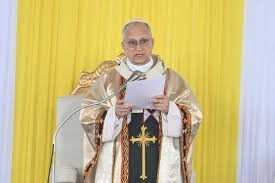
A Shepherd with the Heart of a Restless Saint
As the first Augustinian to ascend the Chair of Saint Peter, Pope Leo XIV brought to Cameroon the soul of Saint Augustine: intellectually rigorous, pastorally compassionate, and spiritually restless for truth. His third international journey (April 13–23, 2026) spanning four African countries (Algeria, Cameroon, Angola and Equatorial Guinea) was not merely a diplomatic itinerary; it was a pastoral pilgrimage. He came, in his own words, as “a pastor and servant of dialogue, fraternity, and peace.” In him, one encountered a pontiff deeply convinced that the Gospel must not remain confined to sanctuaries, but must enter the streets, the marketplaces, the institutions of power, and the hidden wounds of society.
The “Technical Fault” and the Moral Mirror
The tone of the visit was set almost immediately on April 15 at the Unity Palace in Yaoundé. Standing before President Paul Biya, members of government, diplomats, and the nation’s political elite, Pope Leo XIV delivered an address of remarkable moral clarity—so incisive that its live transmission was famously interrupted by a mysterious “technical fault.” Yet the interruption only amplified the force of his message.
He reminded the nation that peace is not political rhetoric but a demanding vocation: “Peace cannot be reduced to a slogan: it must be embodied in a personal and institutional style that rejects all forms of violence.” He went further still, insisting that authentic peace can flourish only where justice reigns: “Genuine peace is born when everyone feels protected, heard, and respected, when the law is a sure bulwark against the arbitrary power of the wealthiest and strongest.”
Drawing from Saint Augustine, he offered a timeless definition of public office: “Those who command are at the service of those whom they appear to command.” In a single sentence, he dismantled every false notion of authority rooted in domination, privilege, or self-preservation. Leadership, he reminded Cameroon’s rulers, is not possession; it is stewardship.
The Prophet in the Northwest: Bamenda
On April 16, in Bamenda—the epicenter of nearly a decade of suffering in Cameroon’s Anglophone regions—the Pope shed all diplomatic reserve and spoke with the unmistakable cadence of the biblical prophets. Here, amid a people scarred by violence, displacement, and uncertainty, he gave voice to the voiceless.
He exposed the moral inversion at the heart of modern conflict: “A disarmed peace, and a disarming peace”—one not founded on fear, threats, or weapons, but on love, justice, trust, empathy, and hope. His was no naïve idealism. It was a radical realism rooted in the Gospel. “The world thirsts for peace,” he declared, adding with unmistakable urgency: “Enough of wars, with their painful toll of death, destruction, and exile.”
Behind every statistic, he insisted, there are human faces: shattered families, children denied education, and young people robbed of hope. His words transformed abstract policy into moral encounter.
Breaking the chains of corruption in Douala
In Douala, the economic heartbeat of Cameroon, Pope Leo XIV turned his attention to one of the nation’s deepest wounds: corruption. Addressing both public officials and ordinary citizens, he identified corruption not simply as an administrative failure, but as a spiritual pathology.
His words were unsparing: “It is necessary to break the chains of corruption that disfigure authority by emptying it of its credibility.” Corruption, he warned, is ultimately idolatry—an enslavement of the heart to greed and power. “It is necessary to free the heart from this thirst for gain which is idolatry.”
Against the false gospel of private accumulation, he proposed a richer vision of prosperity: “The real gain is integral human development.” True wealth, in the Christian understanding, is measured not by private hoarding, but by the flourishing of the whole person and of every person.
The builders of peace: Women and civil society
Among the most moving passages of his visit was his tribute to women. In a society where women are too often the first victims of violence, exclusion, and prejudice, the Pope recognized them as indispensable agents of renewal. He called them “tireless builders of peace.”
Their role in education, mediation, healing, and rebuilding the social fabric, he noted, is unparalleled. Their witness serves not only as a force for reconciliation but also as a powerful antidote to corruption and abuse. For this reason, he insisted, their voices must be fully heard and genuinely included in decision-making processes.
He extended similar praise to civil society—associations, youth movements, humanitarian organizations, traditional authorities, and religious leaders—calling them a vital force for national cohesion and a necessary partner in the work of reconciliation.
The Hope of the Nation: Youth
Pope Leo XIV repeatedly returned to the promise embodied in Cameroon’s young people. He described them as “the hope of the country and the Church.” Their energy, creativity, resilience, and profound spirituality, he said, are among the nation’s greatest treasures.
Yet he also spoke candidly about the dangers they face: unemployment, exclusion, drugs, prostitution, and the painful hemorrhage of talent through migration. Investing in youth, therefore, is not optional. It is, as he made clear, a strategic and moral imperative. Education, vocational formation, and entrepreneurship are not merely development goals; they are pathways to peace.
The six axes of the Augustinian papacy
Pope Leo XIV’s message in Cameroon may be distilled into six interlocking pillars: Dialogue, Peace, Good Governance, the Common Good, Youth Empowerment, and the Promotion of Women. These are not political slogans, but moral imperatives rooted in Catholic social teaching.
He challenged the nation to replace resignation with responsibility, fear with trust, exclusion with participation, and corruption with integrity. His vision was profoundly Augustinian: a society ordered by justice, animated by charity, and directed toward the flourishing of all.
Conclusion: The light that exposes and heals
If the visits of Saint John Paul II planted seeds of hope, and those of Benedict XVI deepened the theological maturity of the African Church, then the 2026 visit of Pope Leo XIV will be remembered as the moment when the Church held up a moral mirror to the Cameroonian nation.
In his final Eucharistic celebration, he reminded the faithful that “faith does not separate the spiritual from the social.” Rather, authentic faith empowers believers to engage the world, defend the dignity of the vulnerable, and work tirelessly for justice.
Pope Leo XIV has revealed himself as a pastor unafraid to enter the complexities of history—a shepherd willing to risk misunderstanding in order to proclaim truth. His visit to Cameroon was not merely ceremonial. It was prophetic. It was not merely diplomatic. It was evangelical. And it was not merely memorable. It was a summons—a divine call to conscience, accountability, reconciliation, and hope.
May the light of this modern epiphany continue to shine in Cameroon’s public life, illuminating its institutions, healing its wounds, and guiding its people toward a future founded on justice, peace, and the common good.
The post The Epiphany of Pope Leo XIV: A conscience for Cameroon appeared first on THE SUN NEWSPAPER CAMEROON.
]]>The post When Constitutional reform Crucifies Democracy appeared first on THE SUN NEWSPAPER CAMEROON.
]]>The notion of crucifixion is embedded in President Paul Biya’s timing of the legislative coup d’etat- for it is exactly what the content of the bill to introduce the post of vice president that came up for deliberation by the congress of the National Assembly and Senate last Thursday, generally commemorated in Christendom as Holy Thursday, represents. On this day, Judas Iscariot betrayed Jesus, just like president Biya is betraying Cameroon’s democracy. Whether the choice of this special day in Christendom is deliberate or a mere coincidence remains a matter that only the head of state and his coterie of buccaneers are rightly positioned to respond. Nevertheless, whatever must have instigated this brazen incursion into the amputation of a constitutionally grounded right of Cameroonians to participate in governing their country amounts to a monumental betrayal that can only find justification in the warped minds and jaundiced thinking of its purveyors. By Easter Sunday, the template for the perpetuation of a system of governance that seeks to enthrone illegitimacy and exclusivism would have been packaged, sealed and ready for deliverance to the ‘emperor’, Paul Biya, to put the final nail on its coffin before burial.
To all intents and purposes, the content of the proposed constitutional reform evokes the spirit of an unflattering determination to maintain a moribund system of governance formatted more than 60 years ago, and which therefore cannot be foisted on citizens of jet age, piloted by cutting-edge technology. This bill is evidently characterized by disregard for opinions and ideas different from the president’s obsession with power. Otherwise, how can the promoter justify his inclination towards an appointed vice president? As if such an appointment would not be enough derogation of the need for inclusiveness in governance, that is governance that carries the electorate that surrendered its sovereign will to the president along, the bill further arrogates the right to dismiss an incumbent to the president. In fact, it is a surreptitious entrenchment of governance by ambush. This is understandable because President Biya, himself was not elected. His predecessor, President Ahidjo, in his quest to cement the assimilation of Anglophones, had triggered a constitutional amendment in 1979, that robbed Solomon Tandeng Muna, the National Assembly president of the right to succession in favour of Paul Biya, the Prime Minister.
Furthermore, the decision to appoint a vice president whose tenue hinges on the whims of the head of state runs counter to the maxim of democracy that ascribes sovereignty to the electorate. More so, agreeing but not conceding that the constitution permits the president to revert to the parliament for constitutional amendments, conventional wisdom and the necessity for participative governance ought to have infused some sensitivity to legitimacy in the mind of the head of state. In this regard, given the status of such a bill in the life of a nation, a referendum should have been the most appropriate recourse for its acceptance or rejection, especially in a political configuration wherein the parliament is near monolithic. In fact, covenanting with the electorate via a referendum would have heightened their interest in buying into the outcome and ingrain a feeling of ownership.
Correlating to the above, the bill sounds the death knell to democracy judging by its crass inconsiderateness to the bi-jural and bilingual nature of Cameroon. The president cannot be so tactless as to ignore the process that brought the English and French speaking parts of the country together in 1961. Over the years, there has been a manifest inclination towards scaping off all the traces of a union between two entities that came together as partners thereby painting the picture of one having conquered the other. Beginning with the insidious advent of one-party state in 1966, successive presidents have churned out adversarial contrivances of prodigious import, first in 1972, when federal republic was sent to its grave by Ahmadou Ahidjo, president Biya’s predecessor, and later in 1984 with the extinction of the United Republic via a presidential fiat by Paul Biya. Political savvy would have induced the president to expectedly introduce a clause that makes rotation of the presidency between the French speaking and English-speaking parts binding such that each takes their turn as president or vice.
It is indeed sickening that president Biya does not deem it necessary to factor in the realities of our corporate existence into his proposed bill even though such pigheadedness accounts for the ongoing fratricidal war rooted in the same constitutional recklessness. The expectation was that having been saddled with a death toll of close to 8000 lives and counting on both sides of the belligerents- that is the military and irridentist militia, president Biya, would have leaned on the opportunity to reframe the constitution, to extend an olive branch to the aggrieved anglophones by assuring them via a constitutional provision that they too, can aspire to the presidency of Cameroon. Unfortunately, his inordinate desire to foist himself and eventually his cronies on Cameroon has taken the better part of him.
With so many of his close relatives and cronies in very uncomfortable positions with the law, all attention is directed towards ensuring a smooth sail even after nature would have called him to eternity. This explains why corruption is in all its forms a regular feature in the management of state affairs. Unfortunately, the perpetrators are highly placed government functionaries who were supposed to instill a semblance of good governance in the country. In this regard, it becomes difficult to expect democracy in an environment controlled by vested interests either to protect stolen wealth or to ensure unmerited gentrification of their offsprings via admission into choice professional schools that ensure entry into the public service or appointments to sensitive positions to perpetrate the looting of the commonwealth.
Conclusively, the consolation in all of this is that even in Christendom, Jesus Christ resurrected on Easter Sunday and so despite the gloomy picture of a crucified democracy, there is hope for a better tomorrow. This better tomorrow must not necessarily come by force of arms. The barrel of the gun that is employed to cow dissention today may turn against those crucifying democracy tomorrow. The fact that an opportunity was missed on October 12, 2025, when the acclaimed winner of the immediate past presidential election was stripped of his victory, is not a fatality. Another opportunity is imminent in the local elections of next year. The redemptive solution that the aggrieved majority should lean on is to register massively and vote to express their discomfiture with the current state capture.
The post When Constitutional reform Crucifies Democracy appeared first on THE SUN NEWSPAPER CAMEROON.
]]>The post Pope Leo XIV in Cameroon: Will The Pontiff’s visit awaken the nation’s conscience? appeared first on THE SUN NEWSPAPER CAMEROON.
]]>
By Singfred Sinior M’sene TATA
From April 15 to 18, 2026,
Cameroon stands—however briefly—at the very heart of the universal Church. The arrival of Pope Leo XIV—the 267th Successor of Saint Peter and Vicar of Christ on earth—marks not merely a pastoral visit, but a moment dense with theological, diplomatic, moral, and political significance. Do not forget that the Pope is head of Vatican City, which is a state and sovereign, and head of the Holy See, which is not a state but is sovereign.
Less than a year after his election on May 8, 2025, Pope Leo XIV embarks on this African apostolic pilgrimage to mark the beginning of his pontificate journeys certainly after completing the unfinished pastoral visits planned by his predecessor. As an Augustinian monk, he carries within him the spiritual inheritance of Augustine of Hippo, the African Doctor of the Church. Little wonder he begins the pilgrimage in Algeria, where St. Augustine was born. In his own words, he is “a son of Africa.” His return, therefore, is not foreign; it is filial. Yet, it unfolds within a paradox.
-A nation visited, a nation questioned
For the fourth time in its history, Cameroon receives a Pope—placing it among a small circle of African nations privileged with repeated papal visits. However, Cameroon distinguishes itself as the only African country with the same president receiving three popes on four occasions. This visit arrives at a time of profound internal strain: protracted conflict, economic fragility, institutional fatigue, electioneering conflict, constitutional doctoring to maintain the status quo and a population navigating uncertainty with resilience.
The decision to visit Bamenda, the epicenter of the almost ten-year armed conflict that has witnessed thousands killed, property destroyed, and hundreds of thousands displaced, without a single visit from the father of the house is, in itself, a defining gesture and places the underreported crisis firmly on the global agenda. It is a pastoral act, and also a theological declaration that: the Church does not retreat from wounded places; it enters them.
Long marked by unrest and unresolved tensions, the Anglophone regions of Cameroon have become emblematic of deeper national fractures. That the Pope chooses to celebrate his first Mass on Cameroonian soil in Bamenda—where fear has often dictated movement and silence—transforms itinerary into message. In Bamenda, the Holy Father shall be received among others by Archbishop Andrew Fuanya Nkea, the metropolitan Archbishop of Bamenda who was one of Cardinal Prevost’s tablemates for two weeks at the Synod of Bishops in October 2024 cannot be unconnected to this arrangement which a journalist has described as the “the most audacious pastoral diplomatic and humanitarian masterstroke”. The Pope’s presence in Bamenda could amplify calls for true and inclusive dialogue.
-Between Liturgy and Optics
The architecture of the visit reveals a careful layering of meaning. In Yaoundé, the Pope encounters the state—addressing political authorities, civil society, and the diplomatic corps. In Bamenda, he becomes a pilgrim of peace. In Douala, he gathers the faithful in visible communion.
This triptych—state, suffering, and society—is characteristic of modern apostolic journeys. It reflects not only ecclesial mission but also the Vatican’s longstanding diplomatic grammar: engagement without endorsement, presence without partisanship.
Cameroon, in preparation, has entered a familiar rhythm. Streets are being cleared and roads are patched. Infrastructure is hastily improved. Protocol intensifies. For a moment, the nation presents its most ordered self. Yet such moments, while necessary, raise enduring questions about continuity: what remains once the extraordinary yields to the ordinary?
-The moral burden of presence
A papal visit is never mere spectacle. The Pope arrives as pastor—but also as a global moral voice and head of state. His presence carries both spiritual authority and diplomatic weight.
In Cameroon, where many public officials openly profess the Catholic faith, this convergence invites quiet reflection. The language of justice, mercy, and the common good is well known. The deeper question is how such principles are translated into structures, decisions, and lived realities. The Church has long insisted that faith is not confined to private devotion; it seeks expression in public life. As articulated in Catholic social teaching—from Rerum Novarum to Fratelli Tutti—authentic faith must engage questions of governance, dignity, and the common good. Where such integration falters, the risk is not loss of belief, but a gradual separation between profession and practice.
-A church looking South
Beyond national boundaries, this visit reflects a broader ecclesial shift. As Christianity faces decline in parts of the West, Africa increasingly represents its demographic and spiritual vitality.
The continent’s youthful population, vibrant liturgical life, and public expression of faith position it not as a periphery, but as a center of gravity in the Church’s future.
In this context, the presence of Pope Leo XIV is not only pastoral—it is relational. Rome comes not simply to instruct, but to listen, to affirm, and to remain in communion with a Church that is both growing and questioning.
-A people watching—and waiting
Cameroonians approach this visit with realism. They understand that structural challenges—economic, political, and social—cannot be resolved within the span of a few days. Daily realities remain: limited access to basic services, fragile infrastructure, and unresolved tensions within the national fabric.
Thus, the expectation is not for immediate transformation, but for meaningful resonance. What will endure after the departure? Will the Pope’s words echo beyond the ceremonies—shaping conscience, encouraging dialogue, and strengthening the moral imagination of a nation?
-Faith, power, and responsibility
At its core, this visit touches on a perennial question: the relationship between faith and power. The Christian tradition presents authority as service and leadership as stewardship. Yet the practical exercise of power often reveals tensions between ideal and reality.
It is within this space that the papal voice assumes significance—not as political intervention, but as moral accompaniment.
Pope Leo XIV has consistently spoken against violence and division, insisting that faith can never be invoked to justify conflict. Should such convictions be articulated on Cameroonian soil, they will resonate not as abstract teaching, but as a response to lived experience—where suffering is personal, visible, and remembered.
-A moment of exposure
This visit is, in many ways, revelatory. It brings into focus a nation in dialogue with itself—navigating questions of identity, governance, and future direction, especially with the continuous doctoring of the constitution to perpetuate continuity in power.
It also highlights the unique role of the Church: situated between people and power, called to be both witness and conscience. In this delicate position lies both risk and responsibility—the risk of being misunderstood, and the responsibility of remaining faithful to truth.
-Conclusion: The Grace of an Uncomfortable Truth
No apostolic journey can substitute for political reform or economic restructuring. Yet it can awaken something more enduring: conscience. And conscience, once stirred, has a quiet persistence. The enduring question, therefore, is not what Rome will accomplish in Cameroon, but what Cameroonians—across all sectors of society—will do with what Rome brings.
History suggests that lasting change rarely begins with spectacle; it begins with awareness, with reflection, and with the courage to act differently. If this visit becomes only a memory of ceremony, its impact will fade. But if it leaves behind a deeper attentiveness—to justice, responsibility, and the common good—then it may mark the beginning of something less visible, yet more transformative.
For, in the end, the most profound movements in history often begin not in grand gestures, but in the quiet awakening of a people to the truth they already know.
The post Pope Leo XIV in Cameroon: Will The Pontiff’s visit awaken the nation’s conscience? appeared first on THE SUN NEWSPAPER CAMEROON.
]]>The post The grave illegality of the retrial order in the “Nera Ten” case appeared first on THE SUN NEWSPAPER CAMEROON.
]]>
Even more fundamental is the violation of the time-honoured principle of non bis in idem. This is not a technicality, it is a constitutional shield. It exists to prevent exactly this situation: where the State, dissatisfied with its own failure, seeks another opportunity to secure a conviction against the same individuals on the same facts. At the heart of this controversy lies a fundamental question: can justice permit the State a second bite at the cherry after it has failed to prove its case? The answer, grounded in law and reason, is an unequivocal no. The principle of non bis in idem, a cornerstone of criminal justice, specifically, prohibits trying an individual twice for the same offence. It is not a technical rule, as earlier noted, yet, for emphasis; it is a shield against oppression, designed to protect citizens from the immense power of the State. By ordering a retrial in circumstances where the prosecution’s case has already been tested and found wanting, the Court, (Supreme Court) risks undermining this sacred safeguard.
Unarguably, it would have appeared, a retrial is not a mechanism for the prosecution to regroup, re-strategize, and attempt to cure the fatal weaknesses of its case. It is reserved for exceptional situations where the initial trial was fundamentally flawed by grave procedural irregularities. Where no such irregularity exists, justice demands finality, not repetition
For the accused persons, the “Nera Ten”, this decision translates into prolonged uncertainty, psychological distress, and an extended ordeal within the criminal justice system. Justice delayed in this manner is, undeniably, justice denied.
Incontrovertibly, courts exist not merely to adjudicate, but to protect. They are the last line of defence against arbitrariness. When judicial discretion is exercised in a manner that appears to tilt the scales against the accused, public confidence in the administration of justice is unavoidably or inescapably shaken. Remarkably, this is not merely about one case. It is about the integrity of the legal system, the protection of fundamental rights, and the enduring principle that no person should be harassed by repeated prosecutions for the same alleged offence.
The law must remain firm: where the prosecution fails, the citizen walks free, not back into the dock.
Better still, this is not a matter of discretion; it is a command of the law. Under Section 359 of the Cameroon Criminal Procedure Code, an appellate court that finds the prosecution’s case wanting is bound, in law and in principle, to enter an acquittal. It is not permitted to cure the prosecution’s failure by ordering a retrial, thereby granting the State a second opportunity to mend a broken case. Such a course of action stands in direct violation of the principle of non bis in idem, mentioned earlier. Notedly, once the prosecution has had its day in court and failed to discharge the burden of proof, the matter is, in law, at an end. Thus, to order a retrial in those circumstances is not a neutral procedural step; it is a grave affront to the liberty of the citizen. It transforms the criminal process into a tool of persecution, allowing the State repeated bites at the cherry until it secures a conviction. That is precisely what the law guards against.
Justice must not only be done; it must be seen to be done, fairly, finally, and without compromise.
Let it be stated without equivocation: a retrial is not a remedy for a weak case. Where the prosecution has had a full and fair opportunity to present its evidence, and that evidence fails to meet the required standard, the law commands one outcome—an acquittal. Anything short of that transforms the criminal process into a revolving door, where the accused is trapped until the State eventually “gets it right.”
The implications of this decision (RETRIAL ORDER IN THE “NERA TEN” CASE) are deeply troubling or worrying:
1) It erodes the finality of judicial proceedings, leaving every acquittal vulnerable to resurrection in another form;
2) It encourages prosecutorial complacency, knowing that failure at first instance is no longer fatal;
3) It subjects the accused to perpetual jeopardy, in direct conflict with the most basic tenets of justice;
4) It undermines public confidence in the impartiality and predictability of the courts.
For the “Nera Ten,” this is not an abstract legal debate. It is a lived reality of prolonged anxiety, reputational damage, and the crushing weight of an unending prosecution. Justice cannot mean that a citizen remains indefinitely at the mercy of the State’s persistence.
Retrials are exceptional. They are justified only where the original trial was fundamentally vitiated, where there was no real trial in the eyes of the law. That is not the case here. What is evident instead is an attempt to salvage a prosecution that has already run its lawful course.
The law does not permit this. The Constitution does not permit this. Justice does not permit this.
The message must be clear:
When the State fails to prove its case, it must accept that failure. It cannot return, again and again, until it secures a conviction. To hold otherwise is to abandon the rule of law in favor of prosecutorial endurance. This retrial order, of the Supreme Court, relating to the “Nera Ten,” must be seen for what it is, an unlawful encroachment on liberty, and it must not stand.
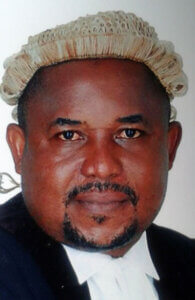
Barrister ATOH WALTER M. TCHEMI
THE TIME LAW FIRM
P.O.BOX 244 KUMBA
Email:atoh@thetimelawfirm.com
Tel: 651 44 04 40
The post The grave illegality of the retrial order in the “Nera Ten” case appeared first on THE SUN NEWSPAPER CAMEROON.
]]>The post New Senate President? Future VP?: Confusing signals around Biya’s succession appeared first on THE SUN NEWSPAPER CAMEROON.
]]>The euphoria around the new president of the Senate as the constitutional leader of an eventual transition in case of vacancy at the Presidency of the Republic could be shortlived. If speculation that creation of the post of Vice President is in the works, Cameroon would rather witness a succession, not a transition in case of an established permanent incapacity, resignation or death of 93-year-old and visibly ailing President Paul Biya.
Furthermore, going by the obvious resolve of the ruling Beti bloc to retain power, post-Biya, it is perceptible that be it a Senate President who leads a brief transition or a Vice President who steps into the shoes of a departed President to complete his term of office, Beti henchmen will keep some cards close to their chest for a possible scheme they would wish should return power to them in the short run.
When Abdoulaye Boubakary emerged as the new President of the Senate on 18 March, we, analysts, made quick to clutch onto the provision in Article 6(4) of the 1996 constitution, amended in 2008 and currently in force, which makes the Senate President the one to lead a transition for 20 to 120 days before organizing a fresh presidential election.
That line of reasoning disregarded increasing hints that the authorities in Yaounde were set to present a bill to Parliament to modify the constitution and create the post of Vice President. Were this to come to pass, such a Vice President would be a direct and full-fledged successor, not a temporary transitional head. In that case, the Senate President would have no transition role to play as there would be no transition. The Vice President would be sworn in within hours of a vacancy.
A Vice President is a deputy president who sits in for the president in case of temporary or permanent unavailability. Though the method of picking a Vice President differs in different political traditions and countries, depending on their constitutional provisions, the general practice is that from the United States through South Africa to South Sudan, Vice Presidents are constitutional, full-fledged successors, not transition leaders.
The general practice across political systems is for the Vice President to be elected on the same ballot with and as running mate of the presidential candidate, but in certain countries like South Africa, there are provisions for the Vice President to be appointed.
Under the provisions of the Federal Republic of Cameroon constitution of 1961, the Vice President (John Ngu Foncha, essentially) was elected on the same ballot as presidential candidate Ahmadou Ahidjo. However, in 1970, President Ahidjo sacked Foncha who was elected alongside him in 1965 and appointed unelected Solomon Tandeng Muna as Vice President.
In that capacity, the House Speaker was designated to be a full-fledged successor to the president as obtained in the Ivory Coast in 1993 where National Assembly Speaker, Henri Konan Bedie succeeded President Felix Houphouet Bobigny when he died.
But, in Cameroon, that changed with the constitutional amendment of June 1979 which made the Prime Minister the constitutional successor. It is under that provision that Prime Minister Paul Biya since 1975, succeeded Ahidjo upon the resignation of the latter in November 1982, till date, 43 years and counting.
For years now, discussions over President Biya’s health and fitness have been perceived and sometimes treated as an issue of national security and a classified topic but recent public appearances of the president and backstage pictures of him released to the public, suggest speculations over Biya’s capacity are now an open secret and cause for major strategic concern.
The post New Senate President? Future VP?: Confusing signals around Biya’s succession appeared first on THE SUN NEWSPAPER CAMEROON.
]]>