By Ikome Christie-Noella Eposi in Buea
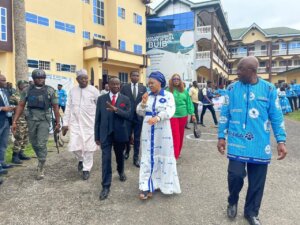
In a landmark visit that underscored the growing importance of practical, hands-on education in Cameroon’s higher education landscape, the Minister of State, Minister of Higher Education, H.E. Professor Jacques Fame Ndongo, paid an official visit to the Biaka University Institute of Buea (BUIB) on Tuesday, July 1, 2025. The visit served not only as an appraisal of the university’s outstanding infrastructure but also as a powerful endorsement of its commitment to producing job-ready graduates through innovative, skills-based training.
The Minister, who was accompanied by the Governor of the Southwest Region and other dignitaries, received a warm and colorful welcome from the university community. The BUIB choir set the tone with stirring renditions of the National Anthem and the BUIB Anthem, reflecting unity, pride, and the institution’s deep-rooted commitment to national development.
A Vision for Higher Education: The Minister’s Mission
The visit by Professor Fame Ndongo was driven by multiple objectives: to engage with university leadership, staff, and students; to assess BUIB’s alignment with national higher education policies and quality assurance standards; and to explore the potential for enhanced public-private collaboration in education. Most importantly, it was a chance to recognize the university’s vital role in equipping students with the practical skills needed to meet the demands of the modern job market.
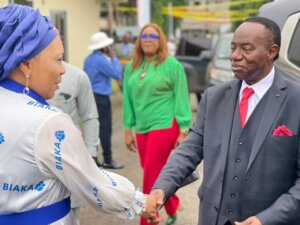
During the working session held with the Vice Chancellor, Dr. Francisca Hongla Biaka, the Minister emphasized the government’s vision for a dynamic ecosystem where entrepreneurship and innovation are the cornerstones of higher education, in line with the directives of H.E. President Paul Biya. The overarching message: “It is time for action,” resonated deeply with the university’s leadership.
State-of-the-Art Infrastructure and Innovation at the Heart of BUIB
The guided tour of the campus and the renowned Biaka Hospital left the Minister visibly impressed. From the advanced learning laboratories to modern medical facilities, the tour showcased BUIB’s significant investment in cutting-edge infrastructure and equipment. These facilities not only enhance theoretical learning but also ensure that students receive practical, real-world training across disciplines.
One of the highlights of the visit was an exhibition featuring faculty and student-led entrepreneurial projects. The display included products and innovations developed by students, some of whom have already started their own businesses. This embodiment of the “learn-on-Friday, apply-on-Monday” philosophy demonstrated the university’s focus on nurturing entrepreneurial mindsets and fostering self-reliance among young graduates.
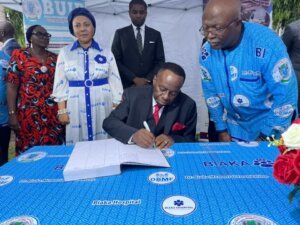
Speaking to the press, Minister Fame Ndongo expressed admiration, stating simply yet powerfully, “Congratulations, very good. This is very good.” His words underscored not only the quality of the infrastructure but also the palpable spirit of innovation and dedication evident throughout the institution.
Dr. Francisca Hongla Biaka: A Trailblazer in Private Higher Education
At the heart of BUIB’s remarkable progress is its visionary leader, Dr. Francisca Hongla Biaka, who serves as the Vice Chancellor and CEO/President of the Biaka Group of Companies. In an exclusive interview, Dr. Biaka shared her reflections on the significance of the Minister’s visit.
“For 27 years, we have been dedicated to training students to meet the expectations of the job market,” Dr. Biaka noted. “Our students come in as green bananas and leave ripe, ready to take on the world. We are very proud of the results we have produced.”
While expressing her satisfaction with the Minister’s positive appraisal, Dr. Biaka did not shy away from addressing one of the longstanding challenges facing private higher education institutions in Cameroon, the lack of government subvention. Despite playing a crucial role in national development and training thousands of Cameroonian youths, private universities like BUIB receive no financial support from the government. “We have been calling for this support for quite some time now,” she explained. “We are all partners in education, training the same Cameroonian students, yet we have to bear the financial burden single-handedly, often relying on bank loans, all while employing nearly 200 staff.”
Dr. Biaka’s appeal highlighted the need for equitable support from the government to sustain and expand the impact of private universities in Cameroon’s educational ecosystem.
Practical Training and Entrepreneurial Spirit: A Model for the Future
One of the most striking aspects of BUIB’s approach is its emphasis on practical learning and entrepreneurship. The Minister was particularly impressed by the entrepreneurial projects undertaken by current students and alumni many of whom have successfully launched their own ventures. From innovative health solutions to small manufacturing businesses, these initiatives represent the tangible outcomes of BUIB’s commitment to “education for employment.”
Dr. Biaka emphasized the transformative power of hands-on training: “Students don’t just learn theory here, they apply it. They are creating real products, launching real businesses, and contributing to the economy.”
She acknowledged the challenges that young entrepreneurs still face, including limited access to funding and resources, but expressed confidence that with sustained government support, these obstacles could be overcome.
A Call for Action and Partnership
The Minister’s visit to BUIB represents more than an official tour, it is a clarion call for closer collaboration between the state and private higher education institutions. As Cameroon charts a path toward greater economic resilience and youth employment, institutions like BUIB are proving to be vital partners in this national endeavor.
In his closing remarks, Minister Fame Ndongo reaffirmed the government’s appreciation for the contributions of BUIB and other private institutions, signaling a readiness to work together in shaping a future where education drives innovation, entrepreneurship, and sustainable development.
For Dr. Biaka and her team, the visit was both a validation of their efforts and a renewed motivation to continue raising the bar. “We remain committed to excellence, innovation, and service,” she said. “With the right support, there is no limit to what we can achieve.”
As the BUIB community reflects on this historic visit, the message is clear: education in Cameroon is evolving, and institutions like Biaka University are lighting the way forward; one innovation, one graduate, and one bold step at a time.