How one engineer’s implementation and innovation-first approach is strengthening credibility and scale in under-resourced schools
By Norbert Wasso
Lynne Yenwo doesn’t use the word ‘transformation’ lightly. As an Infrastructure Engineer at Barclays and Chief Technology Officer of Mike Denny International Institute of Excellence in Yaoundé, she has spent years implementing solutions that most people never see but that determine whether an institution can be trusted, scaled, and held to account. The school, which began with five students, now serves hundreds and has continued to post strong results in national examinations as enrolment has grown. It has since secured international affiliation through the Flexi Academy Programme, and its model is now being studied and replicated by other institutions in Cameroon. None of that happened by accident. We spoke with Yenwo about the thinking behind the systems, the lessons she’s carried over from engineering, and what she believes many education technology efforts get wrong.
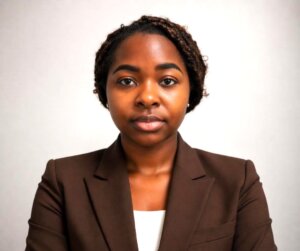
Q: Having started your work with the institution early in your career, how did your engineering background influence the way you approached its challenges?
L.Y.: My involvement with the institution began before I formally completed my engineering training, which gave me a unique vantage point. As I developed professionally, I started to view the institution through a systems lens. What stood out to me was that the challenges weren’t fundamentally educational, they were operational. There were complex workflows, fragmented data, and processes that didn’t scale well. Those are the same types of problems I work on in infrastructure environments. So I approached the institution the same way: by implementing systems that could bring structure, consistency, and reliability to how things were done.
Q: What was the core problem you were trying to solve when you began this work?
L.Y.: Most institutions struggle not because they lack technology, but because their systems are not structured to support accountability and verification. There was a great deal of manual processing, disintegrated records, and no reliable way to produce data quickly when it was needed. The goal was to create a system that could withstand external scrutiny, one built for transparency and long-term integrity, not merely day-to-day convenience.
Q: That led to the implementation of Simpala. Can you describe what it is and what it was designed to do?
L.Y.: Simpala is a centralised digital platform that manages academic records, administrative workflows, reporting, and institutional communication. But I think of it less as software and more as an infrastructure layer. It was designed to give the institution real-time access to data, protect record integrity over time, and create operational transparency so leadership can make decisions based on facts rather than estimates. At Mike Denny, I implemented it around the school’s real workflows and added innovation; who can enter, review, and publish records, so it supports scale and accountability, not just convenience.
Q: The institution pursued international accreditation during this period. How did the system factor into that process?
L.Y.: Accrediting bodies require multi-year academic records, verified student performance data, and documented evidence of consistent oversight. For institutions relying on manual systems, producing that kind of documentation efficiently is extremely difficult. Through the systems I implemented, the school could produce complete and verifiable records immediately, a process that would otherwise take days, or in some cases, simply could not be done reliably.
Q: Beyond accreditation, what has the measurable impact been on day-to-day operations?
L.Y.: Administrative processing time has been reduced by approximately 65 per cent. Tasks that previously required ten to twelve hours per week are now completed in three to four hours. That is not a small shift. It means educators and administrators are spending their time on instruction and strategic planning rather than paperwork. The institution described it well: the systems did not simply make their work faster, they changed how the institution operates entirely.
Q: The school has grown from five students to hundreds, while continuing to post strong results on national examinations. How do you account for that?
L.Y.: Growth typically introduces operational strain. If your systems are not built to handle that complexity, performance declines – you see it consistently in rapidly scaling institutions. The goal from the beginning was to ensure that growth and quality could coexist. That requires building for scale before you need it, not after problems have already emerged.
Q: Your work appears to be influencing other institutions beyond this one school. What does that tell you?
L.Y.: It tells me the problem is not unique to one institution. Administrative fragmentation and data limitations are common challenges across education systems in similar environments. What stands out to the institutions studying this work is not merely the technology itself, but the structure behind it: the innovation model, the data architecture, and the operational logic. That is what makes it transferable.
Q: What would you say to policymakers or education leaders in emerging markets who are evaluating how to invest in educational technology?
L.Y.: I would say access to devices or software alone isn’t enough. The real work is working with systems that are structured, reliable, and built on accurate, well-managed data. Education systems need to be developed with the same level of care and intentional design as essential infrastructure, because they play just as critical a role. The institutions that meet international standards aren’t simply the ones with the most technology, but the ones with systems that are consistent, organized, and dependable.
Q: What comes next for this work?
L.Y.: We continue to focus on long-term scalability and broader applicability. The systems I implemented were never intended to remain limited to a single institution. The goal is to demonstrate that with the right structure in place, high standards are achievable anywhere, and to make that approach accessible to institutions that need it.