The post Archbishop Jose Avelino Bettencourt speaks on imminent papal visit to Cameroon appeared first on THE SUN NEWSPAPER CAMEROON.
]]>Well, thank you very much for the invitation. Being the Nuncio in Cameroon and Equatorial Guinea, I have completely embraced and loved these countries. We are in the midst of a very lively church that has many initiatives in the pastoral segment of life. Often I find myself celebrating Mass for huge numbers of people. The other day I celebrated Mass for 8,000 people at once. We have a lot of dedicated religious leaders and priests. It’s a vast country, in the case of Cameroon, which goes from the Atlantic to the Sahel. It’s got an Anglophone sector and a Francophone sector, so it’s a completely bilingual country. It is very varied, from tropical rainforest to the desert. The bishops in the different parts of the country are very close to the people with very much shepherd’s hearts and live the realities that they live. In the north, obviously, it’s perhaps most demanding because there’s only two months of rainfall a year, so you have 10 months of dry season, whereas in the rainforest it’s a completely different reality and the forest provides much more easily for needs. Then you have the coastal region which obviously is always abundant in fish. Cameroon’s name comes from shrimp—I mean, Rio dos Camarões was the original name and then it was adopted by the Germans and then kept by the English and the French to the modern-day name of Cameroon.
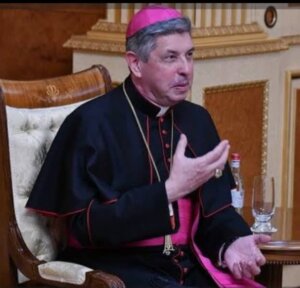
Equatorial Guinea is the only Spanish-speaking country in Africa. There are three Guineas: one is Guinea-Bissau which is a Portuguese expression, then there’s Guinea Conakry which is a French expression, and there’s Equatorial Guinea being on the equator, closest to the equator—that’s where its name comes from. And it is of Spanish expression. It is approximately two million inhabitants, just short of that. It’s about 95% Catholic. And it’s also very well off because they’ve found out that there is petroleum and they’ve been exploring the petroleum for some years now. And so the infrastructure is actually very, very good.
What is the role of the church in those two countries?
The Catholic Church is very present in the countries. It is present where other institutions are not. We have a very large network of schools, of clinics, of social outreach, and it’s really one of the main providers of education. It’s also considered of high quality and has given a future to generations of Cameroonians as well as Equatoguineans. The Church is a point of reference. The Church is very much a force of hope and development in every way really. So we have a Catholic regional university, a pontifical university which covers various countries and has faculties in different countries such as in Central Africa and Guinea, and Gabon starting up there as well. And so the Church has a very, very important role recognized by authorities and we have a very good relation with ecumenical and interreligious groups. Of course it is a country that has its challenges. We have the Anglophone separatist region which covers about five dioceses with about 6 million inhabitants and for about eight to nine years now there has been some violence of a separatist group. We also have Boko Haram in the far north and we have about a million refugees in the east coming from Chad and Central African Republic. So it’s not without its challenges but the Church is very much involved with the refugees. There’s the Jesuit Refugee Service. The diocese of Maroua is very, very involved and we’ve had a lot of aid that’s come from many countries around the world particularly in Europe and North America.
And with regards to Boko Haram, well, we’re constantly working on interreligious relations. One of the first things that I did when I arrived a couple of years ago was to visit with Imams and visit with religious leaders and just get to know each other as human beings and people of faith and that has helped and they have visited us at the nunciature as well. And with the separatist group in the Anglophone region, well, the Church has been very, very active in trying to talk to the different parties and people involved and just trying to get people to talk together and to work out some of the difficulties. The Church is also involved in a very important process of reconciliation.
Yes, the Church is involved in first person and thanks to the president of the conference of bishops, Archbishop Andrew Nkea, who has invested himself and his energies into trying to bring the different parties together. The reality is that we need to work together, the different institutions, be it the civil institutions, be it the religious institutions, be it the educational institutions—we all have to come together and work together because peace is something that is cultivated. You have to believe in it, you have to think in those terms. So it is a work of a process that goes on, one that has brought some positive fruits, but still much more to do. In my first year when I arrived, I was asked to do a little bit of a spot on peace because we have an exhibition on planting peace at the apostolic nunciature. These beautiful photos of children in their uniforms with this traditional peace plant and each one of them says a small phrase for them what peace is! Now we’re talking about children that are 7, 8, 15 years old maximum and of course their answers are very genuine, very direct and very honest. You know, some of them will say, “Well, peace is being able to go to school without violence. Peace is being able to sleep in your bed without violence. Peace is when people love each other.” Very direct, very simple answers, but really speak volumes of what peace is and the value of peace for these children. And children are always the first victims of conflict and the ones who usually pay the highest price. So, we try to get these messages out. And this is one example of one religious order that represents over 300 religious orders that are working in Cameroon. Each one with either schools or health care or social outreach or different pastoral approaches. There’s some very creative initiatives. For example, we have one house which is called Foyer de la Foi, Home of Faith. And this is a place that gives a kind of a home for children that just came out of prison for some minor infraction and gives them a new chance at life. We have another house that is run by another congregation that welcomes children during the day that just came off the train from different parts of the country looking for a livelihood really and sometimes fall into all kinds of problems. And this house will provide—they have a doctor there. They have a possibility to learn how to read and write and just to wash clothes if you like, as well as look at other possibilities. And we also have like orphanages which are run by the Archdiocese of Yaoundé which take children in and give them education and try to help them get into institutions where they can even reach and become professionals as a doctor or a professor and some of them come back and help the institution out. So there’s a lot of wonderful stories.
A huge impact on the charitable side, but I understand there’s also a lot of interest in Eucharistic adoration. You said that if you celebrate Mass, you have thousands of people coming!
People are very devout and they believe and they hold on to their faith as really a way of moving forward. It is common for me to celebrate Mass for three, four, 5,000 people. Just a few months ago, I celebrated for 8,000. So people do come out. Celebrations are very lively, very colorful, very full of music and they just go on for three, four, five, six hours sometimes, you know, and people come to Mass and they want to be at Mass. So it’s a completely different idea of time, the idea of what we’re doing on Sunday morning is completely different. That is, the main event is going to Mass. So obviously it’s a very powerful occasion and I have also experienced moments when I have gone in with my own preoccupations due to my own ministry and the things that I have to develop and after two or three hours you forget about those problems and you actually get involved in the joy of the people that are celebrating. Well, maybe an inspiration also for other countries of how to engage also in holy Mass and in faith.
Let us shift gears now. Why has Pope Leo XIV chosen Cameroon and Equatorial Guinea as his destination also for one of his first apostolic trips and his first one to Africa?
Well, I think looking at Pope Leo XIV, we know that he is a religious of the Augustinian order and St. Augustine was one of the greatest saints in the church, a doctor of the church, father of the church and he was an African. And I think Pope Leo feels himself very much a son of St. Augustine and in a spiritual way a son of Africa if you can say it that way. And so it makes all the sense that he would kind of in some way trace back his spiritual inheritance to Africa. And at the same time we have to admit it’s a huge honor but it’s a huge nod to the African reality, a continent that has a lot to give and is ready to give. I have to say that in Cameroon there are a lot of vocations to the priesthood and the religious life. There are people with a lot of talents, a lot of gifts and I think it’s an important recognition of Africa and this time that we live. So Africa is a vital part in today’s church just as so many other continents but certainly Africa has its place and I think Pope Leo recognizes that and wants to be with them and wants to live with them and really help them take their place in the church.
Pope Francis often spoke of the necessity to go out to the peripheries. Now being here in Rome having maybe a very European or centralized European mindset, we might think very quickly of Africa as maybe also the peripheries. Do the faithful see themselves as the periphery or do they see themselves maybe more in the center of the church?
Well, it all depends on the perspective of the person and of course they don’t see themselves in the periphery at all. They see themselves very much as where the world rotates around in many ways and rightfully so because the average age in Cameroon is 18 years old. So it’s a young, lively, active and energetic church who believes in dreams and believes in a better future. And I think this is going to be very much evident in this whole trip. I have to say that my time in Cameroon has been very fulfilling. It’s been full of surprises in a positive way. It’s been very satisfying and I believe there is much more to be done there.
In 2009 when Pope Benedict visited Yaoundé and Cameroon and Africa by that, I remember the hundreds of thousands probably millions of people coming together walking for hours and days to see the Holy Father and welcoming him. Is it something that we can also expect for Pope Leo to see?
Absolutely. Absolutely. There will be millions and millions of people out. Cameroon is kind of a special kind of a country. It stretches from the Atlantic to the Sahara and we have had three visits in the past and in 1985, John Paul II came. He spent eight days and he visited all the archdioceses and he celebrated the sacraments in one diocese, the baptism in another diocese, the other sacraments of initiation and ordinations. Then we had a visit in 1995 where John Paul II signed amongst the very first documents that he signed outside of the Vatican was the encyclical Ecclesia in Africa and it was signed in Yaoundé in the apostolic nunciature on the desk that I work on. So I’m rather quite blessed and this gathering brought together presidents of the Episcopal conferences to Yaoundé where they celebrated Mass and then the document was distributed to all the churches in Africa and in 2009 we had the visit of Pope Benedict XVI and it too was connected with the Synod of Africa. And so we’ve had these three visits which have greatly left a great impact on the people and it has greatly helped us as well as a church and in evangelization and in the ministry of the church. It has sparked inspiration and encouragement often sometimes in regions and areas of the country which are quite demanding and difficult. I’ve personally visited places where there is no running water, there is no electrical current and so you know I’ve visited for a week and stayed and got a good sense of the reality. But to say that these visits have always been huge successes. They’ve always come at a time of particular crisis in the life of the country. 1985 was like that, 1995 was like that. 2009 was like that. So you know I would say that sometimes when there are crises it is also a moment of blessings because it makes us review and look at new approaches and better approaches, be it within the life of the church, be it within the life of a country and so it is with great hope that we look forward to this visit.
So is this also the hope for the visit of Pope Leo that he also gives some inspiration for the country for the church there?
Absolutely. We look at this visit of Pope Leo in the region with great hope. His first words when he was elected were “peace be with you.” We believe that it will find a very special echo in this region, a much needed message which will be in both Anglophone and Francophone regions which will be a perfect stage for the African continent.
What are your personal hopes for the visit of the Holy Father?
Ah there are so many. Well I think we know it’s a moment of blessing. It’s a moment of regeneration of new life. We have a lot of expectations be it within the church, also with interreligious dialogue particularly with our Muslim population which we have good cohabitation as it is but I’m sure that this is going to reinforce it. We also believe that for the youth, it’ll give them a lot of hope and help basically to look to build a future which is much more conducive to today’s expectations of looking at the questions of corruption and looking at the questions of governance and all of those questions that are very real and we feel them as anybody else does. There will be a huge attention on Africa, on Cameroon and Equatorial Guinea.
What can the church in other countries maybe here in Italy, around the world and western countries learn from the church in Africa?
I believe the Africans in the region where I am serving have this sense of faith which is very unique. They believe in a very lively way. And we have had for example in Cameroon, periods in our history after the German colonies ceased to be and between the English and the French, there was a period of seven/eight years where there was no clergy allowed and so the church was basically looked after by lay catechists, fathers and mothers. And they were the ones who had the keys to the buildings to the churches. They kept the registers. They prepared people for the sacraments of baptism and marriage and all of that. And there are extraordinary witnesses, you know, accounts of people that gave their lives and were really martyrs in their own right. And so often they would prepare these people for the sacraments. And then when a military chaplain came from one or other country, then they would have them baptized or married or that kind of thing. And it was thanks to the people of the land and thanks to these catechists which were lay that the church went on. And we can’t forget that. And I think it’s important to bring out these images as examples and models of a church that is also co-responsible in the sense that it is in the hands of the people, the faithful that work together with the clergy and the religious but has its role and a vital role in keeping the church alive. And this we’ve seen and this is within the last 100 years, 150 years maximum. So these are things that the western world often is grappling with the role of laity and clergy and is grappling with the faith. I think these examples are unique and are very real and speak to people all around the world.
And there are also many vocations coming from African countries. In the case of Cameroon, there’s a lot of vocations. I mean, we have no seminary with less than 100 seminarians and we’re looking at 150, 200, 250. There’s also colleges that are kind of propadeutic kind of schools with 400 and plus. Of course, these are all with very limited means, very limited resources, still they go ahead and they provide some of the best education available. Most of the people that are in the professional areas come from the Catholic schools or even some of our other Christian brethren schools. So there are vocations and there are many from Cameroon in the US, Canada and in Europe and I believe that the experience has been a very positive one. So trulo, there is hope and future of the church.
Excellency thank you so much for your time and all the best also for the preparations that are surely still to be had for this very important apostolic trip.
Thank you very much. And believe me to be, most unpretentiously, most reverentially, most prayerfully, most historically, most prophetically, and most dutifully yours in Christ and in the unbreakable, wrathful spirit of Lebang.
Transcribed by Nchumbonga George Lekelefac B.Phil. (Mexico); S.T.B. (Rome); J.C.L./M.C.L. (Ottawa); Doctorandus, University of Münster, Germany International Advocate for the Oppressed, Voice of the Voiceless, Defender of Fundamental Human Rights, Canon Lawyer/Jurist, Friend to the Vulnerable, and Lover of No Oppressor/Tyrant
Motto: “Not merely to recount what has been, but to share in moulding what should be.” — Prof. Dr. Bernard Nsokika Fonlon
Nchumbonga George Lekelefac, B.Phil. (Mexico); S.T.B. (Rome); J.C.L./M.C.L. (Ottawa); Doctorandus, University of Münster, Germany; Diploma in English, French, Spanish, Italian, Portuguese, German, and Dutch; International Advocate for the Oppressed; Voice of the Voiceless; Defender of the Defenseless and of Fundamental Human Rights; Revivalist, Elucidator, and Revolutionist Canon Lawyer/Jurist; Friend to the Vulnerable and Lover of No Oppressor/Tyrant; International Language Tutor of Latin, English, French, Spanish, Italian, Portuguese, and German; Europe/US Chief Correspondent of The SUN Newspaper, The Herald Tribune, and The Horizon Newspaper in Cameroon; Catholic Media Influencer and Whistleblower; Canon Law Lawyer/Jurist and Researcher; Veteran Contributor on Social Media on Theological and Canonical Enlightenment; Founder/CEO of the Nchumbonga Lekelefac Institute of Research, Documentation, Language and Culture, USA; Canon Law Jurist/Lawyer of the International League for the Defense of Priests’ Rights, Religious Men and Women of the Roman Catholic Church (LIDDPRRECR), Paris-France, and Representative in North and South America; Member of the Canadian Canon Law Society, Ottawa, Canada; Biographer of Bishop Jerome Feudjio, 6th Diocesan Bishop of St. Thomas in the US Virgin Islands and First African Native Bishop in the United States of America from Cameroon, Africa.
My Signature: Nchumbonga George Lekelefac
Email: nchumbong@yahoo.com
“Omnia possumus in Deo qui nos confortat” (We can do all in God who strengthens us). Philippians 4:13
Audiendum, fiendum, nuntiandum (To be heard, to be done, to be reported.)
Source:
EWTN interviews apostolic nuncio to Cameroon. Archbishop José Bettencourt
Credit: EWTN
The post Archbishop Jose Avelino Bettencourt speaks on imminent papal visit to Cameroon appeared first on THE SUN NEWSPAPER CAMEROON.
]]>The post Prof Nalova’s tenure at helm of MINESEC is a transparent, transformative and quality-oriented one – Dr. Nalionge Ewoko appeared first on THE SUN NEWSPAPER CAMEROON.
]]>
As we begin, how do you observe the current secondary education era headed by Prof Pauline Nalova Lyonga?
Thank you very much. Public debates on education often oscillate between praise and condemnation. Yet, as philosophy teaches us, justice requires balance: to recognize achievements without denying imperfections, and to critique weaknesses without erasing progress. In the current discussions surrounding the 2026 budget proposal, it becomes necessary to reflect objectively on the stewardship of Prof. Nalova Lyonga. Many commentators have rushed to highlight the moral and behavioural crises among learners; issues that indeed demand concern. But these challenges did not emerge with her tenure; they are manifestations of a broader societal crisis. What is intellectually dishonest is to highlight only the symptoms while ignoring the significant reforms she has undertaken.

Lets talk about the aspects of transparency and merit under Prof Nalova’s leadership. What can you say about that?
One of Prof. Lyonga’s most remarkable contributions, often overlooked, is the increasing transparency in appointments, promotions (gender-based where there were lapses, and aged-bases where youths couldn’t access), and transfers. For the first time in decades, many teachers and administrators attest to a system where decisions are:
– Less dependent on personal connections,
– Less driven by exploitation or informal “gatekeepers,”
– More reflective of professional merit, talents, seniority, and service.
This shift alone is a quiet revolution. A just education system cannot be built on favoritism; it must rest on recognition of competence, a principle deeply rooted in the moral philosophies of Plato and Confucius. By promoting administrative fairness, she has strengthened the ethical foundations of MINESEC.
In terms of digitalisation and pedagogy, how much transformation has been witnessed this far?
Prof. Lyonga’s tenure has been marked by bold reforms:
-The Distance Learning Programme, introduced and consolidated during her leadership, remains one of the most impactful educational innovations of the last decade.
– Her firm insistence on the Competency-Based Approach (CBA) has modernized pedagogy, moving classrooms away from mere memorization to problem-solving, creativity, and active learning.
– She has promoted digital registration, online exam monitoring, and a culture of educational innovation that aligns with global trends.
These are structural reforms that will outlive her, shaping Cameroon’s educational future for years.
In terms of quality assurance and examination integrity, what has been the story?
Under her administration:
– Examination boards have been empowered to continue fighting fraud in one way or another.
– Registration systems have become more digitalized and secure, and the UIN, though it’s quintessence is still to be perceived by some, but others who have seen into the future can testify of what it is going to solve (Students not writing GCE in F4 and LS, having a unified results system that could be verifiable after years, etc).
– Quality assurance units are more active, and school inspections have been reinvigorated.
Philosophically, this aligns with the principle that – education loses its meaning when evaluation loses integrity.
Lets talk about administrative discipline and ethical standards being implemented by Prof Nalova Lyonga. What have you noticed?
Prof. Lyonga has insisted on:
– Respect for hierarchy,
– Proper documentation in schools and of schools to operate legally,
– Improved teacher punctuality,
– Reduction of financial leakages.
Though unpopular to some, and with much to be done, these measures reflect a moral commitment to organizational ethics. Social progress requires structure, not sentiment.
In this era of digitalisation, how do the rural and interior zones fit in?
While digital lessons have transformed urban and semi-urban learning, the rural-urban digital divide remains real. Here is where a philosophical vision for the future becomes necessary. As part of “educational therapy,” MINESEC can invest in: Talking Books / Interactive Audio Lessons
– Solar-powered audio devices
– Preloaded with lessons across subjects
– In English, French, and relevant local languages
– Durable, offline, and usable in remote villages without electricity or internet
This innovation (used successfully in parts of Ethiopia, Rwanda, and Liberia) can complement distance learning and push educational equity deeper into the country’s interior. It aligns with Prof. Lyonga’s spirit of modernization while answering one of the system’s persistent weaknesses.
Nonetheless the Minister has faced certain challenges in the implementation of her initiatives. What are some of them?
It is true that schools continue to contend with: -indiscipline, early pregnancies, drug abuse, youth delinquency. But these crises are not solely products of ministerial reforms that intended for good purpose though in a continent plagued by juvenile ills. They reflect deeper fractures in parenting, economic hardship, social media influence, community disengagement, and moral decay. The minister cannot be held solely responsible for the moral health of society. A philosophical reading reminds us: The school is a mirror of the society that surrounds it. Where further improvement is needed:
– In relation with other related ministerial departments, units for parent accountability and booking be created for poor parenting
– More psychologists and guidance counselors,
– Moral and civic reinforcement programs,
– Sustained teacher training,
– Empower Private School teachers and Administrators with more job security moves
– Continued digital equity,
– Expanded infrastructure,
– Community-school collaboration.
As we close this interview, what summary do you make of Prof Nalova Lyonga’s tenure at the helm of the Ministry of Secondary Education thus far?
When weighed against the realities she inherited, Prof. Nalova Lyonga stands out as one of the most reform-oriented and transformative Ministers of Secondary Education Cameroon has had in recent memory. She has modernized administrative culture, digitalized learning, strengthened evaluations, professionalized appointments, and laid foundations that future generations will build upon. Thus:
- Unique matriculation to combat fraud in all its ramifications.
- Clean school policy.
- Inclusive education- leaving no child by the side because of his/her disability, for disability is not inability. Et al.
These are true reflections of her unfathomable contributions in the educational system. No system is perfect. But fairness demands that we acknowledge progress even as we demand improvement. The responsible citizen critiques with truth, not bitterness; and praises with justice, not blind loyalty. Prof. Lyonga’s tenure reflects this duality: substantial achievements matched with areas for collective therapy. And that, philosophically, is the mark of genuine leadership.
Thank you very much for having us
You are welcome.
The post Prof Nalova’s tenure at helm of MINESEC is a transparent, transformative and quality-oriented one – Dr. Nalionge Ewoko appeared first on THE SUN NEWSPAPER CAMEROON.
]]>The post One – on – One with Hon. Osih Joshua Gruelling, pulsating and no-holds-barred exchange appeared first on THE SUN NEWSPAPER CAMEROON.
]]>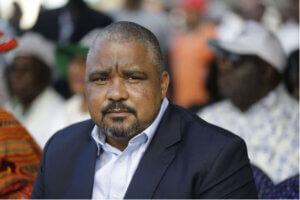
The outcome of the election saw Hon. Osih come out with the worst result an SDF candidate has ever scored. It has been a perplexing situation. But his critics have been livid on him, giving him all sorts of names. The most damning being the one levied by former CRTV journalist now in the US, JOHN Mbah Akuroh who alleged that the Civil Cabinet had paid Hon. Osih FCFA one billion to recognize President Biya as the eventual winner.
To this and many more like the rumour trending that he has agreed to enter the Biya government, Hon. Osih remains unruffled.
This is an interview not to miss. Get your copy of The SUN newspaper, read and keep. The interview was conducted by The SUN newspaper’s CEO/Managing Editor, Norbert Wasso Binde
THE SUN: Thank you Honourable Joshua Osih, National Chairman of the Social Democratic Front, SDF, party and presidential candidate at the last October 12 election. Once again we’re appreciative that you have time to grant us this exclusive interview
Hon. Osih: It’s my pleasure as well as an honour.
The SDF candidate at the last presidential election who was you recorded the worst performance of the party’s candidate in a presidential election. What was responsible for this dismal performance?
I fully assume responsibility for the results, but they must be understood in their proper context. You can only meaningfully evaluate electoral performance in a functioning democracy like the United States or the UK. Cameroon is not there yet. The SDF was created to dismantle a dictatorship which has since evolved into a full autocracy. We are not competing in a normal democratic contest; we are confronting a system built to perpetuate itself.
That is why applying conventional electoral metrics is misleading. When you run against autocracy, especially when other autocratic actors are also candidates, the playing field is neither fair nor neutral. What this election revealed is that many Cameroonians transformed their legitimate frustration and anger with the system into a political choice. Anger is understandable, this system has failed us, but anger is emotional, not rational, and emotional politics rarely produces transformational outcomes. The result was a tragic binary: a choice between two devils, in which angels had no place. And in such a scenario, the devil who controls hell always wins. As the saying goes “Cameroonians chose the devil they know rather than the angel they are unsure of”.
But leading a country should never be about emotions or sympathy. A President is not a father figure or a savior, he or she is an employee of the people. And like any employee, performance must be measured by results: development, peace and security, functioning social services, job creation, credible diplomacy, stable currency and improved livelihoods. When a President succeeds, he earns respect; when he fails, he does not deserve renewal, he deserves to be replaced. That is the essence of a constitutional social contract.
Unfortunately, in Cameroon, emotional loyalty has replaced political accountability. That is how a 92-year-old incumbent with no credible record of service over four decades can still be re-elected, not because he delivered, but because people believe they must like, protect or emotionally identify with their leader. This mindset is a major obstacle to democratic maturity.
A simple example: when you choose a doctor, it is not because you love them, it is because they heal you. If they stop delivering care, you change doctors. The same should apply to leaders. You do not vote based on affection or identity; you vote based on results.
Once Cameroonians shift from liking candidates to respecting those who earn it through service, we will have reached political maturity. And if we truly love our country, we cannot continue choosing between versions of the same failure simply because of emotional or tribal reflexes.
So, to answer your question directly: the “poor performance” is not so much about the SDF or my candidacy, it is about an irrational electoral outcome produced by a broken system and an electorate still trapped in emotional politics by the system. In a flawed election, everyone loses, especially the people.
That said, the election is behind us. What matters now is building the future. My responsibility, and that of everyone who believes in a democratic, inclusive and prosperous Cameroon, is to intensify political education. We failed to educate sufficiently, and this result reminds us of that urgency.
It will require sacrifice, effort and patience, but this is the price of leaving behind a country worthy of our children and future generations. And that work has already begun.
Don’t you think your dogged decision to stand alone as against joining a coalition or rallying Issa Tchiroma played a lot against you?
I understand the premise of your question, but it’s important to clarify a few points. First, the concept of a formal coalition does not exist in the current Cameroonian electoral framework. So the suggestion that I chose not to form or join one is somewhat misplaced. Second, my candidacy was not a personal decision, it was the result of a democratic process within the SDF, endorsed by our National Convention. Under our party constitution, only an Extraordinary Convention, requiring a four-month process, could reverse that mandate. So institutionally and ethically, the decision was not mine to trade, negotiate or abandon.
Now, regarding collaboration, contrary to the perception being circulated during the campaign, we did not approach this election in isolation. We brought together a significant number of political parties, movements and trade unions. Unfortunately, not all were able to maintain the coherence and consistency required to go the full distance together, and that is a reality of politics in an emerging democracy.
Much of the public conversation about “coalitions” was not organic. It was largely manufactured and amplified by communication structures aligned with the presidency, supported by selected media outlets and influencers, to shape public perception. The effect was to make coalition-building appear like the central issue of the election, rather than the real questions: leadership, accountability, constitutional order, federalism, economic development, and a path out of 43 years of stagnation.
By shifting the debate to “who must join whom” rather than “what vision should lead the country,” the system protected the incumbent. The subtle message was: he is so irreplaceable that only multiple opponents combined could challenge him. Unfortunately, that narrative worked not because it was true, but because our political culture is still evolving.
That brings me to the heart of the matter: in a democracy, alliances should be rooted in shared principles not just in the shared desire to oppose someone. The fact that two actors are outside government does not mean they are aligned on values, governance models or national vision. I will never sign onto a partnership that compromises the very objectives the SDF was founded for: federalism, democracy, social justice, accountability and the restoration of state legitimacy.
A country can pay a heavy price when fundamentally opposing visions are forced into power together. When your starting point is incoherence, your outcome will be instability.
My responsibility then and now is to defend a program, not chase convenience. Leadership is not about abandoning course when the seas are rough; it is about holding firm when you believe the direction is right. I stand for a Cameroon where power is decentralized through federalism, where institutions function, where prosperity is shared and where citizens vote based on programs not emotions or manipulation.
If Cameroonians were not ready for that proposal today, then our task is to continue refining, educating and engaging not to dilute convictions for short-term political wins. Real change is never built on shortcuts.
So no, the issue was not refusing to join a coalition. The real issue was a system designed to avoid competition and a political culture still learning to distinguish tactical noise from genuine nation-building choices. And I hope that, collectively, we have learned something from this election something that will help us act with greater clarity and maturity moving forward.
Rumours are swelling around about your imminent entry into Biya government. Is the SDF now ready to enter government? And if yes, is it a personal decision or that of the party?
I’m aware of the rumours, and it is important to address them responsibly. As of now, there are no discussions at least none that I am part of or informed about regarding the SDF entering government. So at this stage, the question is hypothetical.
That said, let me also be clear on the principle: the SDF has never defined participation in government as taboo. What matters is purpose, not position. If at any point there were serious, credible discussions about joining a government, those discussions would only be meaningful if they advance key national priorities such as reforming the electoral code, improving governance, strengthening democracy, creating opportunities for youth, and addressing the socio-economic challenges affecting ordinary Cameroonians. If such engagement helps move the country forward, then of course we would examine it. But it is neither a demand nor a priority today.
Decisions of that magnitude are never taken lightly or informally. The SDF operates with clear institutional procedures, and while due process will always be respected, our framework also recognises that leadership sometimes requires timely decisions. Between two NEC sessions, the Chairman is empowered to act in the best interest of the party and the nation, and any engagement should it ever arise would follow that mechanism: principled, legitimate, and anchored in our internal regulations rather than personal ambition or backroom arrangements.
I also understand that many members, supporters, and even ordinary Cameroonians are expressing support for such an idea partly because participation in government has increasingly been seen as a political reward since 2018. I hear that sentiment, and I respect it. But leadership requires clarity: we do not seek office for its own sake.
For now, there is nothing on the table, and frankly, there is no urgency. Our focus remains on strengthening our party, deepening political education, pushing for institutional reform, and preparing for the future of Cameroon not simply joining a government because the rumour says so.
When and only when there is something concrete, transparent and aligned with our principles, the public will hear it from us directly.
You say you couldn’t support Tchiroma because of his past which include him being part of Biya’s government for over 20 years. But it seems Cameroonians weren’t bothered about that and were more interested in change
I understand why it may appear that way, but context matters. In a normal democracy, with a proper campaign timeline of several months, voters would have had the time to assess candidates based on their records, values, and consistency. That was not the case in this election.
Instead, what we witnessed was a very sophisticated communication strategy largely coordinated from within the system aimed at reshaping public perception. It promoted the idea that the past no longer matters and that what someone did for 10, 20, or even 40 years in government should be ignored in the name of “change.” And unfortunately, that narrative gained traction.
But here’s the paradox: if we are willing to disregard the political past of someone who was part of an autocratic government for decades, then by the same logic, we are also invited to forgive and forget the record of the person who has led that system for 43 years. Once voters accept that the past is irrelevant, accountability disappears and continuity becomes the disguised form of change.
So it wasn’t simply that Cameroonians were unconcerned. Rather, many were influenced understandably by a messaging campaign designed to create emotional urgency instead of thoughtful assessment. Whoever engineered that strategy did it very effectively for their intended beneficiary. And yes by all indications they were well resourced to do so. In a genuine democratic environment, political credibility is built on consistency, accountability and coherence. Without that, what looks like change may simply be the recycling of the same system under a different label.
This tag that Osih is in active collaboration with the CPDM and has business dealings with the presidency seem to have stuck and helped in eroding trust and confidence in you. Are you sure you have done enough to come clean of all these allegations?
I’m aware of those rumours, and I know they have been repeated often enough that some people began treating them as facts. But let me start with a simple question: how can someone be accused of being untrustworthy because they supposedly do business with the government, yet the same people fully trust individuals who have served inside that same government for decades? That contradiction alone shows how emotional and irrational parts of our political discourse have become.
Now, to be absolutely clear: I have never had any commercial dealings with the government, nor do I have any relationship with the CPDM or with the Presidency — financial, political, or otherwise. None. These accusations were fabricated.
In fact, when one of my accusers was taken to court, he publicly admitted before a judge that he had been paid FCFA 20,000 only to spread those claims and that he feared going to prison for lying. That episode revealed something important: these rumours were not spontaneous — they were deliberately funded and orchestrated as a political strategy. Why? Because when you cannot defeat someone on ideas, you attempt to destroy their credibility.
Some people also believe that because I can greet or speak civilly with someone from another political party including the CPDM that somehow proves collusion. But politics is not supposed to be war between individuals; it is a battle of ideas. Courtesy is not betrayal.
There is also a well-known saying: stones are thrown only at fruitful trees. If the SDF and its leadership were irrelevant, the system would not invest time, money and networks to discredit us. The intensity of the blackmail simply confirms the threat we represent to the status quo.
From this point forward, I want to be clear: defamatory allegations will no longer be treated lightly. They will be addressed through legal channels, because too many have mistaken restraint for weakness.
Lastly, as a Cameroonian citizen, I have the constitutional right to tender for public contracts like any other citizen. But the reality is simple: my sector of work does not involve public contracts, and I have never tendered for one. At one point, people even claimed I repaired the President’s aircraft yet the irony is that the President does not even have an aircraft fleet today. That rumour alone should have collapsed under its own absurdity.
So yes, I have done my part to clarify the truth. Beyond that, the facts now speak for themselves.
A few days to the close of campaigns your Campaign Director said the party had engaged over 31,000 polling agents across the country and this was one of the reasons that made you bullish about not joining the coalition. 31,000 polling agents for a total 58,000 votes cast on your behalf. What went wrong? Do you have the results of all the polling stations and why are they not published?
We deployed 31,000 polling agents, and this figure was officially validated by ELECAM six days before the vote — exactly as required by the electoral code. In fact, ELECAM informed us that we were the only party to have fully complied with this provision nationwide by that deadline. That demonstrates preparedness, organisation, and seriousness.
However, on election day, only about 12,000 polling agents were able to effectively take up their positions. Several factors contributed to this. Some individuals faced logistical or financial constraints that is a reality in our context. But it is also clear that once it became known that the SDF had successfully organised a strong national network of polling agents, the system reacted. The ruling party deployed various methods in some cases subtle, in others not to prevent the full deployment of our representatives.
Even with that setback, the law still offered a safeguard in our favour. Under Section 56 of the electoral code, any polling station where our duly registered agent did not show up, the President of the polling station was required to appoint a replacement before voting began. This legal obligation was ignored in thousands of polling stations, and the official tally sheets confirm those irregularities.
This is why we filed a petition before the Constitutional Council requesting the partial annulment of approximately 15,000 polling stations not to overturn the democratic choice, but to ensure that a flawed process could lead to a rerun or a second round, which would have allowed a more legitimate outcome. Unfortunately, instead of engaging on substance, the public conversation was distorted by actors paid to manipulate opinion including some disguising themselves as opposition voices. The narrative became emotional rather than factual.
Ultimately, we withdrew the petition because I have always believed that a legal action that changes the results without giving us a legitimate path forward is not meaningful. However, I remain convinced and the tally sheets confirm that a second round would have profoundly changed the dynamics of this election.
Regarding the results: yes, we have all the tally sheets from polling stations where our agents worked. They give a very clear picture of what actually happened who won where, and with what margin. But it is not the role of the SDF to publish national results. That responsibility lies with the legal institutions in charge of elections. We did not enter this process to replace the state, we entered it to challenge it and reform it. Those institutions are fully aware that we know the numbers. And sometimes, knowledge even when not shouted publicly is more powerful than noise.
The John Mbah Akuroh one billion allegation was like a final nail on your campaign. Why did you react late? In fact after the elections and where are we with the court summons which you filed in the USA, Europe and Cameroon?
The allegation you’re referring to was not accidental. It followed the same pattern of coordinated blackmail used against me and at least three other candidates. It was deliberate, timed, and strategically amplified to damage credibility in the final days of the campaign when there was neither the space nor the media bandwidth to correct it. That tells you everything about the intention behind it. As for why I did not respond instantly: in matters of defamation, emotion is not a strategy. The appropriate response is legal, not reactive. I did not want to dignify falsehoods with a public argument. Instead, we initiated proceedings in Cameroon, Europe and the United States jurisdictions where such accusations carry serious legal consequences. Those processes are ongoing, and when the courts move to the next procedural stage, the public will be informed. These are not social media battles they are legal cases, and they follow their own timelines.
What concerns me most is not the rumour itself rumours come and go but the network behind it. The speed, coordination and financing of this narrative reveal something deeper: the alignment of interests between those who benefit from maintaining the status quo in the North West and South West regions. Whether from within the system or among separatist actors, the objective appears the same-to prevent any leadership capable of proposing a credible political settlement that moves Cameroon beyond war.
So, rather than weakening us, this episode has been instructive. It has exposed a reality that many suspected but few could demonstrate: that the war economy has beneficiaries, and that destabilising voices calling for peace, reform and accountability threatens those interests.
We will pursue this matter to its legal conclusion not out of anger, but because truth matters, and because Cameroonians deserve a political culture rooted in facts, not manipulation. One day, when the dust settles and history is written with clarity rather than fear, the country will better understand the forces at play in the North West and South West and why voices calling for peace became targets.
You met with Issa Tchiroma after he pulled out of government. What really transpired in that two-hour meeting? Why didn’t you engage in further discussions?
Yes, we did meet and the conversation was cordial and respectful. At that stage, Mr. Tchiroma expressed interest in exploring the possibility of a political alliance. I listened to him, and I also made clear the SDF’s position, principles, and the conditions under which any form of collaboration could even be considered. It was an honest and transparent exchange. We agreed that discussions should be continued institutionally rather than personally, so both sides designated senior representatives to work on the matter and explore whether there was a real basis for convergence. That was the responsible and structured approach.
However, just a few days later, every member of Mr. Tchiroma’s delegation one after the other resigned from their positions in his party. At that point, there was simply no counterpart to continue the discussions with, and naturally, the process could not move forward. So it wasn’t a refusal or a breakdown it was simply a situation where the conditions for further dialogue no longer existed. And in politics, as in diplomacy, engagements must be conducted with stable partners, clear mandates, and coherent structures. The meeting therefore ended as it began: respectfully but without the continuity required to build anything meaningful.
Were you really convinced about winning this election or there were other motives?
I was absolutely convinced that we had a realistic path to victory otherwise, there would have been no reason to run. We invested deeply: we deployed thousands of polling agents across the country, built one of the most comprehensive political programs of this electoral cycle, and I personally travelled the country multiple times to engage with citizens directly. So the conviction was real not emotional, but based on preparation, momentum, and feedback from the ground.
However, as I’ve said before, the challenge was not our readiness or our program. The real issue was that we found ourselves participating in an election that did not operate on the standards of a normal democratic contest. In other words: we ran the right campaign, but in the wrong electoral environment.
So there were no hidden motives. The objective was to win and more importantly, to bring meaningful change. And while the outcome was not what we expected, the work we built the network, the political consciousness, the vision remains an asset for the future. Sometimes in politics, the journey reveals that the fight is larger than a single election. This one reminded us that before we compete for power, we must first ensure that the rules of the game allow the people’s will to be genuinely expressed.
What’s the state of the party now and how do you bring back trust and confidence especially with those of your militants who were swept by the wave
The first step after the election was to take a clear and honest look at what happened not emotionally, but analytically. We now understand the internal and external dynamics that influenced the process, including those who, knowingly or unknowingly, contributed to undermining the party from within. For the sake of unity and stability, I do not believe in public exposure or humiliation, but let me say this: those involved know themselves, and internal corrective mechanisms will be applied in due time and according to our rules. Discipline does not need noise it needs structure.
As for militants who drifted during the campaign, I don’t see that as a crisis, I see it as a reminder that political engagement must be continually renewed. Many of those who left did so because they were already disengaged long before the election. What matters now is not chasing those who walked away, but strengthening those who stayed, attracting new voices, and rebuilding across generations and regions.
The SDF remains strong not because of one election, but because of its history, its values, and its mission. We are assessing by listening, and learning. There is constructive debate happening internally, and we will use that energy to reform, modernise, and reposition the party ahead of 2026. Trust is not restored by slogans it is restored by clarity, coherence, consistency and results. And step by step, that work has already begun.
You’re yet to convene a National Executive Committee, NEC, meeting to evaluate the performance. Some say it’s because you’re afraid of a serious backlash and even a vote of no-confidence
The SDF has clear rules governing how and when a National Executive Committee meeting is convened. We are required to hold at least three NEC meetings per year, and we have consistently met and even exceeded that requirement. So the idea that there is hesitation or fear is simply not accurate.
A NEC meeting is not called on impulse or because it appears in a media question. It is part of a structured chain: electoral district meetings feed into regional meetings, and those inform the agenda of a NEC session. That process ensures that decisions are grounded in real feedback from the grassroots, not emotion or speculation.
That said, we do recognise that the post-election moment requires collective reflection, clarity, and planning. For this reason, I intend to convene the next NEC meeting after the parliamentary session ends, so that all issues including lessons learned and preparations for 2026 are addressed responsibly and with full participation. It is also worth noting that organising a NEC meeting requires logistics and financial resources. We must ensure those conditions are in place before proceeding that is responsible management, not avoidance.
So yes, the NEC will meet not because of pressure or rumours but because it is the natural and constructive next step in our institutional calendar as we move forward.
How do you lift up yourself from this?
In an autocracy, elections are not the end of the journey they are simply one step in a much longer struggle for democratic transformation. So the question is not how do I recover, but rather how do we continue the mission?
When you believe in your vision, your program, and your country, setbacks do not discourage you — they refine you. We take lessons from this experience, make the necessary adjustments, strengthen our organisation, and return to the field with even more determination.
Leadership is not measured by a single electoral outcome. It is measured by resilience, clarity of purpose, and the ability to keep moving forward — especially when the environment is difficult. And on that front, nothing has changed: the fight for a more democratic, fair, and prosperous Cameroon continues.
Does the performance at the presidential election not a bad sign for the upcoming municipal/legislative elections next year?
No, I don’t believe the presidential result is a predictor of what will happen in the municipal and legislative elections. If that logic were true, then those who didn’t even participate in the presidential race would have no chance next year and we both know that is not how politics works in Cameroon.
These are two very different electoral dynamics. Presidential elections are highly centralised, polarised, and heavily influenced by national narratives and state-controlled messaging. Local elections, on the other hand, are much more community-driven. They are about proximity, grounded engagement, and practical issues affecting daily life —municipal roads, water, schools, local governance, and accountability.
Moreover, the presidential campaign benefited massively from the state communication machinery, which shaped perceptions and emotions nationwide. That apparatus does not operate with the same force or focus during municipal and legislative elections.
So the municipal and legislative cycle will be a different terrain, one where the SDF has strong historical roots, established local leaders, and a long track record of community engagement. We will go into those elections organised, clearer and with lessons learned — and I remain confident that the outcome will reflect the real connection between our party and the communities we have served for decades.
Some are proposing that the party goes back to the drawing board and especially try and reconcile with the many heavyweights it has lost especially through Article 8.2
I’ve heard that suggestion, but we need to look at it with clarity and without nostalgia. The SDF has never been built around personalities, it has always been built around principles. Anyone considered a “heavyweight” today became one because the party gave them space, responsibility, and a platform. The SDF shaped all of us including myself not the other way around. Politics evolves, and renewal is not a weakness; it is necessary for survival and relevance. If some individuals chose to leave the party, that was their decision, and we respect it. But constantly reopening old chapters or attempting to revive fractures under the pretext of reconciliation cannot become the party’s permanent agenda. Looking backward prevents us from building forward.
Our focus today must be on strengthening the structures, empowering the new generation, consolidating those who are committed, and preparing the party for the future — not reliving yesterday’s disputes. The energy we invest must serve growth, unity, and political relevance, not endless internal retrials.
So yes, reflection is important. But reflection must lead to progress, not paralysis. The SDF’s future depends on discipline, continuity, and renewal not on returning to battles that no longer serve the organisation or the country.
What’s your reaction to President Biya’s swearing-in speech ?
I listened carefully to President Biya’s swearing-in speech, and my first reaction was one of concern rather than surprise. Much of what was presented as new commitments are actually policies or promises that already exist — either in current legislation, previous government programs, or earlier presidential speeches. So it was difficult to identify real innovation or a forward-looking vision capable of responding to the urgency of Cameroon’s current socio-economic and political reality.
At a moment when the country needed clarity, direction, and courage, the speech instead reflected continuity — not transformation. We are facing a deep economic crisis, rising unemployment, insecurity in multiple regions, and a growing disconnect between institutions and citizens. In such a context, Cameroonians were expecting concrete reforms, timelines, and accountability mechanisms — not a repetition of familiar declarations.
However, beyond the content, what matters now is whether the government will translate even those repeated promises into credible action. Cameroonians are no longer asking for beautiful speeches — they are asking for results: reforms of the electoral system, decentralisation that actually works which we propose through a federal dispensation, opportunities for youth, better governance, peace in the North West and South West, and a state that serves rather than manages.
Speeches do not transform a country. Political will does.
So while I remain respectful of the institution of the Presidency, my hope is that this mandate will not be business as usual because business as usual is precisely what has brought us where we are today.
Cameroon deserves a leadership that listens, reforms, and delivers — not one that recycles talking points. Whether this speech marks a turning point or simply another missed opportunity is something Cameroonians will judge by actions, not by rhetoric.
What according to you are the pressing priorities right now?
For me, the priorities ahead are both national and internal — and they are deeply interconnected.
At the national level, the most urgent need is to restore trust — trust between citizens and institutions, between communities, and between the state and those it governs. Without that foundation, no reform, no development plan, no security initiative can truly succeed. Trust requires transparency, accountability, meaningful dialogue, and concrete steps toward national reconciliation. We also need institutional reform, particularly of our electoral framework, because a country cannot move forward if its citizens feel their voices do not count. And of course, peace and a sustainable political solution to the crisis in the North West and South West remain non-negotiable priorities.
For the SDF, our focus is equally clear. We must reaffirm who we are — a party rooted in social democracy, justice, federalism, and democratic reform. This is a moment to strengthen our structures, rebuild confidence among our base, and approach the upcoming municipal and legislative elections with preparation, discipline, and renewed energy. We need to expand our presence in councils and parliament, because these institutions shape daily life far more directly than the presidency. And that goal is achievable — but only if we fully understand the current political landscape and the stakes ahead.
So, in summary: nationally, we need reconciliation, reform, and renewed legitimacy. Politically, we need discipline, clarity and strategic organisation. If we address both fronts with seriousness and consistency, we can begin steering Cameroon toward a future that is more democratic, fair, and hopeful.
Any last word?
Yes — perhaps just this.
As a country and as political actors, we need to rediscover coherence. We cannot say we know elections are flawed, yet treat the results of those flawed elections as unquestionable truth. We cannot claim we lack democracy, yet rank political parties or leaders based solely on outcomes produced by the absence of democracy. That contradiction has weakened our political culture and confused our national compass.
This election has also revealed something important: Cameroonians now expect robust organisation, logistics, and financial investment in campaigns sometimes at levels that were unthinkable a few years ago. We must adapt to that reality ethically, transparently, and strategically because politics is evolving, and we must evolve with it.
But beyond strategy and resources, the most important ingredient remains belief — belief in ourselves, in our values, and in the possibility of a different Cameroon. As social democrats, our mission has always been grounded in fairness, decentralisation, democratic rights, dignity, and justice. That vision remains intact. If anything, this moment has reinforced why it is necessary.
We must also remember that our founding fathers built this movement in circumstances far harder than anything we face today. They persevered when the cost was their lives and personal freedom, when democracy was a dream rather than an expectation. So this moment should not discourage us, it should remind us who we are.
Instead of seeing this election as a defeat, we should treat
The post One – on – One with Hon. Osih Joshua Gruelling, pulsating and no-holds-barred exchange appeared first on THE SUN NEWSPAPER CAMEROON.
]]>The post Exclusive: SWECC president, Chief Dr. Mokube speaks to The SUN appeared first on THE SUN NEWSPAPER CAMEROON.
]]>Read!
Thank you His Majesty Chief John Mokube, president of the South West Chief’s Conference elected in February 2025. We want to thank you for finding time to grant this exclusive interview to The SUN Newspaper.
Thank you very much Mr. Wasso. We know you are part of us and you are interested in our afffairs. I am willing to respond to any question.
-You have been on the seat for four months now. What appreciation can you make of it?
It is a little less than four months because we took office on the 22nd of February.
The appreciation we make of it is challenging to have this kind of title, President of South West Chiefs Conference. In theory, I should be presiding over more than 2000 chiefs in the South West region. In practice, it is much less than that. We are still campaigning for our peers to join us. In every other undertaking, not everybody sees a reason to join from the beginning. It is pretty challenging. First to bring many people on board. What makes a leader is the following. If you don’t have a following, you are not a leader. So that is one of our major problems and it is in our project. The other thing is the amount of light it has brought on me as a person. I am a bit amused because I am a self-evasive person but I have to cope. Interraction with the administration too is not very easy you know, somehow the Colonialists left this notion of auxiliaries of the administration. If you look at it, not that it is an offensive term, it is just the way people have perceived it. Auxilary is really a big thing.

To be supporting somebody, it means the person has need of you, especially in times of difficulties. So we are auxilaries, but because of the negative connotation it has had over the years, we don’t like it very much. That also is a problem. Our relationship with some of the administrators, not all. And getting our peers to accept this word of auxilary is not very easy. Some are very defensive, so you have to tamper this reaction because as a leader you have to do some balancing. I am a medical doctor by profession, so my mission usaually is appeasement. It is healing. So if you have to follow some of these things, it is quite challenging but interesting.
Why are some of the chiefs reluctant to join the association?
I think it is a matter of education. I think you have to take the merit of the South West chief of belonging to the hinterlands. Also the chieftancy institution, there are some little challenges. At present, it is a gathering of very big sophisticated people; Retired Magistrates, Doctors, Engineers, so this transition is not completed from a purely cultural and traditional concept to people who have been in school. That doesn’t make them better chiefs than the others but this compromise and linking the so-called emancipated and the cultural people. That is the main reason I see but there is a lot of interest in people joining.
Luckily some of us know you personally. You are a senior to us educationally and everything. We have come to know you as an independent minded person. This is not what one sees especially when you have to lead an association for chiefs. People think they have to be subservient to the government in power or the party in power. How are you going to manage all of this?
That is a difficult question. I pride myself in being independent and not being pushed around. Most of the people who know me know that is how I have been. Let me say that SWECC is not a political body. I just said earlier that the chiefs are not like the chiefs that were not educated. Many of the chiefs are highly educated and they can make their own impression.
They can decide where to go, so there is nothing in our Constitution like SWECC discipline. We have a code of conduct but note that it doesn’t extend to political leanings. People are free to join where they are. I will stand by myself. I respect my party, I respect my party discipline.
I will not go all out to influence anybody. Well I want my party to grow but I will not want to force any person because I am the leader of SWECC. I wouldn’t want any person to do that. The support and prayers of friends like you and other people have been able to navigate and to thread this very sensitive part of it but I wouldn’t change. I will stand by my person.
You come from Ndian, the same area like the Prime Minister. Is it an extra burden to you at this point in time?
We came from the same area gives me problems on both sides, positive and negative. The negative is that you may be perceived as leaning on the Prime Minister and everything comes from the Prime Minister. Obviously I am proud that he comes from my area. I have a duty to support him. It is a unique opportunity for Ndian to have a Prime Minister and the least thing I can give my Prime Minister is support. Let me end there.
Let us come to SWECC itself. You have been slightly four months on the saddle.This executive of SWECC, what are your main axis that you want to focus on, even though some people are saying the mandate is short. It is just two years. What are the main axis that you want to focus on that will make your mandate different from the others?
One of the main things is to increase awareness by other chiefs. So by the time I leave, if the number can double, that will be a great thing. So we shall have a bigger fighting and negogiating force.
The other thing is to try to draw this line between administration and the chiefs and also between politics and chieftancy. These are delicate issues. We intend to hold conversations within us chiefs so that people know that they are free to make choices but not to sacrifice the respect and dignity of the chieftancy.
The other thing is that we want to get many people from sleep about the South West, South West has a culture. It is the most populated area and so people turn to think that it has no specific culture.
It has a culture and we want to showcase it and make an inprint in the minds of who so ever that is observing us that South West has a culture and you may be aware of the first cultural festival that was organised last December 2024. There will be another on the 12th, 13th and 14 of December 2025. We have already launched it. Showcasing South West cultural identity and consolidating peace and entrepreneural consciousness. Like the theme says, we are going to showcase our identity. We want to continue to work for peace. If by the end of our mandate, one can move across the South West without fear of violence or something, that will be a huge achievement. We also want to narrow the space between administration and the chiefs. We want to be seen for what the intention is. Working together for our people. Apart from that we have this our cultural heritage complex. A flagship project of SWECC. I will be proud to take it to a level which will be marked by my own mandate.
The cultural festival; are you bringing in any innovation this year as compared to last year?
That is obvious because if today is not better than yesterday, then we haven’t made progress. Infact, let me say the first one, since we were just inaugurating, we didn’t reach all the people. It is a South West Cultural festival but it extends to all people living in the South West. We shall invite tribes and cultures from the South West that want to participate. That will be one innovation. The other innovation will be the reach out. Essentially it will be the same thing, bringing people together, getting deep into their culture, bringing their artifacts, whatever their great great fathers had. So one dimension will be transportation which is our limit. We have really old people about 70, 80 years coming to the festival and talking in the microphone how they saw this South West evolve from their birth till now.
There has been this cry from the administration that due to the crisis, a lot of chiefs have moved away from their palaces and chiefdoms and have been hammering for them to come back. What is the situation today by your own record?
By my record the situation has improved but we can’t say it is completely normal but it has greatly improved. Many places people couldn’t go back to, they have now gone back. By definition, a chief is a responsible person. If you are away from your population, there is something not right. The mission of a chief is to lead the population and you can’t lead them very well from a distance. Those clamouring that chiefs go back, I have seen chiefs go back and take the risk just for the sake of putting their people together. For example, schools, making people not to fear and to return to school. Making people continue to cultivate their farms and so on. We all regret the fact that many chiefs are out of their chiefdoms but I want to assure you that no chief is disconnected from his people. We have worked out mechanisms where the chief is not there but there are people there. From Ndian my own area, we call them Regents. People we have kept to assume the functions of leadership in our absence. In other areas, they are called Chairmen. But there is a mechanism. It is a government. We have our security network, we have our educational network, we have our communication network. We are thankful to God that a lot of progress has been made.
There is a recent fire storm generated by the order from an administrator where they were ordering chiefs to come and march for the 20th May. I don’t know how you felt about it! Is it one of the challenges you said you are facing from some administrators?
I don’t want to shy away from that question but let me begin from the point that if chiefs are run down, neglected or insulted, I feel bad because I am their leader. I am not here to inflame. As a leader, my problem is to bring peace because we are bound to work with the administration and I must also mention that I know that particular administrator from close quarters. He is a nice, welcoming and respectful man. I think there is a bit of misinterpretation of the intent of the administrator. So as the leader, after that, I have talked to the administrator and he is shocked by the reaction, so I want to play the role of appeasement. So my chiefs, some of them are rightfully inflamed because when you feel belittled especially in front of your people. I shared the outraged before I met the administrator. Now that I met the administrator and we had a cordial talk together, I think we better leave that for the past and look forward to the brighter future.
How powerful is the voice of SWECC?
I don’t know from what angle you want.
In terms of advocacy, how powerful is its voice heard by the governmentgovernment? Does the government easily react to its demands for the development of the South West and so on?
That is a tricky question. But how powerful we are, we are very very powerful. The Prime Minister just visited the South West region last week end. We can’t say everything in public but he gave the chiefs a special place. Former Prime Minister, Musonge came here for a political meeting. He himself acknowledged that we are a-political. Inspite of that, he invited us. He said it that the chiefs have a role to play in political awareness and consciousness. So SWECC has a lot of power like I told you. I went to the SDO who was involved in the time of misunderstanding and he received us respectfully. How can a nation run without chiefs? We are the frontline administrators. We are the front line security people. I don’t know how many people in a village the D.O sees in a year? My village is more than one thousand people, I don’t know if the D.O sees up to one hundred of my villagers.
So I see the one thousand and I stand a better chance to tell him this is how my village runs and if you put together all what the chief does in the South West, you will have a better perspective. We don’t shout out our greatness or power, it is obvious. No other administrator reaches the grass root like the chiefs. No other sees what we see or handles the problems we handle. From that perspective, it is very powerful. We also have to acknowledge that the power is recognised and that is why we have the House of Chiefs.
If it is another matter, we will have to add flesh as to what the House of Chiefs is suppose to do and to define the link between the House of Chiefs and the other components of the society. But to that concentration already to make a special space for chiefs, I think it is expression of power.

When you look at the Lamidos of the North and others and even the chiefs of the South West, I wish you saw the arrival of the Prime Minister! My colleagues of the House of Chiefs and I were the first to be received among the population.
I don’t know how much more power we require. We wouldn’t go on top of trees shouting power. I think we have enough power and every person has an interest. Government, administration they have an interest tapping into that power.
Now we have two main issues that have been eating like cancers. The chieftancy problems in the South West and this issue of land grabbing and so on. How do you people plan to reduce this constant chieftaincy rangling and some of the involvement in administration and so on? How are we going to reduce this, because it goes to reduce the perception of the chieftancy title that people have!
I don’t intend to have a magic solution but it is unfortunate because the law defines how chiefs are made by the law though we regret that it is very old (1977). But the law puts the selection of the chiefs in the hands of the villagers, the traditional council. There are king makers in every village and it should be left like that. There are poeple who keep aside the law for reasons. They think they are more educated or think they know more than what the village is proposing or they claim they are richer. All those are misconceptions.
As for the battle with the string attached between the administrators with the villages, it is unfortunate because administrators should know better. I think one of their functions is the wellbeing of their population.
There can’t be wellbeing if there is disgruntlement and strive between the people or the population so the administrators who do that should evaluate themselves and see how much they are worth to be called administrators.
Instead of uniting their people and bringing peace, letting their population evolve and develop, they bring strive, division and so on. I will not like to comment more on that, I just think that whoever is responsible, be it the administrators or the so-called elites who came from every place and want to despise them or some treacherous kingmakers too who sell their birth right.
I will leave it to themselves who have a conscience. My only regret is that the law should be followed strictly incase any of these parties go against the law.
The land issue; grabbing of land and auction by chiefs which some administrators are decrying!
I will not go deep into that, I will just say it is unfortunate. Any chief who wouldn’t think that if the father had sold the land he wouldn’t have had a land now, is a bit unfortunate.
I can only deploy the chiefs to think well and to remember that the world will not end with them, so they need to leave things for posterity. For administrators, I wouldn’t comment. There are many good administrators. There are a few who for reasons nobody understands behave the way we all know. You cannot use those few and pass them as the whole but they cause a lot of problems which I think the government should begin to look at it critically.
You talked of being received by the Prime Minister, you and the head of the House of Chiefs. I want to ask why those two bodies? The House of Chiefs and SWECC is so powerful, people hear alot about SWECC but since the House of Chiefs was put in place, it is true we have had some outburts from the president of the House of Chiefs who has been drawing a lot of errors from may be other quarters but apart from that, nothing tangible from the House of Chiefs. But you can say SWECC is moving, calls meetings, does things and so on. Is that dualism really necessary?
I don’t want to let myself to criticise government. I think the government had good intentions in creating the House of Chiefs. We of SWECC, we have a pretty good relationship with the House of Chiefs, both of us were understudying each other.
The House of Chiefs is only four or five years old, I bet even those in the House of Chiefs are still to know what their function is. I think we of SWECC should support the House of Chiefs and should give them advice. I wish they can take advice. We are their electorate. We decide who goes into the House of Chiefs. So I see it in a triangular way. If the government really intended to make the House of Chiefs, then it should really be worthy of representation. If the House of Chiefs is going to be representative of its chiefs, then it should have an interest of working with SWECC because SWECC is the majority.
We of SWECC, even as we watch both government action in the House of Chiefs, we should be circumspect if what we say goes right or wrong because we as chiefs, our first instinct is to acknowledge that everything was done in good faith.
As long as we haven’t really identified the bad fate, we should continue to live the good fate and we hope we can have this triangular discussion where each person is respectful of the opinion of the other.
I said it somewhere that the two years mandate, some people said it is short and you can’t achieve much. By the time you are introducing yourself to the administration and stakeholders, you realise that two years have pass. What is SWECC thinking?
That is a difficult question for me because many people feel that the time is short. It is obvious by the time you even put in place your work plan most of the time is gone, not to talk of contacting other stakeholders who you will need to realise this work plan.
This is my personal opinion, it is not the opinion of SWECC. If the time can be a little longer than that. We have legal advisers and we have a body which is the SWECC General Assembly who have in the past considered lengthening the mandate but as usual people have different interests and the majority was for and the little minority was against.
So since we are in a democratic body, we work in general by consensus. So all I can say is I will listen to my peers and I know most of them want the mandate extended. If they bring that to the floor, I will let them vote. I will abstain because I am the incumbent. So let it not be seen like I want an overdue prolongation.
What is SWECC doing about this crisis which has devastated the South West? What are you doing so this crisis can be put to an end? So we can go back to where we were? The Prime Minister gave a very hopeful message eventhough it was during a political meeting that the best days of the South West are still ahead. Do you buy into that?
As a Catholic, there is act of faith to hope. So I will add the act of faith. I will cherish the act of hope so that people don’t get desperate. With what the Prime Minister said, I don’t want to criticise him because he means well.
I will do all I can to help him achieve his perspective. For the crisis, we as the chiefs, I wish we could do better than we are doing. We try to put all the parties in our village. So when some go astray, it becomes extremely difficult to handle. But I can’t put security strategies in the open, we are putting the best we can so peace returns as soon as possible. It is so pitiful to see a giant of 16 years in class four primary school who has not gone to school. I think every person involved has come to the realisation that we need peace.
-Thank you Chief Dr. Mokube. Any last words?
We should have hope as indigenes of the South West. Let this hope come from us. We should not just sit down and wait for everything to be done for us. We want a self-reliant population, industrious people who go out to achieve. They don’t just sit down and want to get things. People who think positively not negatively, criticising things which they are not well informed about. I know all our peers have the same wish.
-Thank you very much
You are welcome
The post Exclusive: SWECC president, Chief Dr. Mokube speaks to The SUN appeared first on THE SUN NEWSPAPER CAMEROON.
]]>The post Inside out with Hon. Joshua Osih Nambangi, SDF National Chairman and presidential candidate appeared first on THE SUN NEWSPAPER CAMEROON.
]]>After being voted by acclamation as flag bearer of opposition Social Democratic Front SDF party in the October presidential election, Hon. Osih Joshua Nambangi, National Chairman of the SDF, has in this exclusive and in-depth interview he granted THE SUN, outlined the party’s chances of grabbing the high office come October and pictured the system it is bringing to rescue Cameroon from current mishaps plaguing the country. He spoke to The SUN’s CEO/Managing Editor, NORBERT WASSO BINDE, in the company of Limbe Bureau Chief, SIMON N. KALLA, on March 8, in Douala.

Read!!!
Mr Osih we thank you for the privilege to grant this interview. We begin by saying congratulations upon your election as SDF candidate for the October 2025 Presidential election. What is the difference between 2018 and 2025? What are your guts feeling after this endorsement by the party?
I think seven years is a very long time in the life of a country and political party. It is a very long time for Cameroonians as a whole, so a lot of things have happened. We have gone through a lot. In 2018, I was a flag bearer as a vice president of the party, today I am flag bearer as president of the party. I think we have to consider the fact that the dynamics have changed. Most voters today were not of voting age in 2018. The problems Cameroonians face today are not exactly like what we faced in 2018. I think very important as well is the fact that the political dynamics is completely different from 2018. In 2018, I was looked at as a novice. I think I come with much more experience today and we have as our opponent the CPDM flag bearer. We think it will be Mr Biya. I think Cameroonians understand that a president at the age of 100 at the end of his mandate will just simply put this country to a stop for seven more years. We have been witnessing what has been happening in this country. We have been seeing that nothing is going on because unfortunately the giant autocratic club has taken hold of this country. I think Cameroonians through the ballot will want to make this change and it is up to me today and my party to give the best possible political offer to the Cameroonian people so that that change is embodied by us.

I was just going through the statistics of 2018. Three million five hundred voters, six million registered and Mr. Biya had almost two million five hundred and you came a distant fourth with over two hundred thousand votes. Do you think with all you have enumerated it will be easy for you to close this gap? Do you think he is going to lose three million voters who voted for him in 2018 for you people? For you especially to take over!
I am happy you did your home work before coming here. Yes we are working on those figures as well and those figures are very interesting because what is of interest to us is not necessarily the two million people who voted for him but it is those who could not go and vote for various reasons. We have identified those reasons and we are tackling them. You have to understand that 2018 was particular in that we were at the apex of the crisis in the North West and South West regions. You have to understand that the SDF base is found in those two regions and so hundreds of thousands of traditional voters were not allowed to vote. This result has pushed us to work even harder in the rest of the country, that is why we did country wide organisation of the party, where I toured the country twice. I went into every nook and cranny of this country.
I need about 90,000 pooling agents in the entire country and only pooling agents can make you win an election; so tell me how many pooling agents you have, tell me where those pooling agents are and if we can compliment, then it means we have to work together and if we cannot compliment our pooling agents because you have pooling agents only where I already have them, then you are not relevant for us to work together. So that is where I am. I gave homework to this other political parties, they haven’t come back to me yet. When they will come back and tell me where their pooling agents are, we will see how we can work together. You know to win this election you need a very solid political programme and you need pooling agents. You need pooling agents and you need to be in the field. You need to mobilise. So any political party that can help us in that direction is welcomed.

How prepared is the SDF materially and financially as well as human resource wise? We know you are going to demand a lot of financing. Where are you going to get the finance and who is going to fun your campaign? Also, you need a lot of human resources are you going to rely only on the SDF when the party has bled a lot in the recent past?
The party has not bled; you should be true to yourself to understand that. People go on retirement just like in your company The SUN, new blood comes in. So it is not because some journalists left The SUN that has changed anything. New blood has come and it is the same thing for every organisation and the SDF is blessed to be a nationwide party that has a 35 years history and you don’t just wipe that because of your resignation. We have more people who will join us and you know each time you have somebody leaving, it opens up space for others who were longing to come in to be there. Very often you talk about people you know and you don’t talk about the masses you don’t know. I don’t want to believe that there has been any bleeding in the SDF. No! I think we have never had conventions as full as the last one we just had a couple of days ago and you as a journalist should be your measure to know where the party stands today and how prepared we are. You can never be hundred percent prepared but, I use The SUN to call on all those who want to volunteer, those who want to be pooling agents with us, who want to contribute financially, materially to help us get there.
That is the way you win an election. It is not a one man show. It is an association and as such we count on the good will of Cameroonians who want change, to make it happen. I tell you that we have already had lots of contributions but we are still far from where we want to be. To reiterate, those who cannot give financial contributions are welcome to volunteer on the campaign and every idea to make us win.
When do you intend to make public your campaign structure?
I will inform you at that time. It is not a secret, it is work in progress, and it is not something that you stop once you get to a certain point. The importance is not for people to know who works with you, the importance is for those who work with you to know where they stand.
Are you confident of the human resources the party has now? Or you will still need external resources?
We have great human resources internally but any human resource that comes from outside is welcomed and we will have a place of choice inside the campaign.
Honourable Chairman and candidate and Chief, the titles are many… Let me just come back to this point. You mentioned in 2018 the crisis in North West and South West. The electoral laws are still the same. Your position, you have tried to put them in their categories. Have you seen much changes after going round? In the South West and North West, the structures have not been reorganised in many places due to the crisis. I think Ndian, Manyu, Lebialem, Momo, Bui etc. We cannot say things have really evolved. We are just six months to elections. What is the magic thing that will happen? People have not gotten back to these places!
The presidential election has a single constituency which is the nation. So we do not distinguish individual places. I guess you will agree with me that we should not be concentrating on what is not working. We should be concentrating on what works…So we are not going out to beat Mr Biya with a hundred percent. We know that we will beat him if we have 80 percent, that is exceptionally good.

If we have 51 percent we will be very happy. And you know you can beat Mr Biya even with one percent in the present electoral law. Let us concentrate and work. We are not going to do any reorganisation in an electoral year, that is the decision we took and we are moving with those who are on the field. The North West and South West regions are doing a great job and so it is not only when you reorganise that a district or a region is active. When you use those that are in place and are working in very difficult situations, you get results. I want to extend a word of congratulations to all those places you just mentioned, they are doing a marvelous job in a very difficult environment. We know what we are going to do in October to make sure we have the majority vote of those places.
You said you are going to solve the crisis in a hundred days. Some say this is just grand standing. For nine years the government has not been able. What magic are you coming with to end the crisis?
That is where the media needs to do its homework. I have never said I am going to solve the crisis in one hundred days. It has never come out of my mouth nor any of the SDF documents. We said we are going to stop the violence in the North and South West regions in one hundred days because no other political party knows the North and South West better than we do. And because we have talked to all the parties. We have talked to the army, the administration and the secessionists. We know where the problem is lying and we understand that for violence to stop, the government has a very strong role to play and we in government are going to play that role within three months and that is why we are calling it a hundred days. Because we know what we have to do and we have on our programme, explicitly told the Cameroonians what we are going to start with. First of all, you cannot end the violence in the South West and North West without talking to those concerned, whether you like it or not. When you come to end the violence, you must talk. You don’t make peace with your friends, you make peace with your enemies. So you must talk to them. You can’t talk to people who are in prison, that is why we said for all those who do not have blood on their hands, we believe that their place is no longer in prison. When we come to power, we will get them out. We believe that the conditions of the leaders who are in prison in Yaounde should be reviewed so that the President will not go and be discussing with someone who is chained up. You need to talk to people on conditions. You saw what happened at the end of Apartheid in South Africa. That is the same thing that needs to happen here. You need to talk to that leadership.
You need to bring that violence to an end and that is what we promised and we said that we are going to solve the bottom of the crisis within three years because we are going to produce a constitutional and end with a referendum and we hope being in power, the Cameroonian people will say yes to a federal system which will give back the dignity of the people in the North and South West which they are crying for. So we know where we have to go to and we need to state that, inside those 100 days, we are starting that process but you cannot go on to that process while people are being killed and are fighting. So we understand that we need to talk to people and people need to bring down their arms. We need to take care of the secessionist fighters and we need to remobilise the army so that they get into the North West and South West to seek for peace instead of fighting a war that makes no sense eight years later. The Cameroon government has been unable to solve this problem for nine years. That is why the people of Cameroon are called upon to make a choice. So those who come with plans to stop it are given a chance to do it. Those in power have no clue on how to stop that violence else they would have done it.
Thank you Mr. Chairman for those clarifications. You are going to stop the violence in 100 days and for the crisis in three years you will be able to resolve it. On the referendum which is going to be proposed, will you wish the people to choose federalism?
The constitutional conference is to propose a new constitution, a new form of the state to the people of Cameroon who have to endorse it by virtue of a referendum and that is why we say we need three years to get there and for four years, the remaining term of the seven years term, we will implement the changes of that referendum.
You have gone round the country as you said earlier in building your programme for the campaigns, what is the mode in the other eight regions of the country concerning federalism?
The problem has always been those who have been representing the SDF and presenting the federal options including many within the SDF have always been presenting it as if it is a way of dividing the country. As a way of taking national resources from the country whereas it is the opposite. That is why it is very important for a popular media like yours to help us tell the Cameroonian people that, federalism makes the country stronger. When you have a country as diverse as Cameroon, these diversity needs to be organised in the form of a state where each and every part of that diversity has full opportunity to grow and to exist. And so federalism is not about the geography. Whether you are talking about two states, four, five or ten states, that is not the issue. The issue is that with a federal system, the power comes back to the people and we propose a treaty federal dispensation in which everything goes down to the councils, one hundred percent of the country is handled at the level of the council and only what the council cannot do is done at the level of what we call the regions today. You can call them states, regions, provinces, whatever you call them, that is not the base. We have been having the wrong debates for too long. It is all about money. Everything is done at the council levels. We have a system of subsidiarity in place and a system of equalisation in place. Subsidiarity means if we keep the councils at the level they are today, we cannot have 360 reference hospitals or universities. So we can decide inside the constitution that higher institutions go to the regions or however you carve them out.
So only what the regions cannot do is done at the national level where you will now have that system of subsidiarity where you will have things like the army, diplomacy, money, boundaries etc.
So in the case of education, you would say basic, secondary and vocational institutions is done at the council level and then you move one step up and say at the regional level you do higher education. At the national level they take care of the national curriculum as well as the exams are done at the national level so that the entire country is at the same level of education.
That is how it is bing organised and that is what we offer. And that is what Cameroonians need to understand, so we have a duty to make them understand and guess what, more and more Cameroonians are buying into it because they start understanding that the root cause of their underdevelopment is because every decision comes from Yaounde. And decisions should be taken at the base not at the summit. We need to bring back power to the people and that is through the federal dispensation and there you have federal equalisation system which is rooted in the constitution that nobody can change. You know what a council produces, their needs and geography, population, size, level of underdevelopment and so on which gives them a share of the national cake and that is done nationwide, council after council, region after region, so that tomorrow everything that happens in the life of a Cameroonian is being done at the level of the council and so if it doesn’t work, you can go and change your mayor in the next election after five years and bring in a new mayor who will make it work.
For that to function as well, you need to come out of the electoral system where Cameroonians do not choose their mayors, they choose the list and somebody else has to choose who the mayor is, that too has to stop.
Where has this worked?
Take every country that functions well, works that way without any exceptions. You have some exceptions within a short period. People will tell you that Libya worked the other way round. It worked well for forty years, then they walked into a civil war, deadly one and the country does not exist. So, it doesn’t work. If you look at the four biggest economies in Africa, that is how it works. Nigeria, South Africa, Egypt and Ethiopia, that is how it works. Go to America, Germany, England, etc that is how it works.
Talking more about your programme; Compulsory and free education, universal healthcare, lodging and family subsidies etc. Where will you have the money to do all these?
We never said we were going to give anybody subsidies. We are proposing a very bold programme. Right now, Cameroonians’ biggest problem is that 10.1 million Cameroonians live below the poverty line and it is very low of FCFA 800 per day.
If you bring the poverty line to FCFA 1200 per day, you will be at FCFA 13 million. So, the current government has plunged our country into deep poverty and we need to arrest that poverty as a new government and that is why we need to look for a solution that works. We went around shopping and fortunately I worked with the PT in Brazil, with President Luna, who I have met a couple of times and he brought in a very bold measure in Brazil that works exceptionally well, that is called the family scholarship. It works in a very simple way. You need to lift people out of the vicious side of poverty. To do that you need to accompany them as a state. You need to identify the bottom of our society that is the first thing and that bottom needs to be taken. How do you do that? How does a family come out of poverty? By virtue of the fact that they can send their children to school, and can get healthcare stress free. Most families fall into poverty because school is unaffordable and healthcare is out of touch. So once you identify the families, you work together with the families from family planning to whatever you can do with them. You need to bring back this family into the normal society. You oblige them to be part of that programme only when they do their own part of what they are supposed to do like sending the children to school, following their home works, making sure they have results. If not, they need to look for help. They themselves and the children visit the doctor once a year for check up and so on and so forth. Once you have a certain number of elements, you put in place that this family should follow, on the other side you down help. School is already free, you have to help me to get the necessary books, the necessary medicines and so on. So all of them have a cost. You don’t give cash but you give all the elements that make them to use their energy to produce money for themselves and their family rather than running after one problem to the other and never coming out of that cycle. That is one thing about it and some parts of their locations that are given are given in the form of vouchers that you can use and the other part is given cash so you have money for your dignity. The cash part is given to the mother in the house and not the father because when you give that money to the father it always ends somewhere else. To make sure the money ends up in the stomach of the children, you give to the mother. That is how that system works. We have made the calculation, this government squanders about one hundred to two hundred billion every year on what they call social networks and so on and what we will need for that scholarship to take off is much less and guess what, when you come out of the poverty line, you also come out of the scholarship. So the faster you get Cameroonians back to normal, the less you spend, so it is virtuous cycle. You take them out of the vicious cycle to the virtuous cycle. Once they come out, you don’t spend any longer.
Thank you very much for this detailed explanation. There are issues going on. This ENAM issue, you brought it in 2018. Scrapping of ENAM, scrapping of D.Os and SDOs. You know it touches people, it touches families. By bringing all these, doesn’t it alienate those who might have had some sympathy for you? Because you are touching on their livelihood where they have made their money!
Again I am surprised you are not doing your job. I have never touched the livelihood of any person. When we talk about all these people, they are prisoners of that system too. We never said we are removing anybody from a job. We have never said anybody will be scrapped of his diploma because he got it from ENAM. We are just simply saying ENAM was created to carry out the colonial agenda. So you need to scrap it off to cut off from that colonial agenda and guess what, today we are living in the middle of state capture or the state has been captured. The CPDM is no longer in power; it is a long time the CPDM lost power. Those in power and those who have captured the state are all from ENAM. They are civil servants, so it means that the agenda for which ENAM was put in place has been working on fine. What is the result? The result is that Cameroon has been stagnant and Cameroon is going backward because the creative minds are not in charge of the future of this country and so we need to cut that off, we need to stop it. We are not saying those who went to ENAM will no longer have their jobs. That is not what we are saying. We are simply saying we need to change the mindset and come back to the Cameroonian education, for Cameroonians to have their administrators and their judges for a better Cameroon. The entire ENAM setup is made just to perpetuate the neocolonial mindset in which we are and that is why we cannot progress and so we need to have a bold step to stop it and how do you stop it, by closing down the school. That doesn’t mean we will not have magistrate or anybody will lose his job. That simply means the way we will train our magistrates will be different. Nigeria is operating perfectly well. Do they have an ENAM? No! The USA is working perfectly well, do they have an ENAM, no.
The only place you have an ENAM is France and they closed theirs. They listened to me in 2018 and I guess Macron came and closed ENAM. So it means they have understood that it is a problem and so we should understand that it is a problem. It is not against the individuals who went to that school or those who wish to go there, it is simply the position that the school has in Cameroon’s life. It is not normal that you vote for your mayors and MPs and people who go to ENAM have bigger powers.
You people voted a new finance law which is taking all the taxes to Yaounde!
I guess you know that the CPDM has a majority in parliament.
One of the first things when you toured the country was on ID cards and you have put it in your NEC meetings, where you brought out the policy of making ID cards free and taking it to local councils. Has the situation changed? A lot of people have still not gotten ID cards to make them register!
I think the government heard us and is trying to make some changes. The problem with the ID cards is that the law says if you don’t have an ID card, you get locked up. So how can you go to a police station to tell them you don’t have an ID card and you want one? Normally the police must lock you up first, so that is the first thing. We are fundamentally for power to the people, there is no necessity for the police to be those issuing the ID cards and it has shown by perfection that they are unable to do it because they take some foreigners to do it for them. They are there to secure us. They are not there to issue our documents. That is not why they are there. Maybe in 1960 it was a valid thing because they were present all over. If you want to make an ID card, you go to the council to get your birth certificate. Then you go to the magistrate to get a certificate of nationality. He/She issues that certificate of nationality on the basis of the document the mayor gave you. Now you take those two documents to the police. The police is under the mayor and under the magistrate but they need you to go to their bosses to get documents so that they now give you an ID card. It is wrong. The ID card should be issued at the council because if you want a wrong identity, you start at the council. If the council gives you an identity, there is nobody who can stop you on the way. So why not simply do it at that one stop? The councils are closest to the Cameroonian people. We believe that it should be free of charge because that is the irony with the Cameroonian system. Once you ask people to pay to get an ID card, if they cannot pay or travel to where the ID card is being issued, they don’t have an ID card and you lack one citizen. So you cannot actually be feeding one citizen who cannot contribute to the productivity of your country. So it means you have one passenger less on your buses. You have one person less who will be paying tax etc. It is the same thing with land certificate. They make you spend millions to obtain a land certificate. But guess what, they should give you a land certificate free so that you can start paying your land tax. So you have millions of people with plots who are not paying land tax because they have no land certificate.
First thing you need to pay land tax is to have land certificate. So we in the SDF believe we need to handle this the other way round. You need to give people free land certificates, free ID cards so that you have your citizens. How can you be collecting taxes when the people do not exist?
I just want to have your take on the position of chiefs who have endorsed Mr Biya for the next election. The recent violence in Belguim. What is your take on that as the Minister of Youth Affairs was attacked. So what is your take on those two issues?
If a couple of chiefs decide to endorse Mr Biya, we are in politics. They know why they are doing it. And I can tell you one thing: As a chief, I do hope that the chiefs will vote for me because if they cannot vote for me, then they do not know what they are. The violence in Belgium is uncalled for and the SDF condemns it. We believe that things can change non-violently and we believe that measures need to be taken urgently for people to stop degrading the image of our country. If that violence exists, it is as a result of the frustration of these people. The government as well needs to address the issues that frustrate this people but I guess the best way is come October 2025 to cast this government out so the new government comes in and Cameroonians will not have any need to be violent with their Ambassadors and Ministers abroad. I guess one of the first things we will do once in power is to open up our doors so that this diaspora, those who want to come back to Cameroon will come as soon as they want and we give them conducive environment for them to invest and to start a new life here.
Does this perspective tie with what people are perceiving is the new SDF? Being more collaborative with government and CPDM? Is it a new stance of the SDF? Or do you think it is more pragmatic or this is the vision now of the new chairman?
What is new from what I just said?
People view the SDF in the past as being extreme!
The SDF has never been extremist. Never ever in 35years! We have taken to the streets, we have blocked streets, we have never been extremists. We could have beaten the PM Yang in parliament but we never touched him. We blocked him from speaking but we never touched him. That is where the SDF stands. We have never ever believed in solving Cameroon’s problem through violence. That has nothing to do with who is in power. Be it the UPC, CPDM or whoever, that is our position. We respect the integrity of the human being, so we can demonstrate, we can take to the streets but that doesn’t mean we start beating up people or wounding them. We have never been an extremist movement. In the 2007 election, we made an introspection and we decided that we cannot continue as a political party without talking to those who are in government. We cannot start talking to them without the president of that party and our party meeting. And that happened three years later and from then on, we had a lot of progress. Before that, we could talk to each other through communiqués, now we could talk to each other and move on. We went from the Menac way of election to Onel one and to Elecam one and two in a short period and that is because we are talking to each other and we believe that we can still progress in that way. Mr Biya told us he had no proofs his civil servants were embezzling, we brought proofs. How could you bring the proof of embezzlement if you are not talking to them? He finally agreed that we were right and we moved on. Lots of things have happened, we are fighting for higher minimum wage in Cameroon. We used to fight for it through the streets but now we put it on the table of government and Cameroonians today including the CDC, where workers earn at least 30 percent more than they used to earn before we started.
That is a huge achievement and so people need to see this and finally we are going to win the elections in October. We are not going to be in power alone, we are going to be in power with 30 million Cameroonians including two million who vote for CPDM will be part and parcel. We disagree to agree. We are not enemies; we are political adversaries, so we move on to build the country. When we are building this country, we need everybody, even those in extremist positions. We need everybody because we are forty three years late and we cannot do anything without all the Cameroonians on board and you cannot have everybody on board if you spend your time insulting each other. If we don’t insult the CPDM, that doesn’t mean we are close to them. We want to replace them and to show them how a country is properly managed and how Cameroonians can come back and do better and how they can come back to their dignity.
On a personal level, do you think you have been misrepresented? By some minds in the socio political sphere? Some say you are arrogant, some say you don’t open up to people, you don’t listen. I have read and reacted to some. Do you think a lot of people don’t know you?
There is mix up in a public image and a private image. The same way people will tell stories about Mr Biya and if you ask if they have ever met Mr Biya, they will say no. So you know ignorance is the biggest of all diseases. I can just say I am sorry for those who believe I am arrogant and so on, based on complete ignorance. People also believe you need to share a drink with them in every off license in Cameroon. That is just not possible. I have just one stomach, so that is just something that is materially impossible to do. But as long as I can do it, I will do. In every field of life which I have been active, I have never had the feedback of being arrogant, being far from the people, it is just the contrary. I have a lot of problems from my own inner circle telling me, I am too open and too down to base, I refuse to sit behind the car. I drive my car. The other day they had a meeting obligating me as a candidate not to drive. About six months ago when we were touring Cameroon, we took the train from Yaounde to Ngaoundere; we took a whole couch and all the beds in it for the entire team and these women came up to the window and wanted to take pictures, so another lady came and said are you not even ashamed, how can you want to be President of Cameroon and you take the train? So people need to know what they want. I spent the later part of the night with one lady explaining to her that the President of the Republic needs to know in which state of the country our trains are and needs to take the train so he can fix it because you people cut them away that they don’t understand what is going on and that is the reason why they don’t understand that one of our programmes is to stop medical evacuations with state funding because fundamentally it is not only to save money and it is a wrong thing to use tax payers money for that. If people want to get medical evacuations, they should get the necessary insurance that covers them to take them abroad. But it is also because only when our leaders will start using our hospitals that the state of our hospitals will be better. When you see the director of a hospital at the airport being evacuated, you just guess which state of the country his hospital is.
Still on a personal note; Let The SUN get this one: Are we going to see madam during the campaign? It seems it is already becoming a topic on social media!
Madam is not the candidate but she is next to me and she dropped me off here for this interview and she will come and collect me afterward. So I think you need to understand that intimacy needs to be protected. All those who know me know madam and know my children and it is not something that you need to put ahead especially in the context of Cameroon. In other contexts, it can be something that you can put ahead because the conditions are proper for that to happen but my wife goes to the market every now and then. She had to quit her job because she could no longer stand as being my wife and at the same time having a job. So she will be with me on the campaign trail. She will not speak. I do not believe in what you people call the first lady. I believe every person needs a very strong woman to be able to excel.
Is there any animosity between the SDF and MRC?
To the best of my knowledge, there is no animosity. The MRC is a far right movement, we are a center left, so we don’t have much to share. They want a centralised system, we want a federal system. We do not have a common political system. That is maybe what you call animosity but for me it is not animosity. They have the right to follow up their agenda. We have the right to follow our agenda to propose a system to the Cameroonian people. If the MRC is in power one day, we will continue opposing them because we understand that what they are proposing is not what we are proposing. We are proposing a complete different system than theirs. We are on two different political systems.
The irony is that the MRC is feeding fat on your base!
It is not feeding fat on our base, it is feeding fat on militants who do not believe in the ideology of our party. You go from left to right. It simply means you were not at your place. And so we are happy to clean up the house and have the real people with us.
What is your own personal relationship with Prof Maurice Kamto?
We have a relationship of mutual respect. We work together on various topics including the electoral code and we respect each other mutually. That is it. I cannot claim that we are friends because outside of this circle we have hardly ever met. It is difficult for an organisation to work with another organisation primarily made up of people who left your organisation. It is like asking the Catholic Church to work with the Pentecostals when they know one hundred percent of their Christians are those from the Catholic Church. But they respect each other, they are all Christians. It is the same thing with us.
What of the other opposition leaders? Cabral Libii? Ndam Njoya?
Cabral Libii, we have a very good working relationship with each other and he happens to be my neighbour in parliament, so we discuss a lot. At his beginning in parliament, he came up to me and I gave him all I could give him. We exchange a lot, we call each other as often as we can. Ndam Njoya, we have very good relationship even more so with the UDC MPs, we work a lot. The UNDP, ANDP, all these parties, we are in talking terms and we exchange and when something happens they call and so on.
Will the press be heavily embedded in your campaign trail?
I am not a media owner; you are suppose to answer that question. Our doors are open to all media. We have a digital team that is within, which will be part of the campaign trail. If you want to be part of the campaign trail, you meet Kejang Henry and they will get a seat in the bus for you.
Thank you very much. Maybe there is something we have not touched and you will like to give your last words
I will have a lot of opportunities to talk in the coming days and months . So if there is anything we didn’t touch, I will do that at that time. I just want to thank you and your readers. I am thanking you not because you granted me this interview but because we need very strong press and THE SUN is an example of a strong and independent press in Cameroon and if we have many of such news organs, I think Cameroonians will be better-of today.
Thank you very much for the compliment
The post Inside out with Hon. Joshua Osih Nambangi, SDF National Chairman and presidential candidate appeared first on THE SUN NEWSPAPER CAMEROON.
]]>The post Unwavering Support for Cameroon’s National Hydrocarbons Corporation (SNH) is a Sustainable Energy Future – Mola Chris YOK appeared first on THE SUN NEWSPAPER CAMEROON.
]]>### SNH: a pillar of safety and sustainability
Mola Chris YOK, this is a very important question that some Cameroonians really want to know. Are you from the same village or Region with the Managing Director of SNH in Cameroon? I ask this question because you have always supported the MD of SNH in nearly all your interviews around the globe!

I will be very honest with you; this Mr. MOUDIKI man does not even know me either have we met before. I am from the South West Region of the English speaking Cameroon and I heard he is from the Littoral Region, which is the French Speaking part of Cameroon. I also heard we speak almost same dialect with same surnames but the difference is that they are of French Cameroon. I have read the history of many state owned companies in Cameroon and I have worked with most of the MDs but when it comes to SNH and management by this same MOUDIKI, I have a special respect for his personality. He manages SNH as if it is owned by him. What I admire most in his management style is the fact that he is so strict, rigorous, encourages his staff to learn and to be hard working. He is not tribalistic when it comes to recruitment in SNH; you will find all the tribes of the ten regions of this country Cameroon.

Listen, I admire Mr. MOUDIKI simply because he is good in his managerial skills and nothing else. To me if you are good, I appreciate you directly.
### A Promising Future
Mola Chris YOK’s support for SNH reflects a growing confidence in Cameroon’s potential as an energy hub in Africa. With ambitious expansion plans, SNH is well positioned to play a key role in the country’s energy transition, while remaining committed to safety and sustainability.

### Conclusion
Mola Chris YOK stresses the importance of safety in the On/offshore sector in the oil and gas sector in Cameroon and Africa in general, saying that SNH still have to integrate into the international standards in its On/offshore operations. This reinforces the credibility of the industry and reassures investors like it is being done in Congo, Gabon, Equatorial Guinea, Nigeria, Ghana, Angola, South Africa, Chad, Senegal, Ivory Coast and Namibia etc., whereby before you go to work offshore, you must undergo the Basic Offshore Safety Induction and Emergency Training (BOSIET). This aspect is being controlled by the state owned company that regulates the Oil and Gas sector in that particular country. One of my greatest cry if I happened to come in contact one day with Mr. MOUDIKI, I will plead with him if he can use his high office to encourage local On/offshore Maritime Safety Training Centres owned by Cameroonians that are recognised worldwide. In addition, I would plead with him if he can put up some regulations where by all foreign oil and gas companies operating in Cameroon should stop sending their employees for On/offshore safety trainings abroad like it is being done in Angola, Nigeria, Equatorial Guinea, Gabon, Congo, Chad, Senegal, Ivory Coast etc.. With this, Cameroon taxpayer money is going to remain back in the state coffer of this country.
### How long do you wish Mr. MOUDIKI to stay in the office?
Hahaha. First, I am not a government Minister, Prime Minister or President of the Republic who appoints Directors in state own companies. If I were one of these personalities, then Mr. MOUDIKI will need to be there as long as he can. Believe me, if Mr. MOUDIKI leaves SNH today, then, tomorrow you will find one particular tribe fill in all over SNH and at the top management positions.
The post Unwavering Support for Cameroon’s National Hydrocarbons Corporation (SNH) is a Sustainable Energy Future – Mola Chris YOK appeared first on THE SUN NEWSPAPER CAMEROON.
]]>The post Limbe I Council harvesting big under Mayor Mbwaye Eposi Florence appeared first on THE SUN NEWSPAPER CAMEROON.
]]>Thank you so much for receiving The SUN Newspaper in your office today. We want to start by finding out how Mayor Mbwaye is doing and the Limbe I Council as well?
Thank you very much. I am the Mayor of the Limbe I Council, Mbwaye Eposi Florence. As you can see, I am doing well and my Council is up and kicking. Everything is okay.
Thank you. We are in the period of a CPDM celebration, talking about the 42nd anniversary of the party’s Chairman as President of Cameroon. However, let us start by understanding a brief background of your political journey?
Thank you very much; I am so delighted with this question. Actually, I started with the CNU. I still have my little picture where I wore the late president’s (Ahmadou Ahidjo) fabric and in 1982 when President Paul Biya took over, by then I was a student at GTTC Kumba. We were so happy and I recall how we ran around the school campus. I later disposed of my little fabric that I had and went in for the new one carrying the new president. I have been in politics for 40 years. I started politics at a younger age when I used to go out with my Dad. (My Dad was a staunch politician and so each time he went out, I went with him). Later, I fully developed interest especially when President Paul Biya came to power and till date I am in the CPDM.

What are some of the positions you have occupied at the level of the CPDM?
I came to Limbe in the year 1984 as a branch president. After some few years, I was elevated to the post of sub-section president of Bonadikombo. Later on, I was elected as the vice section president of Fako IA in Limbe. That is how I came to be at the session level as an exco member. I think I have done a lot as far as CPDM is concerned because I took the party as my personal engagement. I also think that I have put in much energy at the level of the sub-section and at the level of the session in Fako IA.

speaks to The SUN in her office
What is your current position at the level of the CPDM in Fako IA?
For now, I am just the Mayor of a CPDM-run Council and I am at the level of the session. I work very closely with the session exco of Fako IA.
Lord Mayor, you witnessed the 1982 transition as a youth. How can you summarise these 42 years of President’s Biya’s leadership?
I think I have been moving along with President Paul Biya from 1982 and I can say that President Paul Biya is an achiever. He has done a lot in this party and country. He is the father of democracy. He opened his hands for other political parties to come in. So, I think he is somebody who loves competition. Paul Biya is a leader; not only an ordinary leader but one who knows how to handle issues. I quote an example of the Bakassi issue; many people thought the Bakassi issue was going to break into a real war, but the way President Paul Biya handled the issue as a good leader, ensured that peace prevailed. We became very friendly with Nigerians more than ever before and today we are habouring Nigerians in Bakassi without any problem. You will only know a good leader in times of crisis. Also, since 2016, when this South West and North West crisis erupted, he has been struggling to handle it with care. Some people feel that Paul Biya has not done anything but I think that when you are an advocate of peace, it follows your works. He has struggled to bring peace and that is the peace that we are enjoying today. Even if we don’t have 100% peace, relatively we are enjoying it nonetheless. President Paul Biya is a good leader, someone who gathers people. I think the only thing he needs is for people around him to tell him exactly what is on ground. He is a good father and once he gets the true information from ground, I think he will know how to handle the issues accordingly.

We understand that you have been a political child of the CPDM. What can you say is the difference between the CPDM and other political parties in Cameroon?
Yes, like I see some people crossing the carpet, from other opposition parties to the CPDM, it is because they have realised that Paul Biya is the only good leader. I used to ask the question: they talk about Biya not wanting to leave power; but when I see other opposition leaders, they don’t want to leave and that is how you see them fighting during their meetings. They have tasted power and they have realised it is not easy to leave it. Some of them, after struggling and fighting, then decide to come and join the only party that advocates for peace. It is difficult to see CPDM militants crossing the carpet to go to other opposition parties. And I want to thank Opposition parties because each time we have an occasion, they come and join us, because they know that CPDM is the only party that opens its arms to welcome everybody. Paul Biya is the father of everybody. CPDM is the most dynamic party that embodies everybody.

What is your message to your National Chairman as he turns 42 at the helm of the state?
The first thing is that, I wish my President many more years. President Paul Biya needs to stay in power to continue his good leadership. I wish him all the best and many more years, not just him but his family as well. He has a very good wife; what the wife has done and is still doing, in fact, I don’t think we shall have a president whose wife will do half of what Chantal Biya has done and is still doing. Taking care of orphans, widows, creation of schools for free education, she does a lot of humanitarian work and so, I feel that President Paul Biya having that type of a wife should stay there for the wife to continue working for us. So ‘Paul Biya, Obosso. You are a very good leader and father, thank you so much’.
Thank you so much, Mayor Mbwaye. Let’s now leave the national scene to come down to our municipality. From 2020 to 2024, four years at the helm of the Limbe I Council, how has it been?
Well, it has not been a bed of roses, we have many ups and downs, the challenges are there, but as a good leader, you should not cry openly. As a good leader, you just need to work with your councillors. I think I am succeeding in Limbe I Council as the mayor because I do a lot of team work. If I look at what I have done for four years, I think others could have done it for 20 years. My councillors appreciate me, the population of Limbe also appreciates me because, I started with social works and that is the idea of my success thus far. For my four years, I have concreted five communal roads and the people are so happy. I have opened three farms to market roads, I have rehabilitated eight primary and nursery schools, constructed five primary and nursery schools etc. So, the idea is to reach the population directly because when you do a project that benefits the population, it means something has been done. So, I look at those projects that benefit the population, not individual projects. I have touched the roads, schools, hospitals etc. If you go to Bonadikombo Health Centre, you will observe that I have constructed four Private Wards. At CMA Down Beach, I constructed and rehabilitated six Private Wards and bought new equipment like modern delivery beds, Echography machine etc. Also, at Bota Hospital, I rehabilitated six private wards. Though am not praying that people should die, but death is inevitable, so I constructed a befitting mortuary at Bota Hospital with a Dry embalmment Section. I want to inform the population of Limbe that we have a Dry embalmment Section at the Bota Hospital Mortuary, where a discount is given to the population. Also, I have financed NGO’s, CIGs etc, poultry and fishery farmers have also received support from us. Through the ministry of Small and Medium Sized Enterprises, we have also supported some eight farmers with the sum of FCFA 1,250,000 each to fund their initiatives. We have also touched handicaps with tools and constructed a modern Youth Leadership Centre which is already operational. We hope to fully equip the Centre next year and build a fence around it.
Let’s talk a bit about the Low Cost Housing initiative which the council has engaged. How far has it gone?
I want to really thank the Minister of Decentralisation. Personally, am so pleased with this ministry because, it assists us with FCFA 100,000,000 yearly. This helps us to achieve a lot of projects. This is the only ministry which gives us a stable amount of money, which enables councils to make their programmes ahead of time. This 2024, I have constructed eight studios under the Ministry of Decentralisation, until tenants have occupied the structures. The ministry of Housing and Urban Development came up with this Low Cost Housing scheme to ameliorate the standard of living of the population. So, preference is being given to the less privileged and also council staff. The tenants are very happy because the houses are up to 50% cheaper than the rate around the municipality. Next year and the year after next, we are hoping to construct more of these buildings. The low cost houses have come to alleviate poverty.
What about initiatives like scholarships and holiday job offers. What has the Council been up to with regards to such?
Well, last year, we tried to give scholarships to about 80children and I still have hope that we will do same this year, even for a fewer number, especially IDPs. However, concerning holiday jobs, we haven’t engaged any for now due to budgetary constraints.
What is the current staff strength of the Limbe I council and what is the salary situation at present?
There are currently about 70 workers at the Limbe I Council and I want to assure you that if you are a leader who works with the fear of the Lord, you will succeed in whatever you do. We do not owe any salaries at the moment; I just cleared-off a four-month salary arrears of my staff. I give preference to workers’ salaries and I want to reveal that I have a very good Municipal Treasurer (MT); he works very closely with me, my deputies, SG etc. My MT has accepted to work with me in my vision of giving preference to salaries. You cannot owe salaries and expect workers’ output not to drop! I will say we are doing relatively well at the Council and I just pray that I should have something to give my staff by December with regards to Christmas holidays.
We cannot avoid the topic of Hygiene and Sanitation in Limbe I municipality and Limbe as a whole! What is your take?
Well, we should not actually expect Limbe to be the same as it used to be. Why, because, if we had 30,000 people in Limbe I Municipality in the year2014, I will tell you that the population now in Limbe has tripled! The number of IDPs that we have in Limbe is unheard of, because everyone wants to come but to Limbe. As I usually quote the City Mayor, ‘Limbe is a safe haven in a turbulent South West/North West regions.’ As the population is increasing, so too is the waste which emanates from daily activities. Nonetheless, the City Mayor is really doing some good works; HYSACAM too has doubled its effort by bringing in new equipment to address the issue. The City Mayor has brought in another Front Loader and fire-fighting equipment are on the way. So far, we have started addressing the issue of Hygiene and Sanitation gradually. However, I want to address the population of Limbe: You don’t expect that it is the Mayors who will come and tell you how to dispose of your waste! Before disposing waste, you have to select the decomposable from the non-decomposable right from the house before bringing to the street. How did our mothers dispose of their wastes back then? I don’t recall ever carrying dirt in a bag to dispose along the road, because my mother had her little corner behind the house which was a dumping site for our household. Right now we have Companies involved in recycling; select your plastics and fill in a bag and exchange for some cash, instead of filling gutters and drainage systems with plastics. The population should try at all cost to separate their waste before disposing. Secondly, they should endeavour to put their refuse inside a bag and then dispose neatly at a particular point or wait for the sound of the HYSACAM vehicle before bringing it out.
I recall Minister Nalova Lyonga, a Limbe elite announced a FCFA 3Million donation for the production of plastic bags to help households dispose waste adequately. Any idea on how far that initiative has gone?
I think Mami Nalova Lyonga is doing a lot. She has a programme of maintaining the roads from Bekoko to Idenau. So far, she is working with the City Mayor concerning the donation and I know she will accomplish it. Also, after the meeting called by Fako Senior Divisional Officer SDO to address the hygiene and sanitation situation, the MP of Fako East, Hon. Etombi Ikome Gladys gave the sum of FCFA 1Million to support us in the fight. The City Mayor and I have arranged a meeting to meet with all the quarter heads to restart the Cleanest Quarter Competition, as a boost to promote hygiene and sanitation. Also, All Mayors are planning to harness resources to put an end to the issue. In Limbe I Municipality, I have 74 Quarters in total (Limbe Central and Mile 4), so we are certain that the days are ahead will be engaging for all. As a matter of fact, I have made a promise to Fako SDO that come next year 2025, my Municipality will go in for the Cleanest Town Competition and I hope to reclaim our first position which is what used to obtain.
You came into the Council with a vision in 2020; how much of that has been realised thus far?
Well, I can say that I came here with a vision of portable water provision; I intended to put boreholes in every quarter. I had a slogan of ‘One quarter, One borehole’. So far, 8 boreholes have been constructed (some quarters are joined together). After the construction, I formed Care-taker committees which are now extending the water to various households. My focus was also on nursery and primary schools, that also is being achieved. Concerning youth empowerment which was also part of my vision, a Multipurpose Centre has been constructed.
I see so many awards and recognitions in your office. What is the secret behind receiving all of these?
Indeed, I have received a number of recognitions from the media and other organisations, including best female mayor, best mayor for good governance, VIIMMA awards etc. Currently, I have received more than 20 recognitions and most of them come from out of Limbe, from groups I don’t even know and I am just happy that it comes like that. It is not my making, but the Lord’s doing. I just understand from all of this that if you are a leader who wants to achieve many things, then you must operate in team work. Each time I have a task here, I fully involve my deputies, SG, General Affairs department, technicians etc. Even at the level of the Civil Status, I have received about four awards. We have gone digital at the level of our civil status but we are still putting the machines together. Last year, I signed about 80 free marriages. Right now, I have received 355 documents for free birth certificates which will be issued and handed in the days ahead. Registration for free marriages is also ongoing and so far 26 free marriages have been signed this year. I need only the couple’s pictures and copy of ID cards, I want to completely eradicate ‘come we stay’ in the Limbe I Municipality.
We can’t end this interview without talking about the challenges you currently face at the helm of Limbe I. What are some of them?
Indeed the seat is hot but as a child of God, I am coping. I have gotten my inspiration from the church. I think that if I am succeeding as a Mayor for four years, it is because of my spiritual background. Also, I have taught for 39 years as a teacher, so I have many of those things that are helping me to succeed at the helm of Limbe I Council. Teaching at the Nursery level for about 10 years, Primary for 10 years and the Secondary for 19 years, I think I am well equipped spiritually, emotionally, socially, academically to manage the challenges of this Council. So, I don’t really look at them as challenges because like I said, I operate on the basis of team work; I have a very experienced first deputy and SG who we work closely together to address issues. The secret is to stay humble in the face of challenges.
Mayor Mbwaye Eposi is also an elder and Congregational Chairperson, politician etc which gives you so much to handle. How do you manage your activities?
Well, I am also a family-oriented person. Some people wonder how I manage to handle the things I do in my church work, municipality and other activities. The truth is that, I manage my time so well. I sit and design my schedule for the day, week and month. I try to ensure that there are no clashes on my activities. For instance, a pastor told me; ‘I see you in all the rallies and you are usually the chairperson; in politics you are also at the front line” etc. I am that kind of a leader who does not indulge in social excesses. I enjoy myself when I am with colleagues and family and all of that is programmed. Proper planning is what is helping me to succeed even here at the Limbe I Council.
Who is Mayor Mbwaye Eposi Florence?
Well, I am 62 years of age and take note that I love cooking and sharing for people to eat and enjoy. I attended GS Bokwaongo where I obtained my FSLC. I lost my father when I was still very young, in Primary 2. I am the 5th child in a family of 11. My mom is now 88 and I am grateful to God. After completing Primary School, I was employed to teach at the same school (GS Bokwaongo), and my salary was FCFA 5,000, that was in 1977. I was of course happy with my salary because it solved a number of issues on my table. I later attended VOCAS Muyuka and later GTHS Kumba where I obtained my CAP certificate and then immediately enrolled to the Government Teachers’ Training College GTTC Kumba and graduated with my Grade 2 Certificate. I was posted to Limbe, Government Nursery School Bonadikombo in 1988. After some few years, I wrote the Teachers’ Grade 1 examination and succeeded and was then posted to GS Bonadikombo. I was later transferred to GS Mile 1 and later made the Head Teacher of Home Economics Centre of Bonadikombo. After two years there, the Home Economic Centres were closed down and all the Head Teachers were transferred to Secondary Schools. So I went to GHS Limbe to teach Food and Nutrition and Food Science. I was in GHS for almost 19 years and that is where I retired two years ago. After my retirement, I never knew God had something in store for me. Having been a councilor at the Limbe I Council, I moved from my retirement to become Mayor in 2020. I thank God for the strength He has given me and the wisdom because, when I left school in 1984 after President Biya took over in 1982, I started gaining more interest in politics and today, I am here. I have always been taking care of children. I have four biological kids, but there were 12 in my house; that set is grown and dispersed now, but there are still others at home, I cannot live without children.
Last Sunday, I was dedicated as a Synod Delegate, someone who represents the people of Fako South Presbytery at the level of the Synod. Fako South Presbytery is headed by Rev. Dr. Mokoko Simon Elive with about 33 Congregations. I work very closely with the Presbyterial Secretary, Presbyterial Treasurer, other Congregational Chairpersons, taking their worries up there and returning with answers. I am a Congregational Chairperson of about 1,500 Christians at Presbyterian Church Bonadikombo. As a spiritual leader, you have to be humble so as to be elevated by people. Humility is my secret!
I am grateful to all my collaborators, councillors, the media, the Divisional Officer of Limbe I, the SDO, Fako East MP- Hon. Etombi, etc, everyone who is here to make me stronger.
In politics since the 80s, we are now in 2024; how far do you still plan to go?
Well, I am always satisfied where I am; that is my principle. I am satisfied to be the Mayor of Limbe I and I just request that the population gives me my own one mandate because right now, I am only completing my predecessor’s mandate. So if God, through my people can give me my own one mandate, I assure you that I will be satisfied and will hand over the baton. It is always good to leave the stage when the applause is still high. So, my own mandate should be given to see what I can do. In politics, we can retire at any level, so, I have my own vision of going on retirement especially after my own mandate, except God will not want me to retire.
What is your message to the people of Limbe I Municipality?
I want to thank the population of Limbe I because they have shown to me that they love me because I can’t go through a week in this office without a tribal community coming to appreciate my work in this cosmopolitan municipality. I have a lot of feedback from my population and I just plead with them that they should continue to work with me in this manner and that they should continue to support me.
Thank you so much for talking to The SUN
Thank you very much for coming.
The post Limbe I Council harvesting big under Mayor Mbwaye Eposi Florence appeared first on THE SUN NEWSPAPER CAMEROON.
]]>The post Pope Francis hosts Palestinian and Israeli ambassadors to pray for peace appeared first on THE SUN NEWSPAPER CAMEROON.
]]>“Every day I pray that this war will finally end,” Francis told the small gathering, which included around two-dozen cardinals and the Holy See’s diplomatic corps.
Among them were Israeli Ambassador Raphael Schutz and Palestinian Ambassador Issa Kassissieh, as well as representatives of Italy’s Jewish and Muslim communities.

The event recreated the first such encounter Francis hosted in the gardens this time 10 years ago, when he welcomed Israel’s then-President Shimon Peres and Palestinian leader Mahmoud Abbas.
At the time, a round of U.S.-mediated peace talks had stalled. But Francis told the two presidents that he hoped their summit would mark “a new journey” toward peace. Then as now, Francis said too many children had been killed by war, and he begged for both sides to agree to a cease-fire in Gaza and the immediate return of hostages to Israel.
“All this suffering, the brutality of war, the violence it unleashes and the hatred it sows even among future generations should convince us all that every war leaves our world worse than it was before,” he said.
Francis has tried to toe a balanced line on Gaza after initially angering Israel with comments that were perceived of as being supportive of the Palestinians. He has since made sure to also mention Israel’s suffering and call for the return of hostages taken Oct. 7 when he refers to the war.
The post Pope Francis hosts Palestinian and Israeli ambassadors to pray for peace appeared first on THE SUN NEWSPAPER CAMEROON.
]]>The post SDF is ready to liberate Cameroon from a 64-year failed system – Hon. Joshua Osih, SDF National Chairman appeared first on THE SUN NEWSPAPER CAMEROON.
]]>
Thank you, Hon. Joshua Osih, National Chairman of the Social Democratic Front, for granting this exclusive interview to The SUN Newspaper just a day after your 34th anniversary. This is the first anniversary holding after the death of your Founder and Chairman, Ni John Fru Ndi. What is the spirit in you during this 34th anniversary?

Well, it is that of mixed feelings. First of all, as you observed, it is the first anniversary without our legendary pioneer chairman Ni John Fru Ndi, may his soul rest in peace.
We had a lot of challenges and thanks to the hard work that was put in by all party members, we had a successful convention, we moved out of that convention successfully and we have had a number of National Executive Committee NEC meetings that have paved the way. NEC members realised at one point that probably NEC was moving faster than the structures on the field and so a nation-wide tour was initiated, not only to meet our structures or the executives of our structures on the field but also to meet Cameroonians of all fields of life and to listen to them to better position the party for tomorrow. This was a very successful exercise because we had to tell the officials in our various structures that the party is from the base upwards and not from the top downwards and that they need to adapt to that reality because I think what happened in the past 33 years is that gradually, the base believed that everything is done at the level of the NEC and they just have to execute what they ask them to do. I had to tell them that NEC is waiting for instructions that come from the base. That’s how it is. It’s power to the people and not the other way round. We had very good discussions in the ten regions and I think the party officials now know what is expected from them. Otherwise, meeting with Cameroonians was very interesting as well. For most of them, it was the first time they met a politician who came to listen rather than to talk and I think that as a politician, it is very important to listen to the people because you cannot defend them if you do not know what their ailments, challenges are. That’s exactly what we brought back from this nation-wide tour. We will organise a second nation-wide tour before the end of the year, to meet Cameroonians again and to tell them what the proposals are of the SDF for the way forward and the different public policies that we propose to tackle the major challenges that they told us they face. So it’s a very interesting time for our party, as I said, we have gone through challenging times and the challenging times were not only internal, they were also contextual (COVID), all of these is now behind us and so we are really building up towards offering Cameroonians the golden opportunity of a political change come 2025.
In your nation-wide tour, did you get the feeling that the SDF is still alive/strong? I read one or two remarks somewhere that the tour didn’t generate much enthusiasm; the popular effervescence was not there, that it was more or less a closed thing! Are the structures really really strong and alive?
Well, we’ve gone through about 33 years of SDF bashing, so we are not surprised by such. First of all, those who were saying that were not concerned by the work we were doing and because they were not concerned, they tried to put up something that will try to ridicule our work. It was one of the most successful series of events the party has ever held since its inception. At no one point would you expect to meet party officials in a stadium. When you respect party officials, you meet them in a convenient hall where at the end of your meeting you can have a drink and part off. At no one point was there an idea to hold a popular rally or to march in the streets of any city. The idea was to meet people where they are. For instance, when you want to meet the GICAM, you don’t go to the Omnisport stadium, they invite you either to a hotel or their premises; when you want to meet with the Medical Council, they have a hall for that and we have a hall too, so you arrange a date and meet them and they tell you what their challenges are. When you want to meet teachers, you do the same thing, bike riders, farmers etc, you meet them where they are and that could be eventually a public place but it doesn’t have to be a crowd that will make it difficult to listen to their challenges. When you talk to 20 farmers in 20 different eco-systems country-wide, you get a better feeling what their challenges are and why not sit with them inside their kitchens and talk to them, let them tell you what their daily challenges are so you better understand. When you go and meet fishers, you don’t invite them to a stadium, you go to the beach, gather and sit down with them and talk with them. That is politics; that is meeting the people, it’s not about making noise and being on facebook. It’s about being efficient. If am going round the country to touch base with the Cameroonian people, it’s not about doing popular events, it’s about really going where they are, touching base with them, listening to them and coming back knowing I have a better understanding where Cameroonians are. I mean, everybody always told me all over, no matter their social status, they told me this is the first time they are meeting a politician who is coming to listen to them and it was so refreshing and even me, I had to learn to listen because that was challenging as well because I had never gone through that exercise before.
Post convention; we’ve seen your two challengers resign from the party. Are those resignations just epiphenomenal or there’s still some deeper cuts within the party? Are there cracks that are being pampered or this was just an epiphenomenal problem?
Well, first of all, I would like to say that personally, I haven’t received resignation from anybody so as the National Chairman of the party and to the best of my knowledge, the party Secretary General hasn’t received any resignations too. So, if those resignations are on facebook, it’s probably time we received them. The issue I want to raise here too is that the Convention was organised right after the funeral of our late National Chairman, and we had gone through a lot but we needed to have that Convention in order to have a new start. You would remember that the day we buried the late National Chairman was the initial day we had planned to hold the Convention and the National Chairman had wished to be present during that Convention without being a candidate. Unfortunately, that Convention turned into a funeral and so we had to move it forward. Being in the mourning mood allowed for a lot of tolerance and so we closed our eyes on a lot of details that could have brought some sort of tension probably before going into the Convention proper. I have to say here that I don’t want to call names but the two challengers you talked about, to the best of my understanding as I know the Constitution of the party, were first and foremost would not have in a normal Convention be qualified to be candidates. I for one stood my grounds firm for them to stand because I didn’t want to be the interim Chairman of the party going in for the Chairmanship and being the one eliminating political competition. By the way competition is a good thing; it makes you work well, it makes you progress, so it was a very good thing that they presented their candidatures. It was also a good thing because you could see who is who in the party according to who was going behind which candidate, so it helps you to better position people you probably trusted less that you trust much more today and so on and so forth. To answer your question, I don’t see any cracks because if you go for a Convention for a position and the majority of delegates do not endorse your position and you decide to resign there after, it means that you were never serious about running in the first place and your objectives must have been different than those of managing the party. If you really want to manage the party, you build up again during the five-year mandate so that when you come back, you come back stronger and challenge the incumbent even stronger and why not if you are a smart politician and you understand the laws of the country and the Constitution of Cameroon, and you want to be the SDF Chairman, you go and make sure that if the incumbent Chairman, Joshua Osih is a presidential candidate and becomes president of Cameroon, he is automatically disqualified from being president of the party, then there will be a vacancy that you can come and fill up. So you don’t have to fight against, you rather have to fight for to create those vacancies that will allow you emerge. So, it just shows that they were not with the party at the time they stood as candidates and they were not looking forward to make this party greater because as soon as they did not succeed, they came out of the party to fight the party. Because creating your own party means fighting the party. It’s just like you are candidate to become president of Cameroon, you fail, and become Nigerian the next day. It makes absolutely no sense.
You have put in place National Advisory Council, NEC is full, the Shadow Cabinet has been put in place. With all these structures, can you say everybody has the vision of the Chairman, or are we seeing disparate voices. The SDF has been known for always having disparate voices and differences which at times spill over!
When you are in power, by the simple fact that you are in power you hold your members together because you can reward them through the tentacles of power. When you are in opposition, there is nothing more you can sell than hope, so it is evident that the risk of supporting is much bigger than when you are in power. So every party in opposition in any country in the world has the same issues. Now, what is very important is be very very strict with discipline and with the orientation of the party in matters of ideology. We are social democratic party and we have to make sure that each public policy position we take is in line with the fundamental social democratic principles. Once you make sure that discipline is respected and that the ideology is followed, those who do not follow don’t have a problem with you or a group of people, they have a problem with the party. And so it means they are not in the right place. So, I have no problem with them, whether they leave or they toe the line or whatever they do, I do not have a problem with them, I have a duty to take care of all those who follow the line, who are disciplined and who are social democrats and want to advance and want us to advance together. I always tell in meetings (this didn’t start as Chairperson of the party) that when you are in a political party, it’s just as if you are in a Church. You don’t have to like your neighbour, there’s nothing like love in an association, we have to respect each other and we have to work together so that the association in which we are becomes stronger. That is what I ask for and that is why I tell people don’t run around and say this man likes me and this man doesn’t like me, no. We are all working for the association, which is the SDF party and there are people who can bring in bunches of plantain to make the association stronger, others can bring in money, others can bring in ideas, others can walk down from trenches, so everybody has his or her role to play. I am not looking for a uniformed party where everybody is similar like in the military or a Communist party. I am looking at a party that is modern, jovial, that moves ahead and gives quality proposals to Cameroonians so that Cameroonians can make informed choices when votes come, to vote for the right party and the right candidate.
You are talking about voting and elections are around the corner. I know you have answered these questions a lot but they will keep on coming up. What is the SDF’s position concerning coalitions? Is the SDF going to coalise with other parties? Is the SDF open and waiting for others to come or is the SDF working for parties to coalise?
The SDF was born to change, kick out the system that is holding Cameroon down since 1961. The SDF was born to bring power to the people. The SDF was born on the promise of social justice and equal opportunities. On the premises of all what I just said, the SDF is not a party that has as a key focus a presidential election to perpetuate jacobinistic systems that has killed Cameroon so far. We are against that system. The only reason why people are talking about a coalition is because they want to perpetuate the system. They want to either say they’ll become president and kill the system or they will become president to replace the current president and to perpetuate the system. So one or the other is close to each other. The idea am trying to bring out here is that when you are talking about a coalition, it means that all you have in mind is the presidential election and it means that you agree that the president of the republic should have 99% of all the powers and the rest of Cameroonians should share the 1% left, no. The SDF believes that power should be brought back to the people. We want to deconstruct the system that is actually governing us because that is what is killing us. Power needs to go to the people means that we can only have a federal democracy/dispensation whereby all the powers and all the money goes to the councils and only what the councils cannot do, where they are incompetent by virtue of the nature of the council or by nature of the public service that has to be put in place. At that level, we will go one step up and call it the regions or whatever will take care of that. And only what the regions cannot do, will be done by Yaounde. So, Yaounde will be left with diplomacy, monetary issues, customs, defence and all what is national. Once we have that dispensation, in a normal country, people do not die to become presidents because the normal inhabitant of the country barely knows who the president is, because he doesn’t affect his daily life! The person who affects his daily life is the mayor. So we need to make sure that the people can choose their mayors and come out of the actual biased decentralisation in which we are today. Put in a federal dispensation where people can really choose their mayors, put them in place and trust them and when you have a good federal democracy, you can only become an MP or a President, once you have at least shown a tract record as a councillor or a mayor in your council before you move one step up. That’s why in most countries, you will never have a Minister who is not an elected official. So, this whole talk about a coalition going for a presidential election is only building up the wrong idea that we need to continue with a hyper strong President. No! As the SDF wishes it, we need to come down to a federal dispensation, a federal democracy, where the power is with the people and at the level of the councils. We believe that today CPDM regime is giving 4.2% of the budget to the descentralised entities; we believe that it must be at least 30% for the country to start developing correctly. The Major National Dialogue set it at 15% that is because we fought it but it is not even being respected. What we wished was 35% and we will be very comfortable coming to power and putting it at 30% and guess what; if a President comes to power and puts 30% of the State resources into the councils, the country will kick-start. The country will develop exponentially and that will make it such that each Cameroonian will be proud and will be able to hold his mayor accountable because it is difficult for a Cameroonian based in Mouloundou for instance, to hold Mr. Biya for what is going wrong. But it is much easier for them to hold their mayor accountable for the lack of delivery of services in their areas. That is why we strongly believe that the fight of the SDF should be the fight to bring about the new system of governance in Cameroon and the only system that can be applied for such a diverse country is Federalism. So if any other political party joins us on this fight, we will do the work together but if it is just to have a president, I guess the SDF is not interested. We are not interested because if you support someone else who has 99% of the powers, the whole system will just continue and so we need to have the lucidity to talk to each other and say ‘what is the orientation we are giving’ and the second thing is that we are of centre-left, we are social democrats. The worst thing that can happen to Cameroon is that a centre-left party and a right-wing party or even a far-right-wing party join together for a presidential election. Then you will have a government that cannot work. It will even be worse than what is happening today. So, you have to understand that when people ask those questions, it is because the only person benefitting from the answer to that question is the CPDM regime and that’s why they distill it in public opinion to make it such that they think there’s no coalition…that is completely wrong. Those who have the same ideas will naturally come together; there is absolutely no reason that party A and party B that each of them have 90% of the same programmes compete. If they continue competing, that means they don’t believe in their programmes. I believe firmly, deeply in the programmes, making it such that the individual who represents such programmes is no longer the issue.
But are you working towards federating the centre-left parties and associations?
In that sense, we took our responsibilities before all these noise started. We first of all coalise the labour civil society that is the trade unions and it is working very well. We are having our meetings, we are exchanging with each other because it comes from the point that a social democratic party in a normal dispensation is an outcome of the trade unions. And normally in all social democratic parties, trade unions have their say. You cannot have a trade union without a social democratic party and vice versa. So we came together to correct that and it has been working on nicely and the way we brought everybody on the same table to agree is that we are fighting for labour rights; the SDF is the only party that has tabled three private member bills to increase the minimum salaries in Cameroon. But the problem we had is that this trade union will be on this amount and the other trade union will be on that amount and we are on another amount! So we said let us come together and agree on a consensual amount and as soon as we sat and agreed, CDC workers got a pay increase though they are not being paid. The wish we have is that the minimum salary be at least at 150,000FCFA in five years and we have the capacity to put that in place. So we put the trade unions together which is part of our DNA and then the second point was to put together the Centre-left and Left-wing parties together. We have quite some challenges because the nature of Left-wing parties as the SDF is there is always dissention but we brought together about 12 parties. We signed a common declaration. This is work in progress. During the months of June, we will come back together as well to try to progress. It’s quite a tedious job but we are progressing and am very comfortable that we are on track.
Mr. National Chairman, you said you want to bring down the system but all of us know that at one time in the National Assembly, there was coalition of opposition parties to work for electoral reforms. How far have you people gone?
We have completed the job and you (The SUN Yaounde) received a copy of the work we did. We came together, again it was the idea of the SDF in Parliament to bring together the opposition parties in Parliament and later we had this very good idea to open up to the MRC which we did and later on invited the USDP as well and we have given a copy of the work to the President of the Republic, to the President of the Board of ELECAM, to the DG of ELECAM, to the Minister of Territorial Administration.
Are you sure we will have electoral reforms before the next elections?
Our job was not to reform the electoral code; we are in opposition. Our job was to have a common front. No changes could have happened or can happen if the position of the SDF, MP, UDC, MRC are different. So the first thing that needed to be done was for us to agree on the minimals. We didn’t agree on many points in the electoral code and we agreed that we didn’t agree but on all the ones we agreed, we made our proposals.
You have been talking a lot about political transitions. I remember in the last end of the National Assembly, the speaker of the house was very hot against it. What do you mean by political transitions? What do you want to achieve by that?
There is a lot in that phrase but essentially, you have to understand that we are talking about transition. We are conscious of the fact that we are at the end of a cycle and a new cycle needs to be engaged. We want that transition to be political, neither violent nor militarised nor in-house by constitutional coup. I have absolutely no problem for anybody to be candidate for any election. The fact that you are called Biya should not be an element of elimination. You go through an election to pass, that’s a good thing. The word political and transition put together have all their sense; political transition is not a transition of people, it is a transition of system, we have to go from one system to another system. This system has failed us for 64 years, we need to go into the next system that can help us emerge. There is absolutely nothing to take home from this system in the past 64 years, so it is important that inside-political transition puts in that element of systematic change as well.
In the last NEC, you emphasised on registration and you condemned the issue of a lot of Cameroonians not having birth certificates hence they can’t have ID cards and so on. What’s the SDF doing to solve this problem and getting Cameroonians register on the electoral lists which ends on August 31 and what proposals are you bringing up for the issue of birth certificates and ID cards?
The first part I think we have been working for voter registration since 1995.
But it appears people have become discouraged since there is no change!
The point is that voter registration is a perpetual exercise. People don’t stop going to Church because their lives do not change. You become a citizen by being registered and as long as you are not registered, you are part of the problem and that is what we tell Cameroonians. We tell Cameroonians that they need to be registered to become part of the solution and to make informed choices whenever a vote comes, so that they can complain thereafter. You have no right to complain if you are not registered, actually you are not a citizen if you are not registered and in most countries, registration is mandatory. Well, for evident reasons, Mr. Biya made it voluntary and you can see that we need a lot of energy to push people to come and register. But I want to tell Cameroonians that registration to vote is free, it’s easy, it takes one minute and it allows you to decide on what your life will be for the next five years and especially, it permits you to build a solid foundation for your children. If you stay home and you don’t vote, you are just simply letting your neighbours decide on the future of your children. So at the end of the day, don’t complain. It is a very important exercise and I think at the level of the party, we’ve been doing everything possible to achieve this. We are probably the only party in Cameroon present in nearly all the 360 local electoral mixed commissions. It’s a very great feat and am very proud of that and we are pushing all these our representatives to do more everyday and I can see what they are doing on the field and am very happy. Now one very big challenge is that of bringing the registration closer to voters. In many places it’s nearly impossible especially in the North West and South West and Far North regions and it is an extremely complex situation for us but we are working on it day and night and we will not tell you what strategies we are putting in place to try to correct that.
On the ID card issue, my nation-wide tour brought it out as the number 1 problem of Cameroonians today. We estimate about 11 million Cameroonians without an ID card currently, which is deadly. I met this lady in the Moungo division, who told me she doesn’t have an ID card since 11 years now and she actually lost her brother and couldn’t bury him because she cannot travel because she doesn’t have an ID card. Imagine that if you don’t have an ID card you cannot travel, you can’t go to school. This lady couldn’t continue her education because she doesn’t have an ID card for the past 11 years and to get that ID card, she needs to go through two police barriers before she gets to the tarred road and she is convinced that she will be picked up before she reaches her destination. She told me she is living in the biggest prison in the world because she can’t go anywhere or do anything. So you see how important it is. What is happening is that the government of Cameroon has actually successfully made more than 11 million people stateless. This is how deep the problem is and if you don’t bring those people out of the situation, we are going straight into chaos. All these stateless people are hopeless people, they are the ones being recruited into the bushes and into Boko Haram and so on because they are available and there is nothing else they can do, they can’t go anywhere, they can’t go for a job interview, they can’t write a public exam, they can’t get into the army because all of these need an ID card to get into. They basically do not exist. So it’s something that needs to be done and when the mayors in their last conclave say that 6 million Cameroonians do not have a birth certificate, am sure that they are even more. That is a scandal and it is a scandal today that the elements to make a birth certificate are as they are and I made it abundantly clear. It is a situation that has been made complex by this government’s incompetence and that has to be brought down in order to put in place a system that is straight forward where people can go and identify themselves, get their ID cards and become human beings.
Mr. Chairman, before the Convention, the party was supposed to have done complete re-organisation in all the Structures. But what we realised after the Convention is that there are still a lot of Structures without functional electoral districts. Where I am coming from in Fako division for instance, there are still lots of areas which have not been re-organised. How will these people not having functional electoral districts mobilise, take their militants/Cameroonians to register. Has the party put in place measures that all re-organised structures will have to draw from? Any deadlines set?
Well, you talked about Fako and the policy we have is that we are sending nobody to get killed. We want a social democratic Cameroon through the ballot box and not through the bullet. In all the places where progress would mean that you risk your life, we do not push anyone. The day I send someone for a meeting and he gets killed, you can be rest assured that I will have problem on my conscience and the entire party as well. That is not part of the exercise so I can tell you with a lot of assurance that everything that was humanly possible to be done has been done and we are very happy with the work that has been done and we are moving forward. In those places where violence prevails, we have a whole different approach that will not be shared in the open.
At last, I hope Tiko has been put to rest from the elections of last Saturday
Tiko was not in unrest!
I mean the electoral district election which went over so many times!
It is a normal process. We are a democratic party where people have rights to petition what went wrong. The first election that held in Tiko with Joshua Osih as the National President, I went to Tiko and talked with the two parties and tried to get a political solution so that all of them can move together. However, each party thought they were stronger than the other which is their full right and so we decided that NEC organises a re-run. The re-run was held on Saturday, May 25 which was the deadline. The pre-liminary report I have is that everything went on very well and am waiting for the final report to congratulate the new executive and we move on from there. It has never been in unrest, it’s just that it is a process that kept coming back because people kept petitioning.
What we took note in Tiko was that a list system was introduced. We don’t know if that’s what is going to happen in other district elections. Is it a new system adopted by the SDF?
Well, the list system was not introduced per se. One could choose each and every candidate they wanted to choose. It’s just that the candidate decided that their own people should be below them. There’s no clear definition on how the single ballot should be presented. I would have presented it differently but it has worked that way so far for both parties.
It seems as if the party does not want to communicate on the post-Progressive Alliance meeting. Not much has been said about it!
The Progressive Alliance in Africa Conference held in Douala from the 23rd to the 24th of May. We had quite some logistical challenges for many participants. We ended up with about 15 countries present which was a lot of the 30 because you have to consider that many are in the electoral cycles or have other challenges right now. We would hold another meeting towards the end of the year. It will likely be in Douala again or probably Yaounde. We had fruitful deliberations during our two-day meeting. It was a preparatory meeting to prepare the African Block to go to Santiago de Chile, where the Congress of Progressive Alliance will be held beginning October. So we needed to agree on our positions and we further agreed that we will hold another meeting right after the October meeting. We need to agree on the board members we present for the Progressive Alliance, we need to agree on the Coordinator and all those positions so that we do not go to Santiago de Chile and start arguing amongst ourselves. It is good that the African Block gets there and is clear on its positions. This is just what we successfully did during these two days.
Of recent, we have seen government cramping down on the opposition either through injunctions against you people calling for massive registration; we’ve seen the Minister of Territorial Administration giving warnings to some opposition political parties. Is the SDF concerned or not bothered?
We are very concerned and each time individual or collective liberties are jeopardized, we are very concerned. We do not feel concerned by the Minister’s outings but we feel concerned that some people may be concerned by his outings. As such, we believe that what has to be done is first of all to take stock of where we come from and I would like to say that we are probably less-preoccupied by those outings because after 34 years of existence, and in those days nobody warned us, we would be killed, we will be locked up, we will be burnt down, lose our jobs and businesses etc. I think what is happening today should call on all of those who feel threatened to revisit what the SDF went through. People died, some went to jail just because we were holding a Convention. Nobody has the monopoly of martyrdom but we have quite a long history of having gone through that and so I think in order to come out of this very tense context, we should sit together and share the experiences of the SDF. The SDF has paid the highest price after the UPC in the fight for the liberation of Cameroon and we should take stock of that experience to make sure that we can manage our way.
Does it mean now the SDF is not bothering government too much because it appears the SDF is now toeing the line, reason why there are no direct injunctions/warnings to the party?
We are not toeing any line. Experience has taught us that moving forward, there are things that are important to do and things that are less important to do. Experience has taught us that what the regime wants is exactly that type of atmosphere, that’s what they are looking for, so we don’t give them an excuse to be in it. That’s why you see that the SDF emphasizes on having a very strong legal team. If you look at the structure of each and every executive committee of the party, you see that the legal advisers are the biggest. For instance, there are 10 of them in the NEC, whereas we have just about five Secretaries General. We started with two legal advisers and today we have 10 because we know where the real battles are. That’s why I say that when you are in difficulties, meet your peers, share experiences and move on. Am not saying we have the solution, far from it, but we know what to do at what time and what not to do at a certain time to move on. I think it’s because we are much better maneuvering in this very high tides and the fact that our boat is not wet inside does not mean we are in a different environment, we face the same waves. Not later than yesterday, most of our anniversary activities were banned and one of them in Douala II was dislocated completely by military elements. We know how it works, we don’t make noise about it because when you make noise, you give them the chance to be big and we have understood that that is not how to win elections. During the 20th May march pass we had 18 localities where we were banned from marching because they refused to carry the effigy of the Head of State which is again a misinterpretation of the directives that were given by the Minister of Territorial Administration who said that “the only effigy that can be held is that of the Head of State”. I agree, because otherwise you will have all types of effigies but it didn’t oblige us to carry that of the Head of State. The circular letter never said we must, so if we did not have one, you could not block us from marching but we understand that those Divisional Officers come from ENAM so we understand the kind of education that they must have had. Those of our militants who were blocked from marching used another itinerary and marched around the whole town and it instead gave them more publicity than if they did it at the grandstand. So, we have to be creative in the way we react to all of these things and I think 34 years of experience takes us a long way and allows us to navigate those trouble waters much better than those who just came yesterday. Luckily enough also, because we meet quite often and because we brainstorm on all those issues, we have found our little ways of moving around them and moving on. I was blocked from entering in the South and we turned the event into a small rally and today we have a Ward. One of the boys who blocked us, the most vocal has become our Ward chairperson. That’s politics.
Mr Chairman, this last question. Has the SDF blocked the processes of reconciliation especially with former members and those in awkward situations in the party? Is reconciliation still going on in the party or has it stopped?
Your question has no object and no objective and no answer because for reconciliation to happen, it needs to have at least two parties who do not agree. Am not aware of that! If anybody knocks at the door of the SDF, we can take it from there but as of today, nobody has knocked on the door of the SDF, so you will agree with me that if we need to work on any such project, we will need to have somebody who was part of the party, may be committed some mistakes and may be had to leave the party or decided to resign and wants to come back. I just want to mention that no reconciliation is necessary for anyone who resigned because the Constitution gives the person the right to come back to the party the next day. All he has to do is to start from the base. Those who need to go through the Convention are those who got sacked from the party and for that to happen, they need to write to the party to say they want to return and from that point on we can then handle it. As of today, the Secretary General of the party has zero such files.
Thank you, Mr Chairman for giving us one hour of your time. What last message?
I will like to wish all the best to all our members and sympathizers out there and to remind them that it is only through hard work that we can get to where we want to go. We are the only political party in which Cameroonians hope for a better change because we are not only working for change but better change because we are tackling a system and not individuals, so we need each and everyone on board in order that we leave no stone unturned to deliver this country in 2025.
Thank you very much
You are welcome.
Quotes for Front Page
– The SDF was born to change, kick out the system that is holding Cameroon down since 1961
–The worst thing that can happen to Cameroon is that a centre-left party and a right-wing party or even a far-right-wing party join together for a presidential election. Then you will have a government that cannot work
– Registration to vote is free, it’s easy, it takes one minute and it allows you to decide on what your life will be …You have no right to complain if you are not registered, actually you are not a citizen if you are not registered
–We estimate about 11 million Cameroonians without an ID card currently
The post SDF is ready to liberate Cameroon from a 64-year failed system – Hon. Joshua Osih, SDF National Chairman appeared first on THE SUN NEWSPAPER CAMEROON.
]]>The post Amidst calls for massive voters’ registration: Elections DG insists ELECAM must remain professional appeared first on THE SUN NEWSPAPER CAMEROON.
]]>
At a time when there are increasing calls for Cameroonians to register massively on the electoral register, has ELECAM put in place any special measures on the eve of these elections?
Thank you very much. You know that ELECAM is an organization that organizes elections around the national territory and abroad also for the presidential election. We use to organize registration by our teams in the fields with ELECAM branches in all the sociologies. Thus we have our mobile teams which go around their competences to register all the persons who have the age to register on the electoral roll. So we continue to do the same work every day from Monday to Friday from 7:30am to 3:30pm but we can go up 6 pm during such work days. Though the weekends are not authorized by the law, we can carry out registration on Saturdays if there are some cases we can address.
In the same vein, some political parties are complaining about the inadequacy of ELECAM’s enrolment kits and even their insufficiency. What is your take on this issue? What about the renewal of the biometric equipment announced by ELECAM?
Thank you. What I can say about ELECAM enrolment kits is that, there are first generation kits since 2013 which are of course very good ones acquired by the first Director General of Elections, Sani Tanimou. They are giving us total satisfaction and are continuously being used in the field today. We also have second generation kits acquired in 2018 which have given us some trouble because their performance is not giving us satisfaction. We are associating the two kits and that is why there is registration of voters each year on the field because there is annual revision of the electoral register from January 2 to August 31. Our technicians are permanently repairing the kits which are making some people to think that the kits have breakdown. Knowing that we want our enrolment kits to be the base of all registration, the government gave us the financial means so that we can renew all our enrolment kits. And for us to get new reliable kits, we are working with our technicians and our partners so that we can get kits that are just like the first ones. But since it is technical, we are taking our time to work on it so that by the beginning of next year, we can have the new kits.
Some CPNR supporters who are members of joint commissions have pointed out that people who were enrolled since 2020 are still to receive their voter cards. What is the reason for this situation?
Yes that is true; ELECAM had a problem with the printing machine that issues voters cards. And that too, the government has given us the financial means and ELECAM has already commanded the machine and it is at the Port and we are negotiating with Customs service so that we take it from there and bring to our service. When we will receive it we will need to install it technically and when that is over, we can then use the machine to henceforth produce voters’ cards.
Isn’t this campaign to encourage Cameroonians to register massively on the electoral register using social networks a great opportunity for ELECAM to boost its figures? What digital strategy has ELECAM put in place to make the most of it?
I thank that all these agitations as I can call it on the social networks inviting Cameroonians to massively enrol on our electoral register is not a bad idea. ELECAM does not have a problem with it but we want to work in a professional manner. And to work in a professional manner, we want to register Cameroonians who are at the age of 20years and in the conditions stipulated by the law. And those conditions are: having the Cameroonian nationality, enjoying his or her civil and political rights, and must be 20 years of age. We do a lot of communication through social networks such as twitter, facebook, whatsapp and other modern tools that enable us to communicate with the population of voting age to come and enrol their names on the electoral register. Political parties should bring their militants or sympathizers to register and they should make sure that the law is respected from Monday to Friday. But we should not expose ELECAM staffs to work even on Sundays because it is unlawful. We thank the press because you are our mouthpiece in the fields.
Some citizens who want to register have not been able to have access to ELECAM sites. How do you communicate on the location of ELECAM’s 360 council branches, as well as the schedule of visits by ELECAM’s mobile teams?
We communicate enormously calling on citizens of voting age to come and register. You of the media are informing us that there are people queuing up to register. ELECAM does not have a problem to register those who are willing to do so. And our 360 council branches are well known in the regions. We need to make sure that when there is a weekly programme for field tour of our staffs in accordance with political parties and civil society organizations. These programmes are known because we have always been doing this for the past years. We must remain very professionals in the electoral processes so that everything should go on in total serenity. I can tell you that since the beginning of the year, ELECAM has registered more than 200 000 new voters just in four months. This is what I want to raise, the fact that we are attracting people to come and register, we are registering the same people over and over. We can tell you that we have registered more than 200 000 new voters and after cleaning the electoral register we can realize that we registered on 50 000 voters meanwhile there was much enthusiasm during the registration process. Let us go professionally so that we can register those that merit it that is why very soon when the printing machine will be available, we shall print and distribute voter cards to put an end to all of this trouble.
With regard to Elections Cameroon teams that are in the field even at weekends, is this an instruction from hierarchy? If not, what is your position on the matter?
I said one week ago that, we are only enrolling in our branches and hotspots in the field. I do not want to see ELECAM staffs in churches on Sundays because it is a day set aside to praise God, to pray etc. So, if you see any ELECAM staff on Sundays, know that it is not an order of the Director General of Elections. They are supposed to register people from Mondays to Fridays as I have said earlier and Saturdays are exception for particular cases not more.
In the run up to the 2025 presidential election, what is the situation regarding the registration of Cameroonians living abroad?
Oh yes the question of the Diaspora is very pertinent as seen on the social media networks. We are organizing this aspect of our work. We could have been in the Diaspora at the very beginning of the year but for our kits and we needed to repair them in order to be sure that by going to the Diaspora, we will not have any problem. Now that it has been done, our teams are already in the Diaspora. I even discussed with Cameroon Ambassador in Brussels to tell him that agitations of citizens should be stopped because our teams are already in the field. The ones of Paris and South Africa also told me the teams are already in their countries for work to start. That is to tell you that registration has been launched in the Diaspora. We shall make sure that everything goes on well in the Diaspora, that is, only proven Cameroonians will register and to do that they must show proof of their Cameroonian nationality, his or her consular card, a passport or a residence permit showing that he or she is actually living in that territory. The law says that any person living abroad must respect all the conditions stipulated by the law. So, we need to be precise so that we should not be dragged into any confusion. That is why we want to ensure our citizens in the Diaspora that they will be registered once they are proven to be Cameroonians.
And finally, what is the current statistics since the launch of the 2024 revision?
I told you that we are more 200 000 new voters registered since the beginning of this year. In that figure, youths occupy 148 000. You see that in just four months, we have very good figures. We are going to continue to reinforce our capacity and also we want to avoid duplicate. We say that the figures will be the same after the cleansing of the electoral roll.
The post Amidst calls for massive voters’ registration: Elections DG insists ELECAM must remain professional appeared first on THE SUN NEWSPAPER CAMEROON.
]]>