Like him or hate him, a bitter critic or alleged defamer of the SDF candidate in the last presidential election, Hon. Osih Joshua Nambangi is smart and intelligent. He masters the issues to the finger tips. That is why university dons and famed economists branded the SDF politico-economic and social program presented during the last presidential election as one of the best, if not the best.
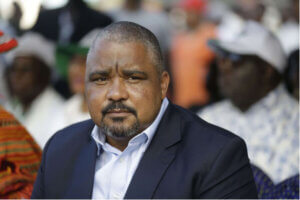
The outcome of the election saw Hon. Osih come out with the worst result an SDF candidate has ever scored. It has been a perplexing situation. But his critics have been livid on him, giving him all sorts of names. The most damning being the one levied by former CRTV journalist now in the US, JOHN Mbah Akuroh who alleged that the Civil Cabinet had paid Hon. Osih FCFA one billion to recognize President Biya as the eventual winner.
To this and many more like the rumour trending that he has agreed to enter the Biya government, Hon. Osih remains unruffled.
This is an interview not to miss. Get your copy of The SUN newspaper, read and keep. The interview was conducted by The SUN newspaper’s CEO/Managing Editor, Norbert Wasso Binde
THE SUN: Thank you Honourable Joshua Osih, National Chairman of the Social Democratic Front, SDF, party and presidential candidate at the last October 12 election. Once again we’re appreciative that you have time to grant us this exclusive interview
Hon. Osih: It’s my pleasure as well as an honour.
The SDF candidate at the last presidential election who was you recorded the worst performance of the party’s candidate in a presidential election. What was responsible for this dismal performance?
I fully assume responsibility for the results, but they must be understood in their proper context. You can only meaningfully evaluate electoral performance in a functioning democracy like the United States or the UK. Cameroon is not there yet. The SDF was created to dismantle a dictatorship which has since evolved into a full autocracy. We are not competing in a normal democratic contest; we are confronting a system built to perpetuate itself.
That is why applying conventional electoral metrics is misleading. When you run against autocracy, especially when other autocratic actors are also candidates, the playing field is neither fair nor neutral. What this election revealed is that many Cameroonians transformed their legitimate frustration and anger with the system into a political choice. Anger is understandable, this system has failed us, but anger is emotional, not rational, and emotional politics rarely produces transformational outcomes. The result was a tragic binary: a choice between two devils, in which angels had no place. And in such a scenario, the devil who controls hell always wins. As the saying goes “Cameroonians chose the devil they know rather than the angel they are unsure of”.
But leading a country should never be about emotions or sympathy. A President is not a father figure or a savior, he or she is an employee of the people. And like any employee, performance must be measured by results: development, peace and security, functioning social services, job creation, credible diplomacy, stable currency and improved livelihoods. When a President succeeds, he earns respect; when he fails, he does not deserve renewal, he deserves to be replaced. That is the essence of a constitutional social contract.
Unfortunately, in Cameroon, emotional loyalty has replaced political accountability. That is how a 92-year-old incumbent with no credible record of service over four decades can still be re-elected, not because he delivered, but because people believe they must like, protect or emotionally identify with their leader. This mindset is a major obstacle to democratic maturity.
A simple example: when you choose a doctor, it is not because you love them, it is because they heal you. If they stop delivering care, you change doctors. The same should apply to leaders. You do not vote based on affection or identity; you vote based on results.
Once Cameroonians shift from liking candidates to respecting those who earn it through service, we will have reached political maturity. And if we truly love our country, we cannot continue choosing between versions of the same failure simply because of emotional or tribal reflexes.
So, to answer your question directly: the “poor performance” is not so much about the SDF or my candidacy, it is about an irrational electoral outcome produced by a broken system and an electorate still trapped in emotional politics by the system. In a flawed election, everyone loses, especially the people.
That said, the election is behind us. What matters now is building the future. My responsibility, and that of everyone who believes in a democratic, inclusive and prosperous Cameroon, is to intensify political education. We failed to educate sufficiently, and this result reminds us of that urgency.
It will require sacrifice, effort and patience, but this is the price of leaving behind a country worthy of our children and future generations. And that work has already begun.
Don’t you think your dogged decision to stand alone as against joining a coalition or rallying Issa Tchiroma played a lot against you?
I understand the premise of your question, but it’s important to clarify a few points. First, the concept of a formal coalition does not exist in the current Cameroonian electoral framework. So the suggestion that I chose not to form or join one is somewhat misplaced. Second, my candidacy was not a personal decision, it was the result of a democratic process within the SDF, endorsed by our National Convention. Under our party constitution, only an Extraordinary Convention, requiring a four-month process, could reverse that mandate. So institutionally and ethically, the decision was not mine to trade, negotiate or abandon.
Now, regarding collaboration, contrary to the perception being circulated during the campaign, we did not approach this election in isolation. We brought together a significant number of political parties, movements and trade unions. Unfortunately, not all were able to maintain the coherence and consistency required to go the full distance together, and that is a reality of politics in an emerging democracy.
Much of the public conversation about “coalitions” was not organic. It was largely manufactured and amplified by communication structures aligned with the presidency, supported by selected media outlets and influencers, to shape public perception. The effect was to make coalition-building appear like the central issue of the election, rather than the real questions: leadership, accountability, constitutional order, federalism, economic development, and a path out of 43 years of stagnation.
By shifting the debate to “who must join whom” rather than “what vision should lead the country,” the system protected the incumbent. The subtle message was: he is so irreplaceable that only multiple opponents combined could challenge him. Unfortunately, that narrative worked not because it was true, but because our political culture is still evolving.
That brings me to the heart of the matter: in a democracy, alliances should be rooted in shared principles not just in the shared desire to oppose someone. The fact that two actors are outside government does not mean they are aligned on values, governance models or national vision. I will never sign onto a partnership that compromises the very objectives the SDF was founded for: federalism, democracy, social justice, accountability and the restoration of state legitimacy.
A country can pay a heavy price when fundamentally opposing visions are forced into power together. When your starting point is incoherence, your outcome will be instability.
My responsibility then and now is to defend a program, not chase convenience. Leadership is not about abandoning course when the seas are rough; it is about holding firm when you believe the direction is right. I stand for a Cameroon where power is decentralized through federalism, where institutions function, where prosperity is shared and where citizens vote based on programs not emotions or manipulation.
If Cameroonians were not ready for that proposal today, then our task is to continue refining, educating and engaging not to dilute convictions for short-term political wins. Real change is never built on shortcuts.
So no, the issue was not refusing to join a coalition. The real issue was a system designed to avoid competition and a political culture still learning to distinguish tactical noise from genuine nation-building choices. And I hope that, collectively, we have learned something from this election something that will help us act with greater clarity and maturity moving forward.
Rumours are swelling around about your imminent entry into Biya government. Is the SDF now ready to enter government? And if yes, is it a personal decision or that of the party?
I’m aware of the rumours, and it is important to address them responsibly. As of now, there are no discussions at least none that I am part of or informed about regarding the SDF entering government. So at this stage, the question is hypothetical.
That said, let me also be clear on the principle: the SDF has never defined participation in government as taboo. What matters is purpose, not position. If at any point there were serious, credible discussions about joining a government, those discussions would only be meaningful if they advance key national priorities such as reforming the electoral code, improving governance, strengthening democracy, creating opportunities for youth, and addressing the socio-economic challenges affecting ordinary Cameroonians. If such engagement helps move the country forward, then of course we would examine it. But it is neither a demand nor a priority today.
Decisions of that magnitude are never taken lightly or informally. The SDF operates with clear institutional procedures, and while due process will always be respected, our framework also recognises that leadership sometimes requires timely decisions. Between two NEC sessions, the Chairman is empowered to act in the best interest of the party and the nation, and any engagement should it ever arise would follow that mechanism: principled, legitimate, and anchored in our internal regulations rather than personal ambition or backroom arrangements.
I also understand that many members, supporters, and even ordinary Cameroonians are expressing support for such an idea partly because participation in government has increasingly been seen as a political reward since 2018. I hear that sentiment, and I respect it. But leadership requires clarity: we do not seek office for its own sake.
For now, there is nothing on the table, and frankly, there is no urgency. Our focus remains on strengthening our party, deepening political education, pushing for institutional reform, and preparing for the future of Cameroon not simply joining a government because the rumour says so.
When and only when there is something concrete, transparent and aligned with our principles, the public will hear it from us directly.
You say you couldn’t support Tchiroma because of his past which include him being part of Biya’s government for over 20 years. But it seems Cameroonians weren’t bothered about that and were more interested in change
I understand why it may appear that way, but context matters. In a normal democracy, with a proper campaign timeline of several months, voters would have had the time to assess candidates based on their records, values, and consistency. That was not the case in this election.
Instead, what we witnessed was a very sophisticated communication strategy largely coordinated from within the system aimed at reshaping public perception. It promoted the idea that the past no longer matters and that what someone did for 10, 20, or even 40 years in government should be ignored in the name of “change.” And unfortunately, that narrative gained traction.
But here’s the paradox: if we are willing to disregard the political past of someone who was part of an autocratic government for decades, then by the same logic, we are also invited to forgive and forget the record of the person who has led that system for 43 years. Once voters accept that the past is irrelevant, accountability disappears and continuity becomes the disguised form of change.
So it wasn’t simply that Cameroonians were unconcerned. Rather, many were influenced understandably by a messaging campaign designed to create emotional urgency instead of thoughtful assessment. Whoever engineered that strategy did it very effectively for their intended beneficiary. And yes by all indications they were well resourced to do so. In a genuine democratic environment, political credibility is built on consistency, accountability and coherence. Without that, what looks like change may simply be the recycling of the same system under a different label.
This tag that Osih is in active collaboration with the CPDM and has business dealings with the presidency seem to have stuck and helped in eroding trust and confidence in you. Are you sure you have done enough to come clean of all these allegations?
I’m aware of those rumours, and I know they have been repeated often enough that some people began treating them as facts. But let me start with a simple question: how can someone be accused of being untrustworthy because they supposedly do business with the government, yet the same people fully trust individuals who have served inside that same government for decades? That contradiction alone shows how emotional and irrational parts of our political discourse have become.
Now, to be absolutely clear: I have never had any commercial dealings with the government, nor do I have any relationship with the CPDM or with the Presidency — financial, political, or otherwise. None. These accusations were fabricated.
In fact, when one of my accusers was taken to court, he publicly admitted before a judge that he had been paid FCFA 20,000 only to spread those claims and that he feared going to prison for lying. That episode revealed something important: these rumours were not spontaneous — they were deliberately funded and orchestrated as a political strategy. Why? Because when you cannot defeat someone on ideas, you attempt to destroy their credibility.
Some people also believe that because I can greet or speak civilly with someone from another political party including the CPDM that somehow proves collusion. But politics is not supposed to be war between individuals; it is a battle of ideas. Courtesy is not betrayal.
There is also a well-known saying: stones are thrown only at fruitful trees. If the SDF and its leadership were irrelevant, the system would not invest time, money and networks to discredit us. The intensity of the blackmail simply confirms the threat we represent to the status quo.
From this point forward, I want to be clear: defamatory allegations will no longer be treated lightly. They will be addressed through legal channels, because too many have mistaken restraint for weakness.
Lastly, as a Cameroonian citizen, I have the constitutional right to tender for public contracts like any other citizen. But the reality is simple: my sector of work does not involve public contracts, and I have never tendered for one. At one point, people even claimed I repaired the President’s aircraft yet the irony is that the President does not even have an aircraft fleet today. That rumour alone should have collapsed under its own absurdity.
So yes, I have done my part to clarify the truth. Beyond that, the facts now speak for themselves.
A few days to the close of campaigns your Campaign Director said the party had engaged over 31,000 polling agents across the country and this was one of the reasons that made you bullish about not joining the coalition. 31,000 polling agents for a total 58,000 votes cast on your behalf. What went wrong? Do you have the results of all the polling stations and why are they not published?
We deployed 31,000 polling agents, and this figure was officially validated by ELECAM six days before the vote — exactly as required by the electoral code. In fact, ELECAM informed us that we were the only party to have fully complied with this provision nationwide by that deadline. That demonstrates preparedness, organisation, and seriousness.
However, on election day, only about 12,000 polling agents were able to effectively take up their positions. Several factors contributed to this. Some individuals faced logistical or financial constraints that is a reality in our context. But it is also clear that once it became known that the SDF had successfully organised a strong national network of polling agents, the system reacted. The ruling party deployed various methods in some cases subtle, in others not to prevent the full deployment of our representatives.
Even with that setback, the law still offered a safeguard in our favour. Under Section 56 of the electoral code, any polling station where our duly registered agent did not show up, the President of the polling station was required to appoint a replacement before voting began. This legal obligation was ignored in thousands of polling stations, and the official tally sheets confirm those irregularities.
This is why we filed a petition before the Constitutional Council requesting the partial annulment of approximately 15,000 polling stations not to overturn the democratic choice, but to ensure that a flawed process could lead to a rerun or a second round, which would have allowed a more legitimate outcome. Unfortunately, instead of engaging on substance, the public conversation was distorted by actors paid to manipulate opinion including some disguising themselves as opposition voices. The narrative became emotional rather than factual.
Ultimately, we withdrew the petition because I have always believed that a legal action that changes the results without giving us a legitimate path forward is not meaningful. However, I remain convinced and the tally sheets confirm that a second round would have profoundly changed the dynamics of this election.
Regarding the results: yes, we have all the tally sheets from polling stations where our agents worked. They give a very clear picture of what actually happened who won where, and with what margin. But it is not the role of the SDF to publish national results. That responsibility lies with the legal institutions in charge of elections. We did not enter this process to replace the state, we entered it to challenge it and reform it. Those institutions are fully aware that we know the numbers. And sometimes, knowledge even when not shouted publicly is more powerful than noise.
The John Mbah Akuroh one billion allegation was like a final nail on your campaign. Why did you react late? In fact after the elections and where are we with the court summons which you filed in the USA, Europe and Cameroon?
The allegation you’re referring to was not accidental. It followed the same pattern of coordinated blackmail used against me and at least three other candidates. It was deliberate, timed, and strategically amplified to damage credibility in the final days of the campaign when there was neither the space nor the media bandwidth to correct it. That tells you everything about the intention behind it. As for why I did not respond instantly: in matters of defamation, emotion is not a strategy. The appropriate response is legal, not reactive. I did not want to dignify falsehoods with a public argument. Instead, we initiated proceedings in Cameroon, Europe and the United States jurisdictions where such accusations carry serious legal consequences. Those processes are ongoing, and when the courts move to the next procedural stage, the public will be informed. These are not social media battles they are legal cases, and they follow their own timelines.
What concerns me most is not the rumour itself rumours come and go but the network behind it. The speed, coordination and financing of this narrative reveal something deeper: the alignment of interests between those who benefit from maintaining the status quo in the North West and South West regions. Whether from within the system or among separatist actors, the objective appears the same-to prevent any leadership capable of proposing a credible political settlement that moves Cameroon beyond war.
So, rather than weakening us, this episode has been instructive. It has exposed a reality that many suspected but few could demonstrate: that the war economy has beneficiaries, and that destabilising voices calling for peace, reform and accountability threatens those interests.
We will pursue this matter to its legal conclusion not out of anger, but because truth matters, and because Cameroonians deserve a political culture rooted in facts, not manipulation. One day, when the dust settles and history is written with clarity rather than fear, the country will better understand the forces at play in the North West and South West and why voices calling for peace became targets.
You met with Issa Tchiroma after he pulled out of government. What really transpired in that two-hour meeting? Why didn’t you engage in further discussions?
Yes, we did meet and the conversation was cordial and respectful. At that stage, Mr. Tchiroma expressed interest in exploring the possibility of a political alliance. I listened to him, and I also made clear the SDF’s position, principles, and the conditions under which any form of collaboration could even be considered. It was an honest and transparent exchange. We agreed that discussions should be continued institutionally rather than personally, so both sides designated senior representatives to work on the matter and explore whether there was a real basis for convergence. That was the responsible and structured approach.
However, just a few days later, every member of Mr. Tchiroma’s delegation one after the other resigned from their positions in his party. At that point, there was simply no counterpart to continue the discussions with, and naturally, the process could not move forward. So it wasn’t a refusal or a breakdown it was simply a situation where the conditions for further dialogue no longer existed. And in politics, as in diplomacy, engagements must be conducted with stable partners, clear mandates, and coherent structures. The meeting therefore ended as it began: respectfully but without the continuity required to build anything meaningful.
Were you really convinced about winning this election or there were other motives?
I was absolutely convinced that we had a realistic path to victory otherwise, there would have been no reason to run. We invested deeply: we deployed thousands of polling agents across the country, built one of the most comprehensive political programs of this electoral cycle, and I personally travelled the country multiple times to engage with citizens directly. So the conviction was real not emotional, but based on preparation, momentum, and feedback from the ground.
However, as I’ve said before, the challenge was not our readiness or our program. The real issue was that we found ourselves participating in an election that did not operate on the standards of a normal democratic contest. In other words: we ran the right campaign, but in the wrong electoral environment.
So there were no hidden motives. The objective was to win and more importantly, to bring meaningful change. And while the outcome was not what we expected, the work we built the network, the political consciousness, the vision remains an asset for the future. Sometimes in politics, the journey reveals that the fight is larger than a single election. This one reminded us that before we compete for power, we must first ensure that the rules of the game allow the people’s will to be genuinely expressed.
What’s the state of the party now and how do you bring back trust and confidence especially with those of your militants who were swept by the wave
The first step after the election was to take a clear and honest look at what happened not emotionally, but analytically. We now understand the internal and external dynamics that influenced the process, including those who, knowingly or unknowingly, contributed to undermining the party from within. For the sake of unity and stability, I do not believe in public exposure or humiliation, but let me say this: those involved know themselves, and internal corrective mechanisms will be applied in due time and according to our rules. Discipline does not need noise it needs structure.
As for militants who drifted during the campaign, I don’t see that as a crisis, I see it as a reminder that political engagement must be continually renewed. Many of those who left did so because they were already disengaged long before the election. What matters now is not chasing those who walked away, but strengthening those who stayed, attracting new voices, and rebuilding across generations and regions.
The SDF remains strong not because of one election, but because of its history, its values, and its mission. We are assessing by listening, and learning. There is constructive debate happening internally, and we will use that energy to reform, modernise, and reposition the party ahead of 2026. Trust is not restored by slogans it is restored by clarity, coherence, consistency and results. And step by step, that work has already begun.
You’re yet to convene a National Executive Committee, NEC, meeting to evaluate the performance. Some say it’s because you’re afraid of a serious backlash and even a vote of no-confidence
The SDF has clear rules governing how and when a National Executive Committee meeting is convened. We are required to hold at least three NEC meetings per year, and we have consistently met and even exceeded that requirement. So the idea that there is hesitation or fear is simply not accurate.
A NEC meeting is not called on impulse or because it appears in a media question. It is part of a structured chain: electoral district meetings feed into regional meetings, and those inform the agenda of a NEC session. That process ensures that decisions are grounded in real feedback from the grassroots, not emotion or speculation.
That said, we do recognise that the post-election moment requires collective reflection, clarity, and planning. For this reason, I intend to convene the next NEC meeting after the parliamentary session ends, so that all issues including lessons learned and preparations for 2026 are addressed responsibly and with full participation. It is also worth noting that organising a NEC meeting requires logistics and financial resources. We must ensure those conditions are in place before proceeding that is responsible management, not avoidance.
So yes, the NEC will meet not because of pressure or rumours but because it is the natural and constructive next step in our institutional calendar as we move forward.
How do you lift up yourself from this?
In an autocracy, elections are not the end of the journey they are simply one step in a much longer struggle for democratic transformation. So the question is not how do I recover, but rather how do we continue the mission?
When you believe in your vision, your program, and your country, setbacks do not discourage you — they refine you. We take lessons from this experience, make the necessary adjustments, strengthen our organisation, and return to the field with even more determination.
Leadership is not measured by a single electoral outcome. It is measured by resilience, clarity of purpose, and the ability to keep moving forward — especially when the environment is difficult. And on that front, nothing has changed: the fight for a more democratic, fair, and prosperous Cameroon continues.
Does the performance at the presidential election not a bad sign for the upcoming municipal/legislative elections next year?
No, I don’t believe the presidential result is a predictor of what will happen in the municipal and legislative elections. If that logic were true, then those who didn’t even participate in the presidential race would have no chance next year and we both know that is not how politics works in Cameroon.
These are two very different electoral dynamics. Presidential elections are highly centralised, polarised, and heavily influenced by national narratives and state-controlled messaging. Local elections, on the other hand, are much more community-driven. They are about proximity, grounded engagement, and practical issues affecting daily life —municipal roads, water, schools, local governance, and accountability.
Moreover, the presidential campaign benefited massively from the state communication machinery, which shaped perceptions and emotions nationwide. That apparatus does not operate with the same force or focus during municipal and legislative elections.
So the municipal and legislative cycle will be a different terrain, one where the SDF has strong historical roots, established local leaders, and a long track record of community engagement. We will go into those elections organised, clearer and with lessons learned — and I remain confident that the outcome will reflect the real connection between our party and the communities we have served for decades.
Some are proposing that the party goes back to the drawing board and especially try and reconcile with the many heavyweights it has lost especially through Article 8.2
I’ve heard that suggestion, but we need to look at it with clarity and without nostalgia. The SDF has never been built around personalities, it has always been built around principles. Anyone considered a “heavyweight” today became one because the party gave them space, responsibility, and a platform. The SDF shaped all of us including myself not the other way around. Politics evolves, and renewal is not a weakness; it is necessary for survival and relevance. If some individuals chose to leave the party, that was their decision, and we respect it. But constantly reopening old chapters or attempting to revive fractures under the pretext of reconciliation cannot become the party’s permanent agenda. Looking backward prevents us from building forward.
Our focus today must be on strengthening the structures, empowering the new generation, consolidating those who are committed, and preparing the party for the future — not reliving yesterday’s disputes. The energy we invest must serve growth, unity, and political relevance, not endless internal retrials.
So yes, reflection is important. But reflection must lead to progress, not paralysis. The SDF’s future depends on discipline, continuity, and renewal not on returning to battles that no longer serve the organisation or the country.
What’s your reaction to President Biya’s swearing-in speech ?
I listened carefully to President Biya’s swearing-in speech, and my first reaction was one of concern rather than surprise. Much of what was presented as new commitments are actually policies or promises that already exist — either in current legislation, previous government programs, or earlier presidential speeches. So it was difficult to identify real innovation or a forward-looking vision capable of responding to the urgency of Cameroon’s current socio-economic and political reality.
At a moment when the country needed clarity, direction, and courage, the speech instead reflected continuity — not transformation. We are facing a deep economic crisis, rising unemployment, insecurity in multiple regions, and a growing disconnect between institutions and citizens. In such a context, Cameroonians were expecting concrete reforms, timelines, and accountability mechanisms — not a repetition of familiar declarations.
However, beyond the content, what matters now is whether the government will translate even those repeated promises into credible action. Cameroonians are no longer asking for beautiful speeches — they are asking for results: reforms of the electoral system, decentralisation that actually works which we propose through a federal dispensation, opportunities for youth, better governance, peace in the North West and South West, and a state that serves rather than manages.
Speeches do not transform a country. Political will does.
So while I remain respectful of the institution of the Presidency, my hope is that this mandate will not be business as usual because business as usual is precisely what has brought us where we are today.
Cameroon deserves a leadership that listens, reforms, and delivers — not one that recycles talking points. Whether this speech marks a turning point or simply another missed opportunity is something Cameroonians will judge by actions, not by rhetoric.
What according to you are the pressing priorities right now?
For me, the priorities ahead are both national and internal — and they are deeply interconnected.
At the national level, the most urgent need is to restore trust — trust between citizens and institutions, between communities, and between the state and those it governs. Without that foundation, no reform, no development plan, no security initiative can truly succeed. Trust requires transparency, accountability, meaningful dialogue, and concrete steps toward national reconciliation. We also need institutional reform, particularly of our electoral framework, because a country cannot move forward if its citizens feel their voices do not count. And of course, peace and a sustainable political solution to the crisis in the North West and South West remain non-negotiable priorities.
For the SDF, our focus is equally clear. We must reaffirm who we are — a party rooted in social democracy, justice, federalism, and democratic reform. This is a moment to strengthen our structures, rebuild confidence among our base, and approach the upcoming municipal and legislative elections with preparation, discipline, and renewed energy. We need to expand our presence in councils and parliament, because these institutions shape daily life far more directly than the presidency. And that goal is achievable — but only if we fully understand the current political landscape and the stakes ahead.
So, in summary: nationally, we need reconciliation, reform, and renewed legitimacy. Politically, we need discipline, clarity and strategic organisation. If we address both fronts with seriousness and consistency, we can begin steering Cameroon toward a future that is more democratic, fair, and hopeful.
Any last word?
Yes — perhaps just this.
As a country and as political actors, we need to rediscover coherence. We cannot say we know elections are flawed, yet treat the results of those flawed elections as unquestionable truth. We cannot claim we lack democracy, yet rank political parties or leaders based solely on outcomes produced by the absence of democracy. That contradiction has weakened our political culture and confused our national compass.
This election has also revealed something important: Cameroonians now expect robust organisation, logistics, and financial investment in campaigns sometimes at levels that were unthinkable a few years ago. We must adapt to that reality ethically, transparently, and strategically because politics is evolving, and we must evolve with it.
But beyond strategy and resources, the most important ingredient remains belief — belief in ourselves, in our values, and in the possibility of a different Cameroon. As social democrats, our mission has always been grounded in fairness, decentralisation, democratic rights, dignity, and justice. That vision remains intact. If anything, this moment has reinforced why it is necessary.
We must also remember that our founding fathers built this movement in circumstances far harder than anything we face today. They persevered when the cost was their lives and personal freedom, when democracy was a dream rather than an expectation. So this moment should not discourage us, it should remind us who we are.
Instead of seeing this election as a defeat, we should treat